
Apple (AAPL) stock fell just shy of 10% on Friday, after CEO Tim Cook warned about the impact of the global memory shortage on the company’s business.
During Apple’s third quarter earnings call, Cook said the company paid significantly more for memory in the quarter and expects that to further increase in the current period. And while Apple is able to offset some of that price jump, it won’t be able to tackle it all.
Cook also noted that the company continues to face supply constraints related to its processors. The CEO said that iPhone and Mac sales outpaced Apple’s own expectations and that a lack of flexibility in the supply chain is making it more difficult to keep up with demand.
For the third quarter, Apple saw earnings per share (EPS) of $2.02 on revenue of $109.4 billion, ahead of the $1.89 EPS and $108.8 billion in revenue analysts were anticipating.
Apple reported EPS of $1.57 and revenue of $94 billion in Q3 2025.
Apple’s iPhone revenue hit $54.2 billion versus expectations of $53.5 billion. Sales were $44.5 billion in the same quarter last year.
Services, Apple’s second-largest business, brought in $30.7 billion versus projections of $31.3 billion. Greater China revenue was $18.8 billion, shy of analyst estimates of $19.5 billion.
While Apple’s stock has outperformed its Big Tech peers, the Cupertino, the memory and shortage has forced the company to raise prices on its Macs and iPads.
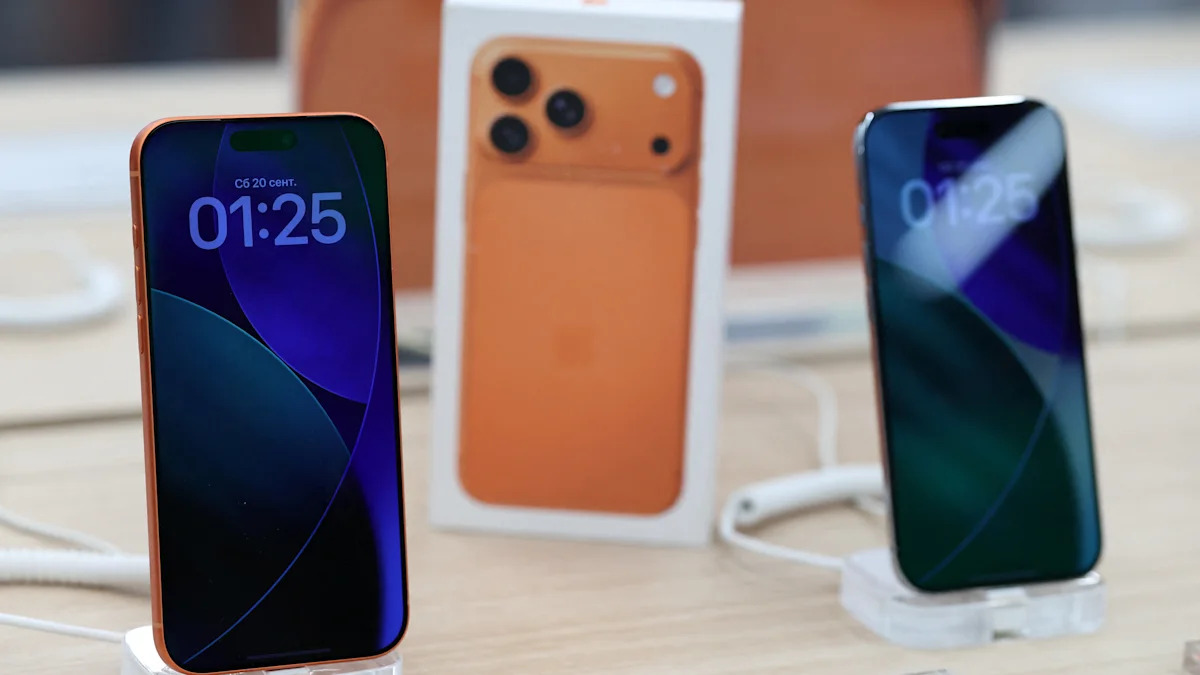
And while the iPhone has been spared price increases so far, that’s expected to change when Apple debuts its next-generation iPhones this fall.
According to Jefferies analyst Edison Lee, the increases in memory prices could pressure Apple’s iPhone margins going forward.
“We estimate the memory cost would rise further in [the second half of 2026], and assuming similar price hikes with iPad (except the 512GB version, where we assume a US$300 price hike vs 200 for iPad), the incremental [gross margins] would only be 21%. That could reduce the overall iPhone GM from 38% to 34.5%,” Lee wrote in an investor note.
But Brandon Nispel of KeyBank Capital Markets sees a potential iPhone price increase as a far larger issue for Apple than simply an impact on gross margins.
“With [Apple] providing a safe haven to the sell-off in semis, we think they are missing the bigger picture, which squarely fits our thesis: as [Apple] raises iPhone prices, unit growth will slow, and as unit growth slows, so will user growth, which we think ultimately will slow Services growth,” Nispel wrote in a note to investors.