
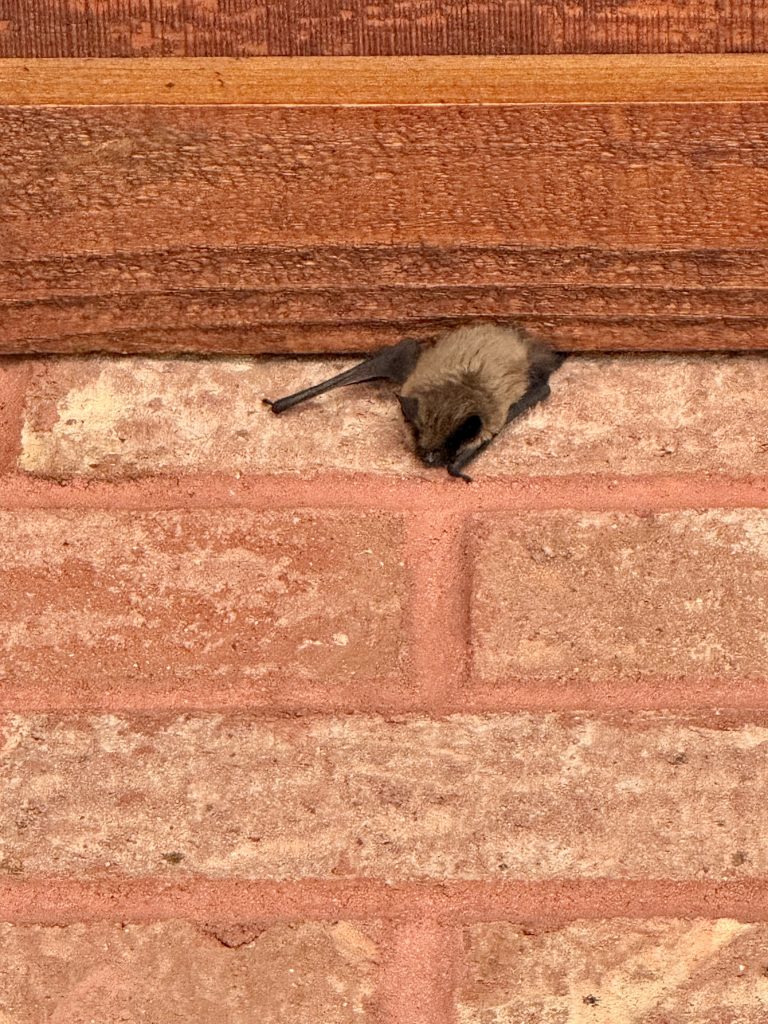
Hunter Creek Building 3 has experienced a large infestation of bats that has left a number of residents on a rabies exposure protocol.
On the night of Tuesday, July 22, Susan Capiel observed a bat in the living room of the apartment she and her husband live in. After waking her husband up to remove it, she witnessed another one fly into the second bedroom/office where she was still awake, around midnight. Upon entering the bedroom to wake her husband up a second time, she saw a third bat flying above him.
“It’s been a nightmare,” she said, “and we have to live with it the rest of the summer.”
After Capel’s husband removed the bats they discovered, they went to bed, not knowing that one floor up, their neighbors were experiencing even more of an infestation.
“I didn’t know what had happened upstairs,” Capiel said. “There were 100 up there … We still didn’t know the seriousness of the situation until the next day.”
The Romero Group, who manages the Hunter Creek property, confirmed that bats were initially discovered living in an enclosed area above the Building 3 residential units during routine maintenance work.
“The presence of bats in residential structures is common in our area,” the Romero Group shared with The Aspen Times in a statement. “TRG was made aware of the situation and immediately started and has continued to work closely and diligently with the HOA and the affected tenants to ensure that no further intrusions can occur and to address any concerns they may have in a satisfactory way.”
According to Pitkin County Public Health, there has been increased bat activity this summer, which Pitkin County Environmental Health Manager Kurt Dahl said could be due to warmer temperatures or the persistent drought, but no one knows for sure.
“We’ve had a ton of them this year just in general,” Dahl said. “We’re seeing a lot more human-bat interaction than we’ve seen in past years.”
Carly Senst, Pitkin County Public Health epidemiologist, added, “This has been an incredibly active year.”
According to Senst, bats are endemic to this area, and finding them inside homes isn’t particularly unusual — but the scale of the Hunter Creek infestation makes it unique.
“The scale of this and number of units impacted is large,” she said. “But the risk for these inhabitants is no greater than anyone else living in a house that may have bats occasionally.”
Carlyn Porter, emergency response and epidemiology program administrator for Pitkin County, confirmed that the colony of bats in Hunter Creek will not be euthanized and tested for rabies.
“We really stand by not testing entire colonies,” she said.
And both Dahl and Senst stressed that less than 1% of bats carry rabies, according to the state.
“We don’t want to go and euthanize all these bats,” Senst said.
Dahl also said that testing just one bat from a nest won’t indicate the status of the rest. Instead, current mitigation efforts will focus on removing bats from inhabited areas of the building and closing off interior access points into units.
What’s happening in Aspen, in one click.
Sign up for our morning newsletter at AspenTimes.com/newsletter
“My understanding is that we’re seeing less and less bats in the rooms,” Dahl said. “This is their nest, in that facility, and we can’t just kick them out. We have to wait until they migrate. For now, they’re here.”
The Romero Group has been working with Pitkin County Public Health, Mountain Pest Control and RAM Pest Control, as well as Quest Environmental for environmental testing, according to a letter sent to Hunter Creek residents impacted by the bats.
“Please be assured that TRG is taking this matter very seriously and regrets any disruption to Hunter Creek residents or guests resulting from it,” the letter reads.
The letter also notes that six individuals are undergoing prophylactic rabies treatments, for which The Romero Group will reimburse any uninsured medical expenses. Senst said that after an assessment and rabies protocol recommendation from Pitkin County Public Health, those with insurance should get the treatment covered.
According to her, just the initial series of shots costs $1,353. But, when administered in a timely manner, it is almost 100% effective at preventing rabies.
Public Health is also assessing pets in Building 3 who may have been exposed, Porter said. A number of unvaccinated cats have already been identified.
For anyone who does find a bat inside their unit or house, Senst recommended calling animal control immediately and not attempting to remove the bat on one’s own. If a professional is unavailable, she encouraged closing off the area where the bat is and, as a last resort, throwing a towel or blanket over it to prevent touching it directly.
“If it’s outside, leave it alone,” she said. “If you identify bats in your home, that is where we may want to have a conversation. Do not try to handle it yourself.”
Of the number of bats that were sent for rabies testing so far this year from other residences, Porter said that none have come back positive.