
Credit: Far Out / Bent Rej
Sat 1 August 2026 11:22, UK
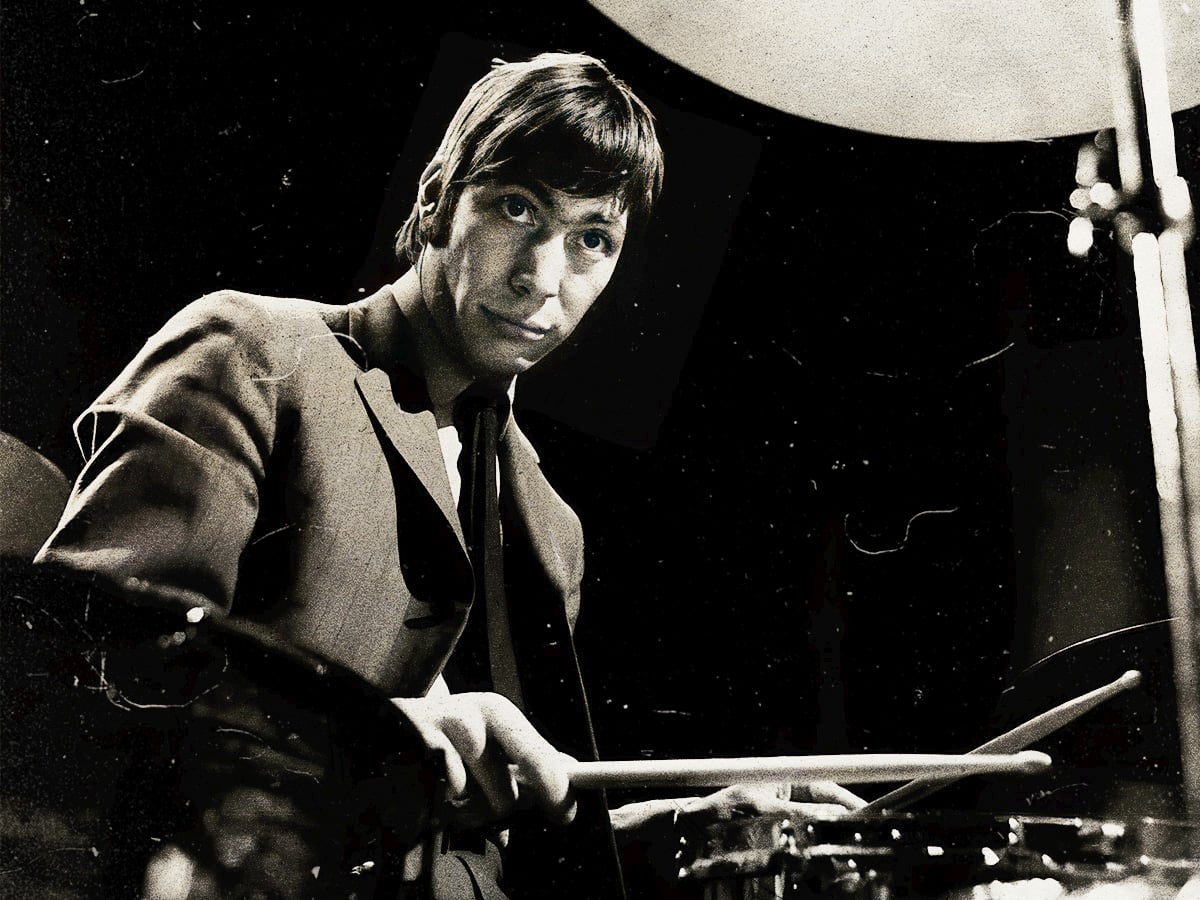
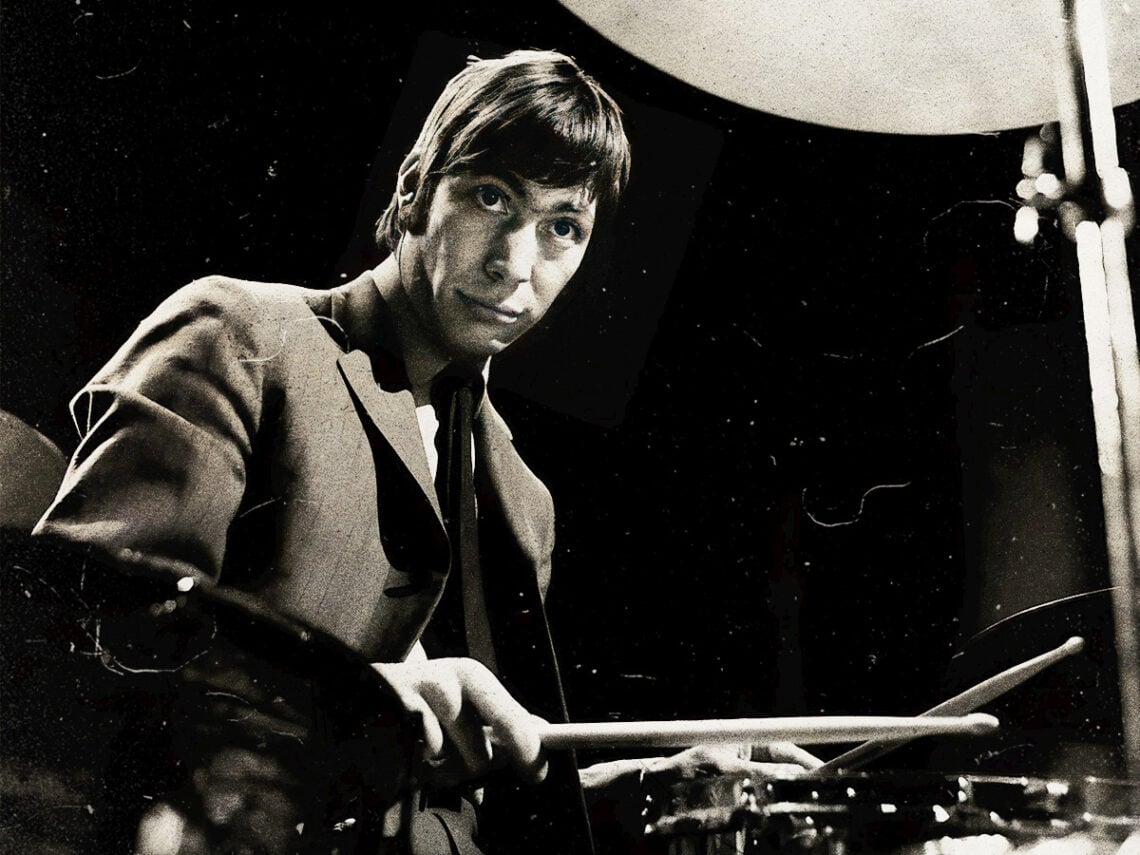
Charlie Watts embodied one of the greatest assets of any drummer: the art of making a beat simple. It’s a sorely overlooked facet, too.
As Paul McCartney said of his own simplistic sticksmith: “Look, I love Led Zeppelin, but you watch them playing, and you can see them looking back at John Bonham, like, ‘What the hell are you doing? This is the beat.”
Old Macca continued, “You could turn your back on Ringo and never have to worry. He both gave you security and you knew he was going to nail it”. The stylish Mr Watts provided that exact same sense of rhythmic security for The Rolling Stones.
As Ringo said himself: “You look at Charlie Watts in the Stones, and there is nothing really said, and he’s an amazing drummer, but the drummers tended not to get the writing. The drummer is the driving force but when you have songwriters of that calibre and singers they much prefer to talk about the songs and the writers.”
However, Watts was largely fine with escaping column inches; he understood his place in the Stones, and that is a feat in itself. While it might have meant that his sheer talent went unnoticed, the songs were the ultimate beneficiaries of his modest sacrifice.
In fact, he was even happy to relinquish the usual mainstay for any drummer: being the heartbeat of the band. As Ronnie Wood explained, “In other bands they follow the drummer; the Stones follow Keith, and they always have.” This was not a slight against Watts. It takes a unique set of skills for a drummer to follow a guitarist.
And yet, despite all his ability and remarked brilliance as a jazz drummer in projects away from the band, there was one very unusual groove in the group’s back catalogue that he simply couldn’t get his head around. This is why their producer, Jimmy Miller, is credited with playing the drums for their Let It Bleed hit ‘You Can’t Always Get What You Want’.
Further reading: From The Vault
With the choral arrangement and Al Kooper’s horn clouding the rhythm, Watts struggled to gauge the offbeats within it. Where was its internal pulse? There wasn’t even Keef to follow in this operatic melee.
The track doesn’t move with the kind of straight, four-on-the-floor momentum that a drummer like Watts could effortlessly lock into. Instead, it drifts between a loose acoustic strum, gospel-style backing vocals and swelling orchestration, creating a feeling of constantly shifting ground. The difficulty is knowing where to place the beat among that shifting sand.
For a fellow who grew up playing in sparser musical times, finding the rhythm in the haze of instrumentation that the band were suddenly flooding into their most ambitious song was like driving through a snowstorm without any lights.
“It proved to be quite difficult to record,” Jagger recalls in According to the Rolling Stones, “Because Charlie couldn’t play the groove and so Jimmy Miller had to play the drums.”
While that might seem like a bit of a tantrum and a bruising ego, Watts was pretty much one of the most laidback cats in rock ‘n’ roll and simply taking a breather is as earnest as it gets in such times. Keith Moon may well have blown his kit up. In fact, Keith Richards claims he didn’t even see his drummer get angry on more than a handful of occasions.
But he also noted that when he did, he threw a “lethal” punch that carried “a lot of balance and timing”, just ask Jagger’s jaw shortly after it uttered “my drummer”. Fortunately, Miller didn’t succumb to such a fate, in part, because Watts knew he wasn’t all that close to figuring it out.
During an interview with NPR, the ever-honest Al Kooper even recalled the comical interaction that saw Watts vacate the stool. With the studio growing agitated as pressures to get finished mounted, Watts wasn’t getting the beat quick enough for Miller. So, the meticulous producer apparently said, “Here, let me show you”. Watts didn’t like this much, so he calmly handed him his sticks and said, “Why don’t you play it then”. He walked out of the studio and only returned once the song was cut.
Despite the difficulty of recording the effort, the final product was one that the band were proud of, and Watts was able to work out his own way of playing it live eventually. Which is something, ironically, that he couldn’t do with ‘Mother’s Little Helper’, a track he had no issue cutting in the studio but floundered with in front of an audience.
Perhaps Watts vacating the chair in the first place is also a measure of his class. As Richards laid out regarding the group’s mantra, “The musicians are there to serve the band. All that matters is whether something furthers the overall sound.” And they might never have sounded better than with this rousing ‘69 classic. As Jagger humbly proclaims: “It’s a good song, even if I say so myself.” It might just be their most resonant to this day.
The none-too-humble frontman continued: “It’s got a very sing-along chorus, and people can identify with it: No one gets what they always want. It’s got a very good melody. It’s got very good orchestral touches that Jack Nitzsche helped with. So it’s got all the ingredients.”
Thank you, Mr Jimmy, for making it happen, I suppose.
