

Making matters worse is a hostile Trump administration intent on undermining the support columns of our economy: medical and science research funding, higher education, and our community of foreign-born students and workers.
Boston has lost its swagger. Talk to people across industries and you’ll hear that the boundless vibrancy we once took for granted has faded. The World Cup brought a jolt of energy that disappeared as suddenly as it arrived, a reminder of how enervated this city, especially downtown, can feel.
Get Trendlines
A business newsletter from Globe Columnist Larry Edelman covering the trends shaping business and the economy in Boston and beyond.
It’s wake-up time, Massachusetts. Our economic assets aren’t so special anymore. Highly skilled workers, excellent health care, and top-notch colleges can be found in many more places than a generation ago.
Complacency is dangerous: To borrow from Hemingway, economies fall apart gradually, then all at once.
And the state’s economic engine — a turbocharged model that outperformed from the early 1980s to the pandemic in 2020 — is sputtering. If Massachusetts doesn’t become a more attractive place to live and run a business, more people and jobs will leave and the quality of life here will fray.
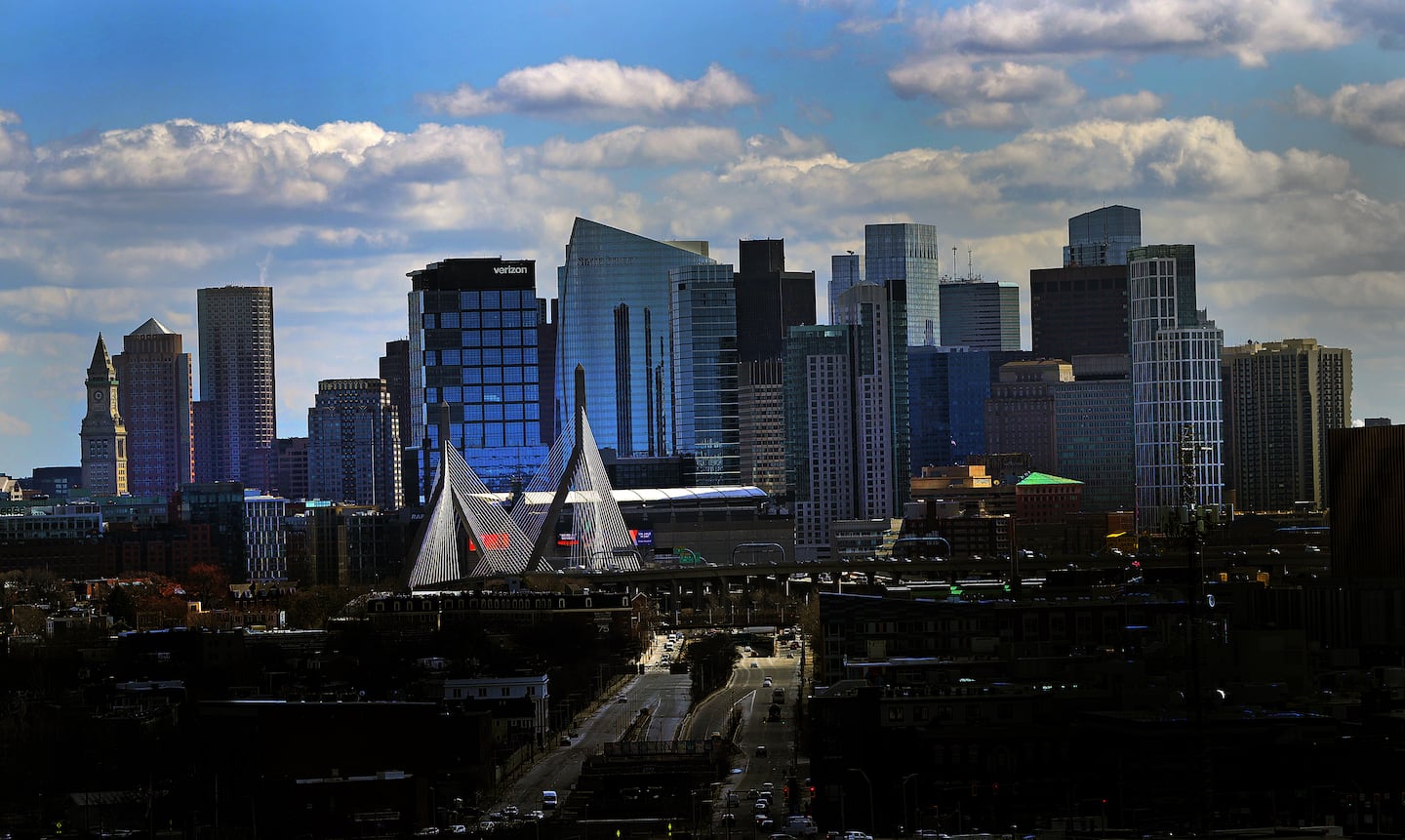 Boston may look the same, but its swagger is missing.David L. Ryan/Globe Staff
Yet we’ve heard all the reasons why many political leaders — and even some business honchos — believe warnings about the state losing its competitive edge are overblown:
Massachusetts is wealthy, ranking first in the nation by median household income.
Our K-12 education system, with some glaring exceptions, is among the best in the country.
We have a highly skilled workforce, world-class hospitals and universities, a preeminent biotech hub, and a vibrant network of startup companies and venture capital firms.
The optimists say we should ignore the overpaid CEOs and crybaby billionaires whining about taxes and threatening to move to New Hampshire or red states with warmer weather and lower taxes.
But put aside the blue-state arrogance for a moment and ruminate on these economic red flags:
Anemic hiring: Massachusetts added fewer private-sector jobs on a percentage basis than 41 other states over the last five years. We trailed big rivals like Florida and Texas, and smaller states, including Arkansas and Wyoming, that are rarely seen as competitors.Flagging entrepreneurial spirit: The state ranked dead last in the nation in new business formations as a percentage of private employment in both 2024 and 2025. Young companies drive job creation.Losing residents: Between 2020 and 2025, some 182,000 more residents moved out of Massachusetts than moved in from other states. That’s more than the number of people who left larger states, including Michigan, Ohio, and Pennsylvania. Tennessee, which had roughly the same population as Massachusetts in 2020, added almost 293,000 people.Lagging tech: The state has just one tech company in the top 100 of Crunchbase’s global list of privately held “unicorn” tech companies: Whoop, the maker of health and fitness tracking wristbands, comes in at No. 94 with a private market value of $10 billion. We are home to zero of the biggest companies pushing the frontiers of artificial intelligence.
The root causes of these ailments are well documented but worth repeating here: a broken housing market, soaring living costs, high taxes, an aging population, the hostile White House. And there’s a persistent disconnect between local political leaders and the business community, each with their own narrow focus.
Together, these factors are sapping the Commonwealth’s economic vitality.
“Cheerleaders will say many states and perhaps the entire country have similar problems,” said David D’Alessandro, a former CEO of John Hancock. “But only a few have all of them, and we are the leader in that dubious minority.”
How did we arrive at this precarious moment?
Massachusetts was riding high when COVID hit in March 2020. Unemployment was near a two-decade low, and economic growth had outpaced the rest of the country in the previous two years.
After the grueling lockdown, midsize Sun Belt and Mountain West metros rebounded faster than Boston, aided by looser pandemic restrictions, business-friendly tax climates, and cheaper housing.
Massachusetts and other blue states, by contrast, shut down hard and reopened slowly. These places share common traits: downtowns dependent on remote-work sectors like technology and professional services; long commutes; and highly educated, affluent residents.
Remote work turned our white-collar job mix into a liability, untethering educated workers from their offices and making it easier for them to move out of state.
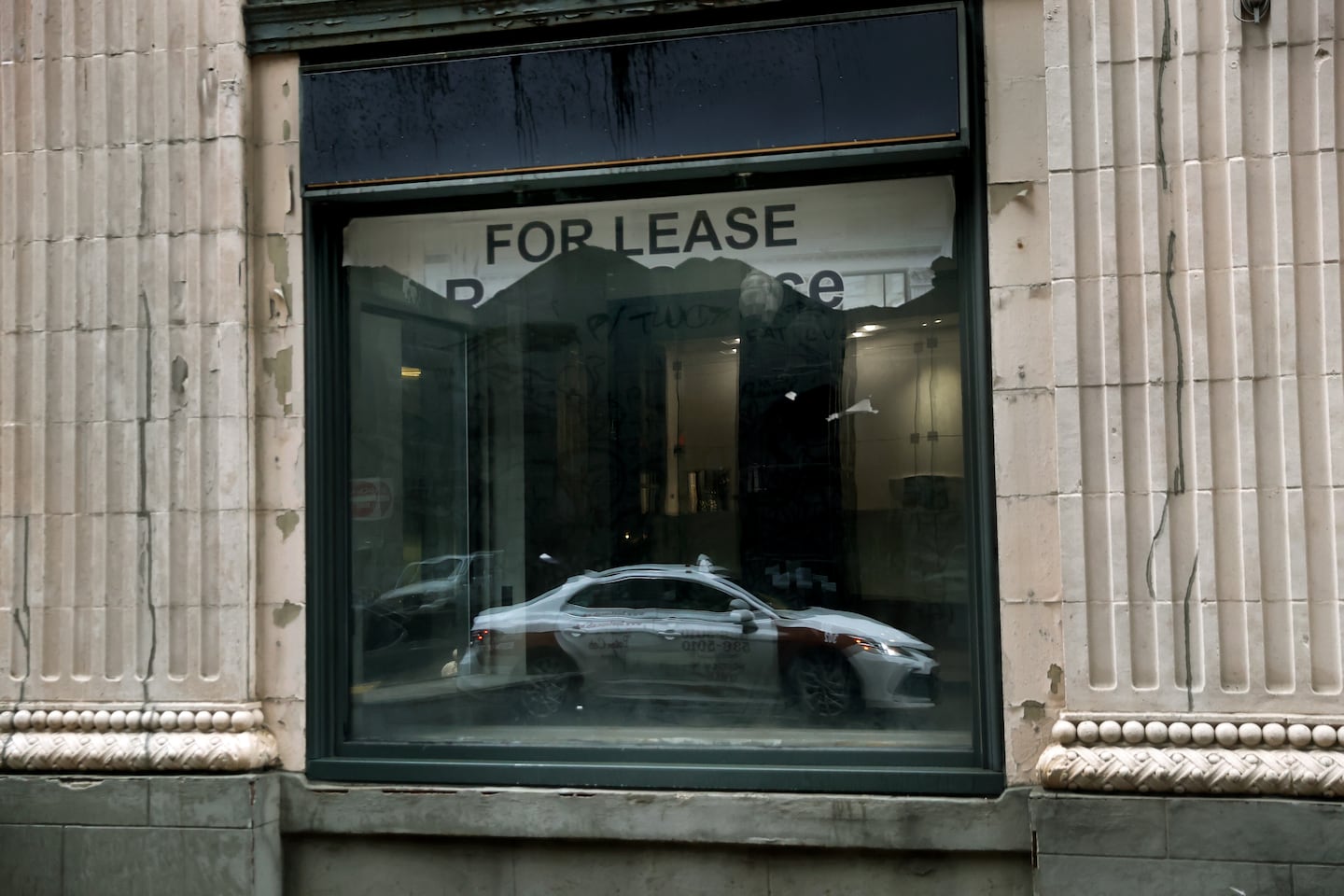 After the pandemic, Boston’s office vacancies soared. The value of older buildings fell.David L. Ryan/Globe Staff
Boston’s office vacancies soared, and the value of older buildings fell, threatening a commercial tax base that funds roughly 70 percent of the city’s budget. The COVID-era life sciences building boom overshot, leaving a glut of lab space that will take years to fill.
But the biggest jolt was post-pandemic inflation — now compounded by fallout from the Iran war — that sent prices in the Boston metropolitan area through the roof.
The pain is being felt everywhere:
The median home listing price in the Boston metro area shot up 38 percent from February 2020 to June 2026, according to Realtor.com, while rents jumped more than 30 percent, Bureau of Labor Statistics data show. Grocery prices rose 25 percent in the same period.Tuition, school fees, and child-care costs climbed 20 percent from March 2020 to May 2026.
In a region where prices were already well above the national average, the surge in costs has pushed us to the breaking point. The harsh reality is that it’s much tougher for people to get by here than it was a generation or two ago.
What’s more, the region is teetering under the weight of high interest rates and building restrictions, and there’s no relief in sight.
No new office space is expected to reach the downtown Boston market until 2032, according to real estate firm CBRE. Authorized permits for privately owned housing units in the Boston-New Hampshire metropolitan area fell 10 percent in 2025, Census Bureau data show. Permits were up 5.6 percent this year through May but remained below 2024’s rate.
“The economic rationale for new multifamily construction is nonexistent,” said Bruce Percelay, chairman of developer The Mount Vernon Company. He blames Boston’s affordable housing and energy requirements, as well as a state law banning forced renter-paid broker fees, for making some new construction financially untenable. As a result, Percelay’s firm has turned to diversifying in South Florida, “something I would never have thought of doing before,” he said.
The state’s higher education and research institutions are struggling to regain their footing — and balance their budgets — amid the administration’s legal attacks, funding cuts, and tightened restrictions on international students. With the White House and Congress controlled by Republicans, a blue state like Massachusetts — with a strong social safety net funded by high taxes — is vulnerable.
 The state’s higher education and research institutions are struggling to regain their footing — and balance their budgets.Heather Diehl for the Boston Globe/For The Boston Globe
The state’s leaders don’t seem to understand just how precarious a position we’re in. Governor Maura Healey and lawmakers have provided modest support to local universities and AI companies. But Beacon Hill works in one gear — low. And the cold war between state leaders and Boston Mayor Michelle Wu has left the city dangling on key issues such as the decline in commercial property values and the resulting loss of tax revenue.
“We are simply unable to acknowledge the depth of our problems,” said Evan Horowitz, executive director of the Center for State Policy Analysis at Tufts University. “We nibble at policy changes, proudly proclaim that we’re making transformative investments, and then wonder why things don’t actually get better.”
We can get our mojo back. It’s been done before: A deindustrializing Massachusetts reinvented itself as a knowledge-based economy in the latter half of the 1970s.
The Route 128 minicomputer industry — and, a few years later, the Reagan-era defense buildup and the burgeoning finance and mutual funds industries — drove a transformation of a state economy left reeling by the loss of the textile, shoe, and light manufacturing industries.
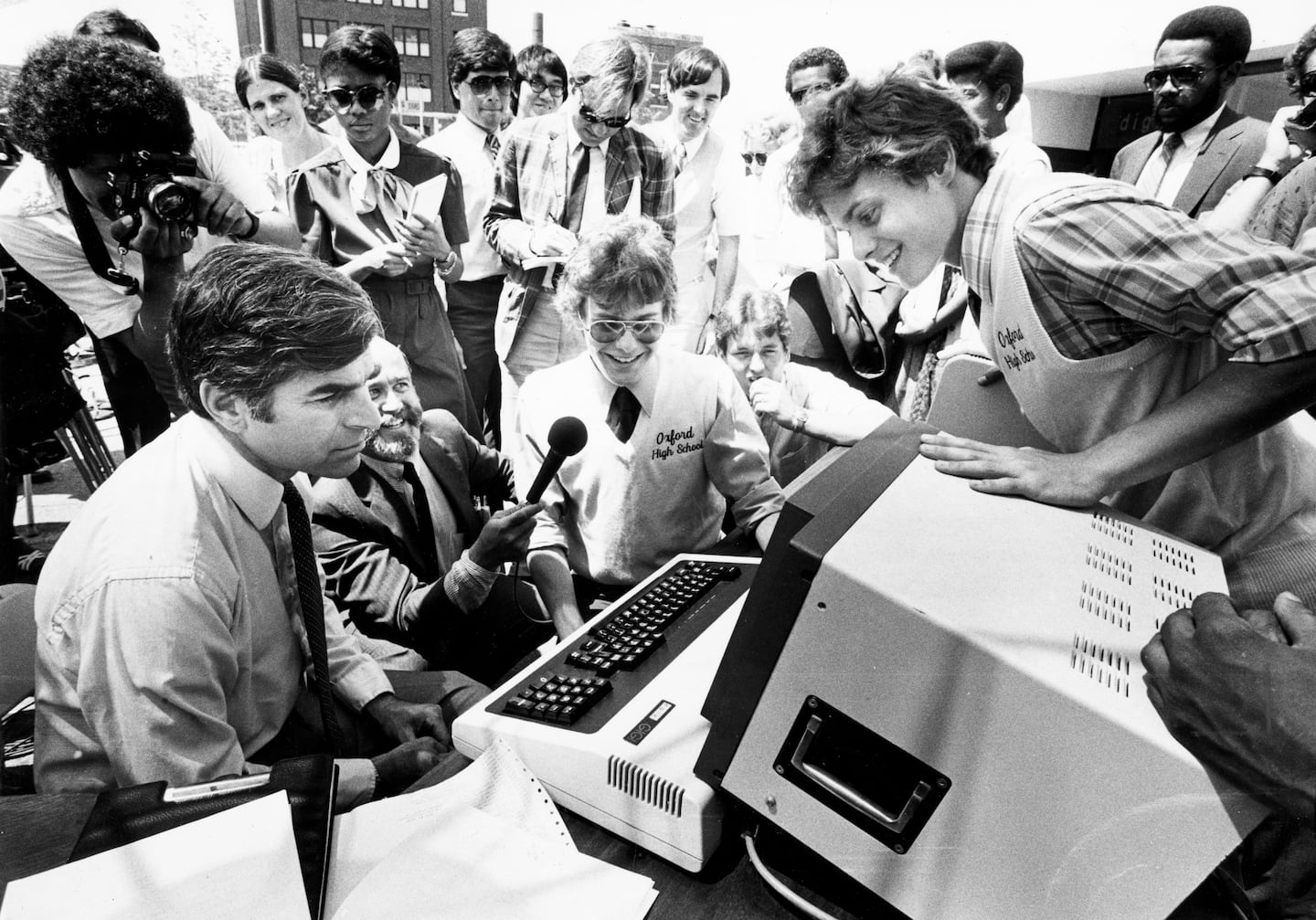 Twins Garry Goodell (leaning over) and Jim Goodwell explained a computer program to Governor Michael Dukakis at a press conference at Digital Equipment Corp. in Roxbury on June 22, 1983. John Blanding/Globe Staff
We called it the “Massachusetts Miracle” and it was.
Digital Equipment, Raytheon, and Fidelity Investments got the headlines for their success. But there would have been no miracle without the state’s research hospitals and universities, venture capital network, and pool of highly educated workers.
Most important to the comeback was Boston’s rise as a biotech and pharmaceutical hub, building off decades of federal investment in university research and, nearly 20 years ago, then-Governor Deval Patrick’s landmark $1 billion state investment in the sector.
After several lean years, the local biotech scene is flashing signs of a turnaround, with initial public offerings on pace to reach levels not seen since 2020 and 2021. Nationally, there has been a spike in mergers and acquisitions.
Industry diversity helped the state weather the 2007-2009 Great Recession and its aftermath in better shape than most of the country.
In an anthology of essays looking back at the Massachusetts Miracle, MIT economist Lester Thurow wrote: “Economic success may suddenly become visible, but such miracles are almost always produced by solid fundamentals and these solid fundamentals always have a long history.”
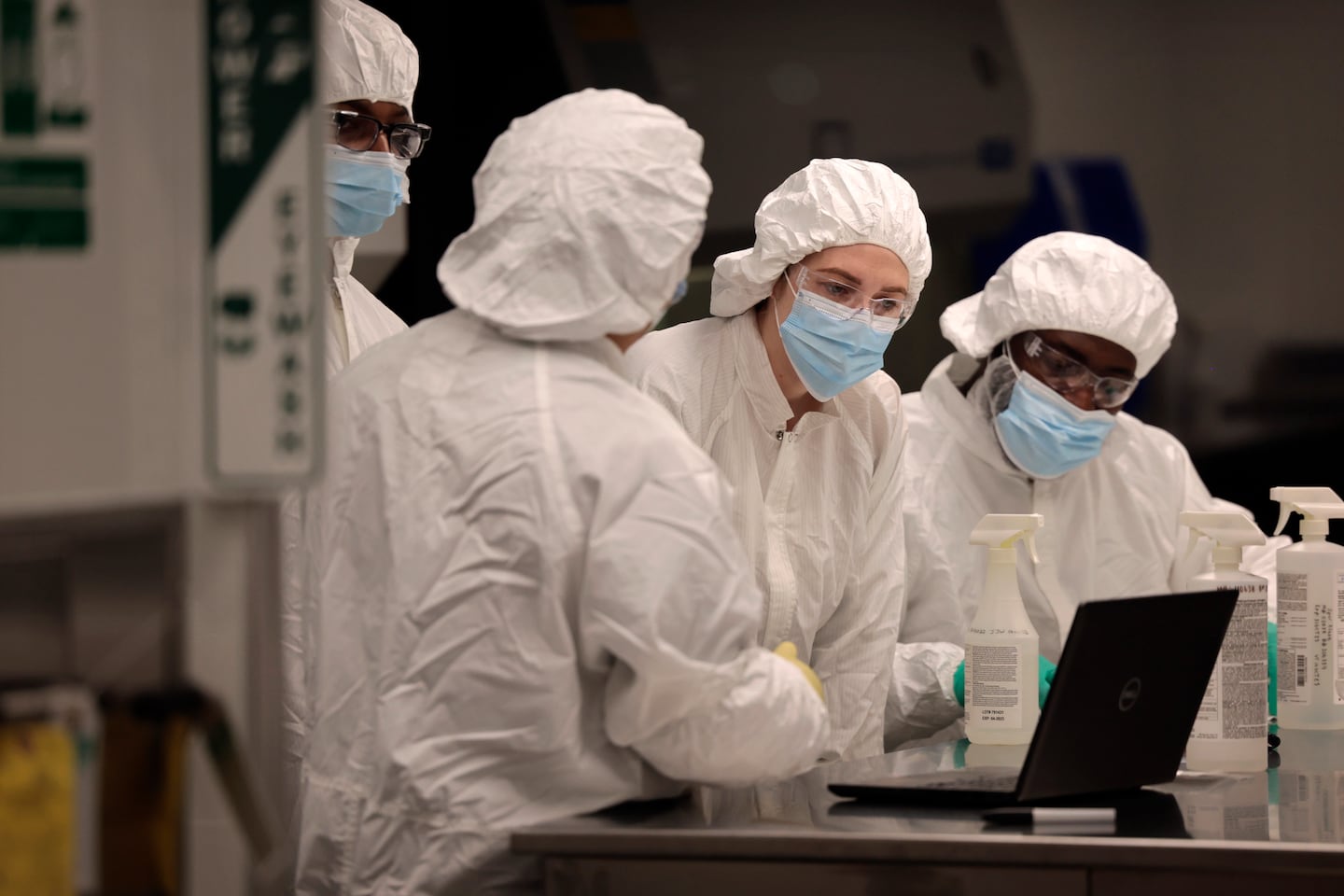 A training session at the Thermo Fisher biomanufacturing plant in Cambridge in 2023.Craig F. Walker/Globe Staff
David R. Lampe, the book’s editor, chalked up Massachusetts’ resurgence a half-century ago to “a remarkable combination of favorable conditions that emerged from the particular culture of the region and by chance.”
That might have been so, but we can’t wait for good fortune to strike again.
Government, academic, and industry leaders need to come together to set priorities, as they did in the 1970s and 1980s. This will demand practical policies, public-private sector collaboration, and honest soul-searching.
We must stop ignoring the alarm, concede we are in trouble, and work fast.
Larry Edelman can be reached at larry.edelman@globe.com.