
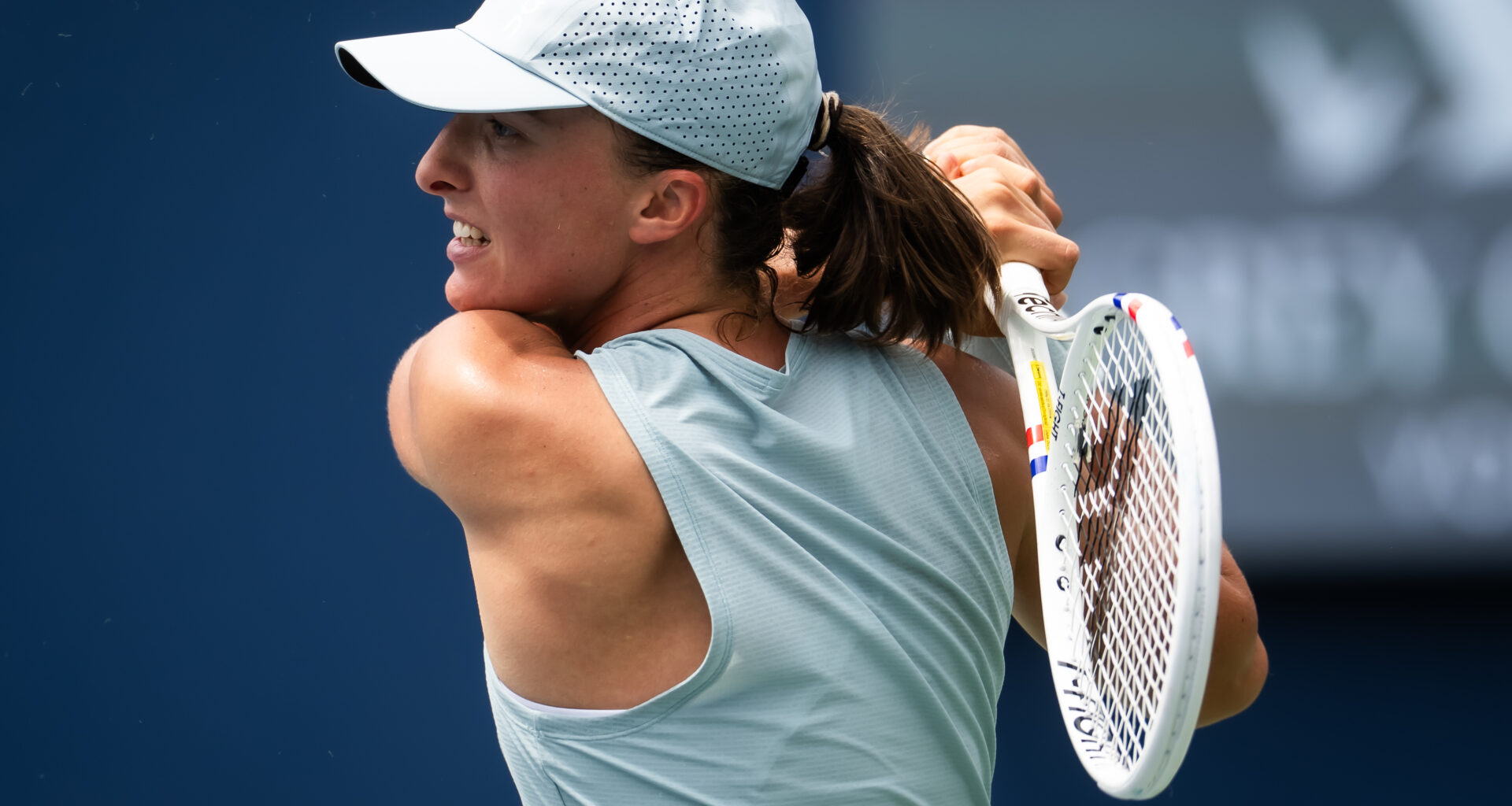
For the second round in a row, No. 7 seed Iga Swiatek conceded just three games to advance at the National Bank Open. The 2023 semifinalist sped past Viktorija Golubic 6-2, 6-1 in 66 minutes to book her place in the fourth round.
Golubic occupies a rare place in Swiatek’s career lore: she’s the only player who has ever defeated the Pole in the first round of a Grand Slam. But that was back at Wimbledon 2019, when Swiatek was just 18 years old. The former World No. 1 has not lost to Golubic in three matches since, and conceded just five games to her in their last two encounters.
“For sure it was a good day, and I’m really happy with the way I played,” Swiatek said in her on-court interview. “Even though the first game wasn’t super smooth, I knew I can start from the beginning, and then it went my way and I could find my rhythm.”
Swiatek will next face either No. 10 seed Marta Kostyuk or No. 19 seed Madison Keys as she bids to reach her second quarterfinal in Canada.
Drop shots provide highlights for both: Though Swiatek dropped serve in the first game of the match, once she had broken back immediately the contest was largely one-way traffic. The six-time major champion landed 18 winners to Golubic’s five and conceded just 14 points on serve — including that opening break.
But there were still some spectacular moments from both players to entertain the Toronto crowd. Golubic came up with the first, delivering enthralling variety and finishing with a half-volleyed pickup pass in a 25-stroke first-set exchange to hold for the first time. Swiatek may have been inspired: the 25-year-old has eschewed the drop shot for many years, but she came up with a brilliant one en route to breaking Golubic for 2-0 in the second set.
For the most part, though, Swiatek managed to keep a lid on Golubic’s variety and shotmaking abilities.
“I think I played back her slice pretty well, so the change of rhythm didn’t bother me that much,” she said in her press conference. “I tried to pick the right balls to attack because I was controlling the pace, it was just about the decision making.”