
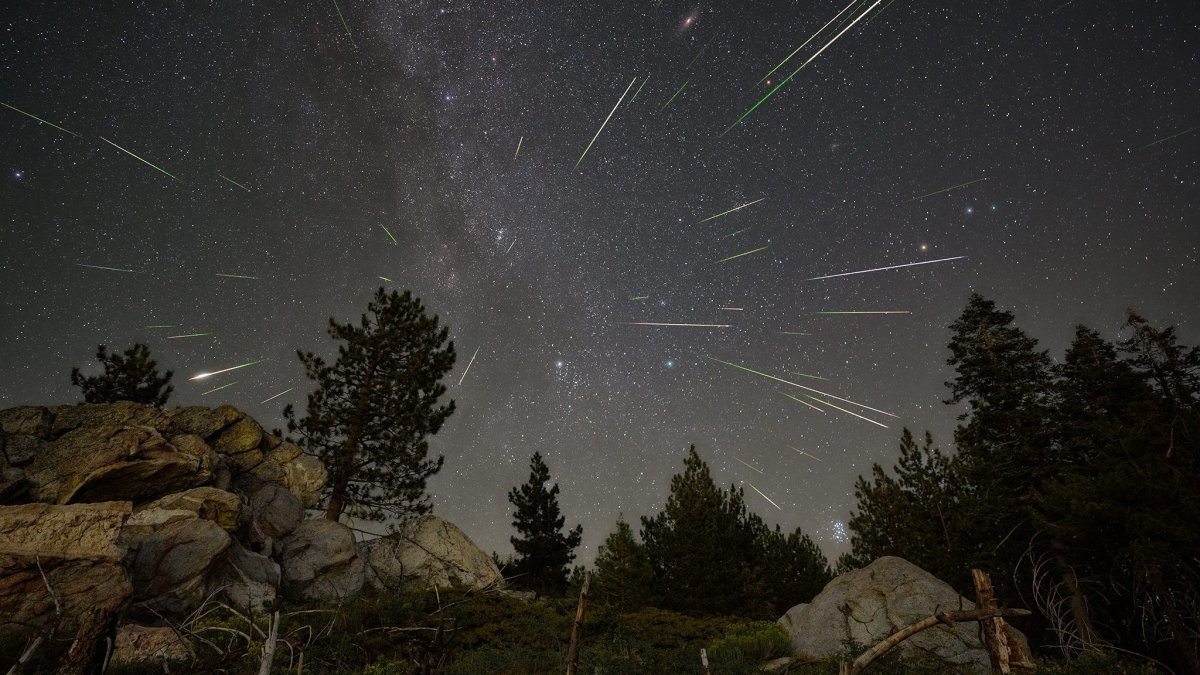
One of the year’s most impressive meteor showers is set to peak in the coming days, delivering a memorable celestial display.
The Perseid meteor shower, widely considered one of the best meteor showers of the year, will peak on the mornings of Aug. 12 and 13, unleashing between 50 and 100 meteors per hour.
According to NASA, the Perseids are especially known for their fireballs, larger bursts of light and color that can last longer than an average meteor streak.
For the best viewing, it’s recommended you venture outdoors early on Aug. 12 and 13. Aug. 14 might be a good option too, though Earthsky.org noted the Perseids typically fall off rapidly after their peak.
This year’s meteor shower will bring a major advantage for skywatchers.
A new moon will coincide with the shower’s peak, providing dark skies and excellent viewing conditions before the sun rises.
You may have gotten a glimpse of the Perseids already, as they’ve been soaring across the sky since mid-July.
The show won’t end with the peak. Meteor activity is expected to continue until Sept. 1.
So, what causes the Perseid meteor shower?
According to NASA, the Perseid meteor shower occurs each summer when the Earth travels through the debris of Comet 109P/Swift-Tuttle, which orbits the sun once every 133 years.
Its nucleus is estimated to be about 16 miles wide, roughly twice the size of the object that is thought to have caused the extinction of dinosaurs.
Like other comets, Comet 109P/Swift-Tuttle leaves behind debris each time it passes through the Solar System. As the Earth moves through it, the debris encounters resistance from its atmosphere, causing it to burn up in spectacular displays.
How can I see the Perseid meteor shower?
The farther away you are from the city, the better the chances are of seeing the most meteors. According to the Adler Planetarium, light pollution in urban and suburban locations can overwhelm the numerous fainter meteors.
Not sure what to look for? The meteors appear as quick streaks of light soaring through the sky, and they only last for a very short time.
To catch the best view, you might need to do some waiting.
Astronomers at the Adler Planetarium suggest you go outside, face east and give your eyes roughly 20 to 30 minutes to adjust to the dark.
You’ll want to keep watch across as much of the sky as possible. Some meteors may be directly in front of you, while others could be to your left, and some may be to your right – or even behind you.
Thinking about using a telescope or binoculars?
You actually won’t need them. You’ll have the best chance of spotting meteors by taking in the widest view possible.