
This Wednesday will be a busy one for skywatchers, with celestial events during both the day and night. The first comes in the afternoon — a partial solar eclipse — followed late at night and into the first light of Thursday by the peak of the Perseid meteor shower.
The meteor shower
The more impressive local event requires nothing more elaborate than a dark sky, a beach chair and your eyes. During the overnight hours of Aug. 12-13, the annual Perseid meteor shower is expected to peak. The Perseids are among the most reliable and prolific of the year’s annual meteor displays.
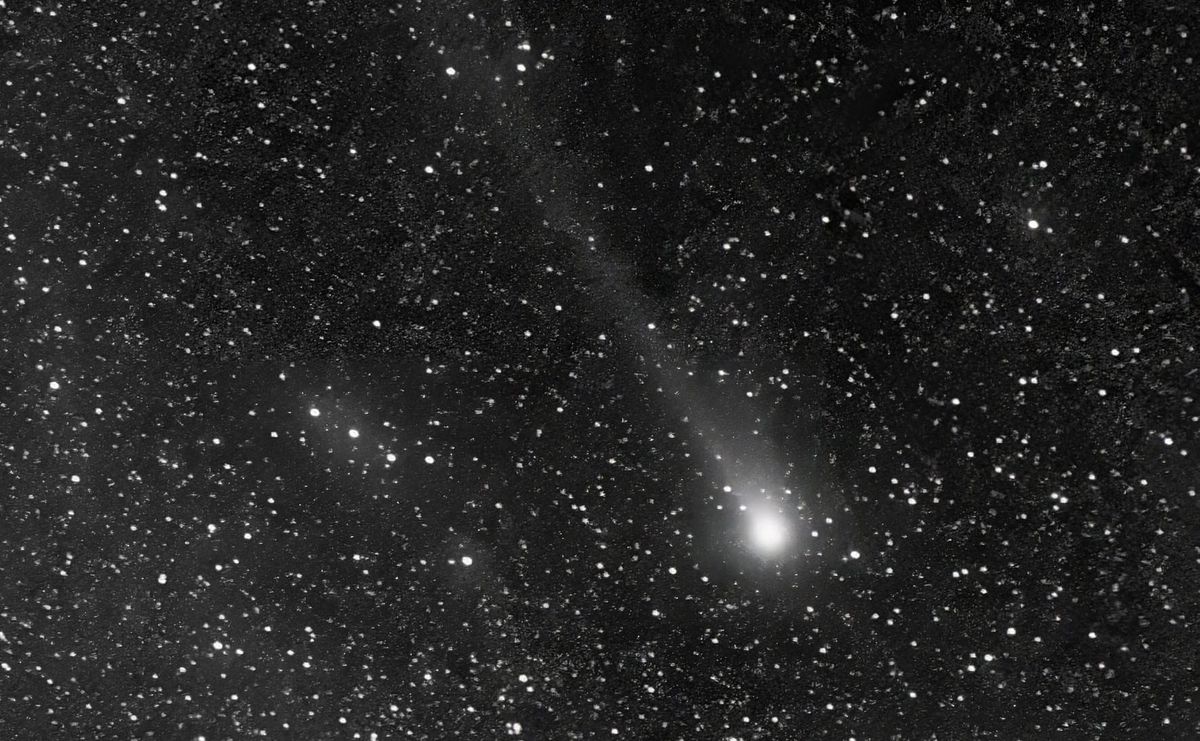
The shower occurs as Earth passes through the densest concentration of tiny particles shed along the orbital path of Comet 109P/Swift-Tuttle, which circles the sun about once every 135 years. The shower can be quite prolific, with up to 50 meteors per hour visible from rural locations and as many as 100 per hour from especially dark sites.
The meteors appear to “radiate” from a location in the constellation Perseus, the Hero, which rises above the northeast horizon around 10 p.m. After midnight, the radiant climbs higher in the sky and Earth turns more directly into the meteoroid stream, making midnight to dawn the best time to watch. Thanks to the earlier solar eclipse, there won’t be any moonlight to interfere with the view.
The best way to see the Perseids is simply to lie back in a beach chair and look up. Binoculars and telescopes won’t help because meteors can streak across any part of the sky.
Perseid meteors are very fast, often crossing the sky in just a second or two, and some can be quite bright. The brightest may leave ghostly trails of light that linger for several seconds.
One complication Wednesday night may be clouds. Current projections call for around 50 percent cloud cover, which won’t make for ideal skywatching, but there should still be enough breaks in the clouds to spot some meteors.
While the shower peaks overnight Aug. 12-13, Perseids can be seen at reduced rates for several nights before and after the peak.
If you miss them on Wednesday night, come out to Sky Meadows State Park for their monthly “Astronomy For Everyone” program on Saturday night. You’re likely to catch a few Perseids “stragglers”, and you’ll be able to explore lots of other celestial sights through telescopes provided by the Northern Virginia Astronomy Club.
The eclipse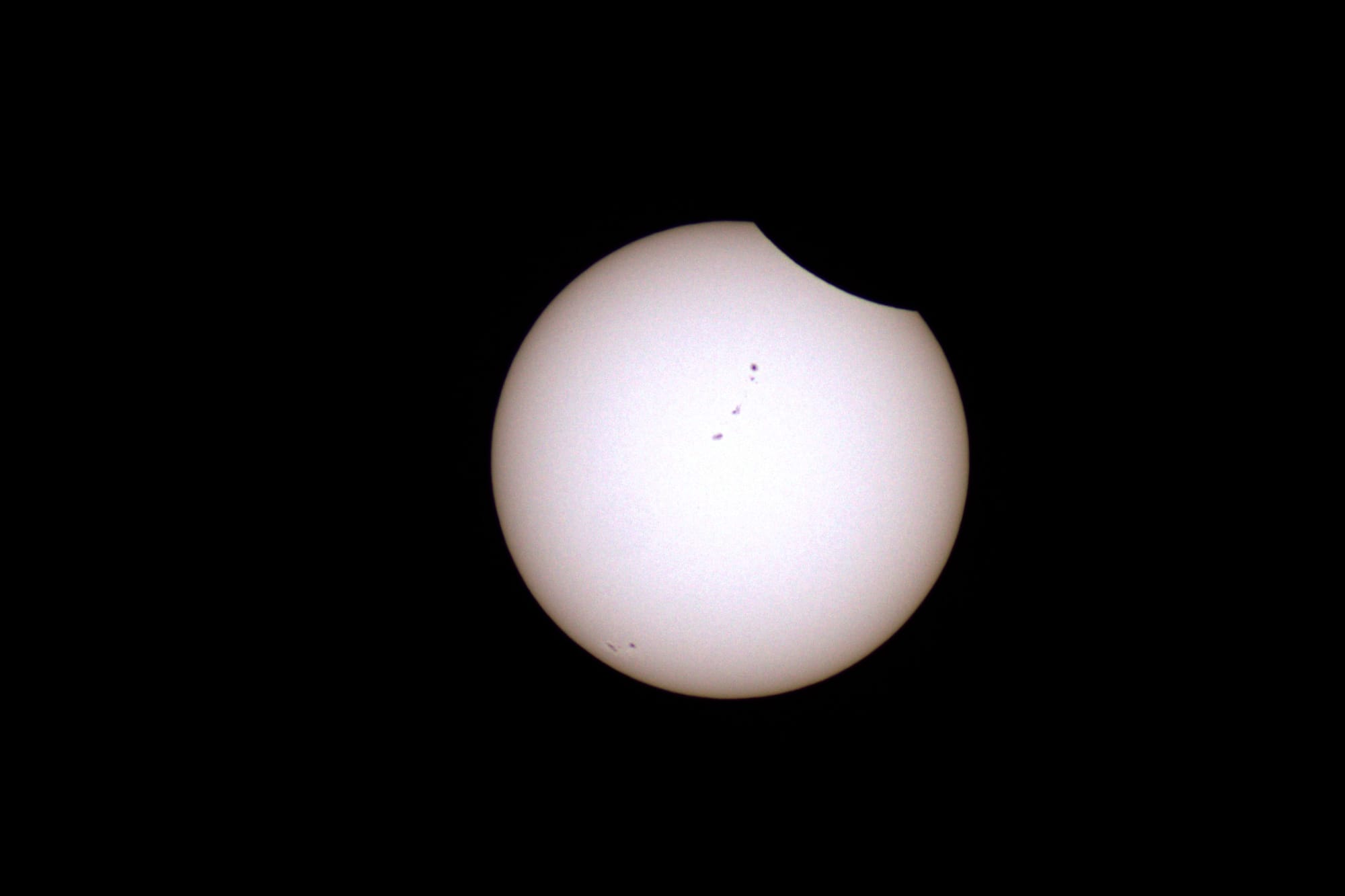 Photo from the early stages of the Aug. 21, 2017 total eclipse in Idaoh. It shows approximately what the Sun will look like at mid-eclipse on Wednesday in DC. (Geoff Chester)ono
If you happen to find yourself along the east coast of Greenland, western Iceland or northern Spain, you’ll be treated to one of the most spectacular sights in the natural world: a total eclipse of the sun by the moon.
Here in DC, we’ll see only a very small partial eclipse between 1:18 and 2:27 p.m., with maximum eclipse at 1:53 p.m. Most of us won’t notice any change in the brightness of the sky. But with a properly filtered telescope, eclipse glasses left over from the 2024 eclipse that crossed the United States, or a homemade pinhole projector, you’ll be able to see a small bite taken out of the sun’s northeastern edge. At maximum eclipse, just 3.5 percent of the sun will be obscured.
Jason Samenow contributed to this report.