
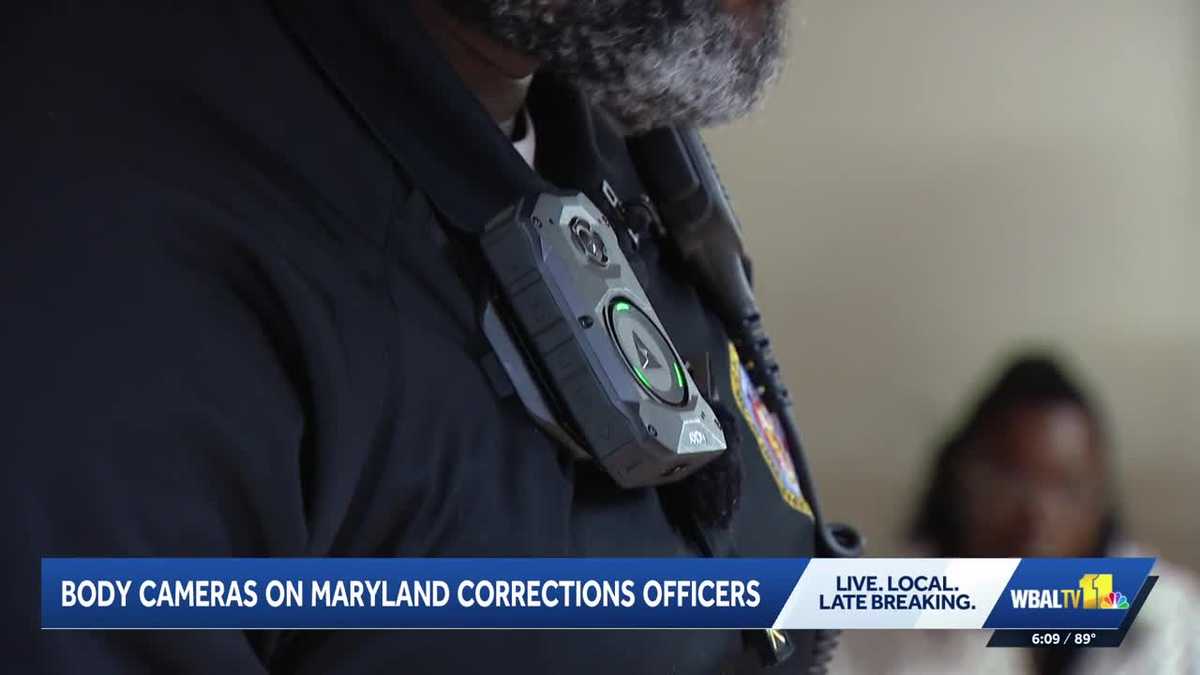
Body-worn cameras make major impact in Maryland’s Department of Corrections
 BALTIMORE —
It may have started as a pilot program, but as of last month, Maryland corrections officers now wear body cameras on the job.
Studies show the tech can decrease physical confrontations by nearly 50%, and WBAL-TV 11 News got a demonstration at Central Booking in East Baltimore.
The state signed a ten-year contract that costs taxpayers $4.1 million each year. Officials said it’s money well spent based on the positive impact the cameras are already making.
At the demonstration, a video was shown of a correctional officer’s point of view on their way to extract an inmate from their cell. The rare glimpse in real time is through a new body-worn camera that corrections officers throughout the state are now equipped with.
These devices signal a new era inside state corrections facilities as body-worn cameras are expected to enhance safety, increase transparency and accountability. David Greene is the deputy secretary of operations for the Maryland Department of Corrections.
“The presence of a camera during an incident in and of itself acts as a deterrent, minimizing or reducing a violent event before it occurs,” Greene said. “It gives our staff an opportunity to prove and show that they are in fact doing what they are supposed to be doing, and it helps to reduce false allegations.”
Since the cameras went statewide on July 2, authorities said the number of assaults has dropped 34% in the month of July. States like Virginia, Florida and Ohio have seen even larger reductions in inmate injuries and other categories.
Virginia has seen a 59% reduction in inmate injuries and a 45% decline in use of force incidents. Florida reports a 70% drop in excessive force complaints. While Ohio has seen a 50% reduction in time spent on investigations.
Corrections officers said the cameras make them feel safer, and they provide unbiased documentation of inmate interactions. Shawn Elliott is a corrections officer in Maryland.
“It deters the cause of individuals from doing certain things without the cameras. So, once they see the camera, they tend to change their actions,” Elliott said.
The body-worn cameras are integrated with stationary closed-circuit ones. The two combined provide full context for any event. Policies are in place for when recording is mandatory, discretionary and prohibited.
“We expect the implementation of these body cameras will reduce violent incidents inside our correctional facilities,” Greene said.
“I do the infractions for the institution adjustment hearing officer, and the body cameras helped me tremendously with getting my cases,” Elliott said.