
MIAMI — Amid a position tight against what stands as a hard cap, the Miami Heat found themselves with one fewer salary mechanism at 11:59 p.m. on Monday night.
That’s when the $5.6 million trade exception created by last summer’s trade of Haywood Highsmith to the Brooklyn Nets expired. While the Highsmith exception reached a calendar year on Saturday, such exceptions do not expire until the next business day.
With that expiration, the Heat no longer hold any trade exceptions, with about $10 million to spend under their $209 million payroll limit for 2026-27, that hard cap created by the acquisition of Giannis Antetokounmpo.
Still at the Heat’s disposal to fill out their standard roster are:
— The remaining $9 million of their mid-level exception, with the other $6.1 million utilized to sign Denver Nuggets free-agent guard Tim Hardaway Jr.
— The $5.8 million bi-annual exception, which cannot be utilized in consecutive seasons.
— And salaries at the NBA minimum, which for 2026-27 count $2.5 million against the cap, regardless of the actual salary on the sliding tenure scale.
The Heat currently have 12 players under standard contract, allowed to carry up to 15 such players during the regular season. The Heat are expected to carry 14 such contracts at their Oct. 21 start of the season, due to their position against the hard cap.
Teams are allowed to carry up to 21 players prior to the start of the regular season.
Under standard contract to the Heat are Bam Adebayo, Antetokounmpo, Ryan Conwell, Simone Fontecchio, Myron Gardner, Hardaway, Nikola Jovic, Pelle Larsson, Davion Mitchell, Bobby Portis Jr., Dru Smith and Andrew Wiggins.
Under two-way contracts to the Heat are Tre Donaldson and Vlad Goldin, with teams allowed to carry up to three players under such contracts, those salaries not counting against the cap.
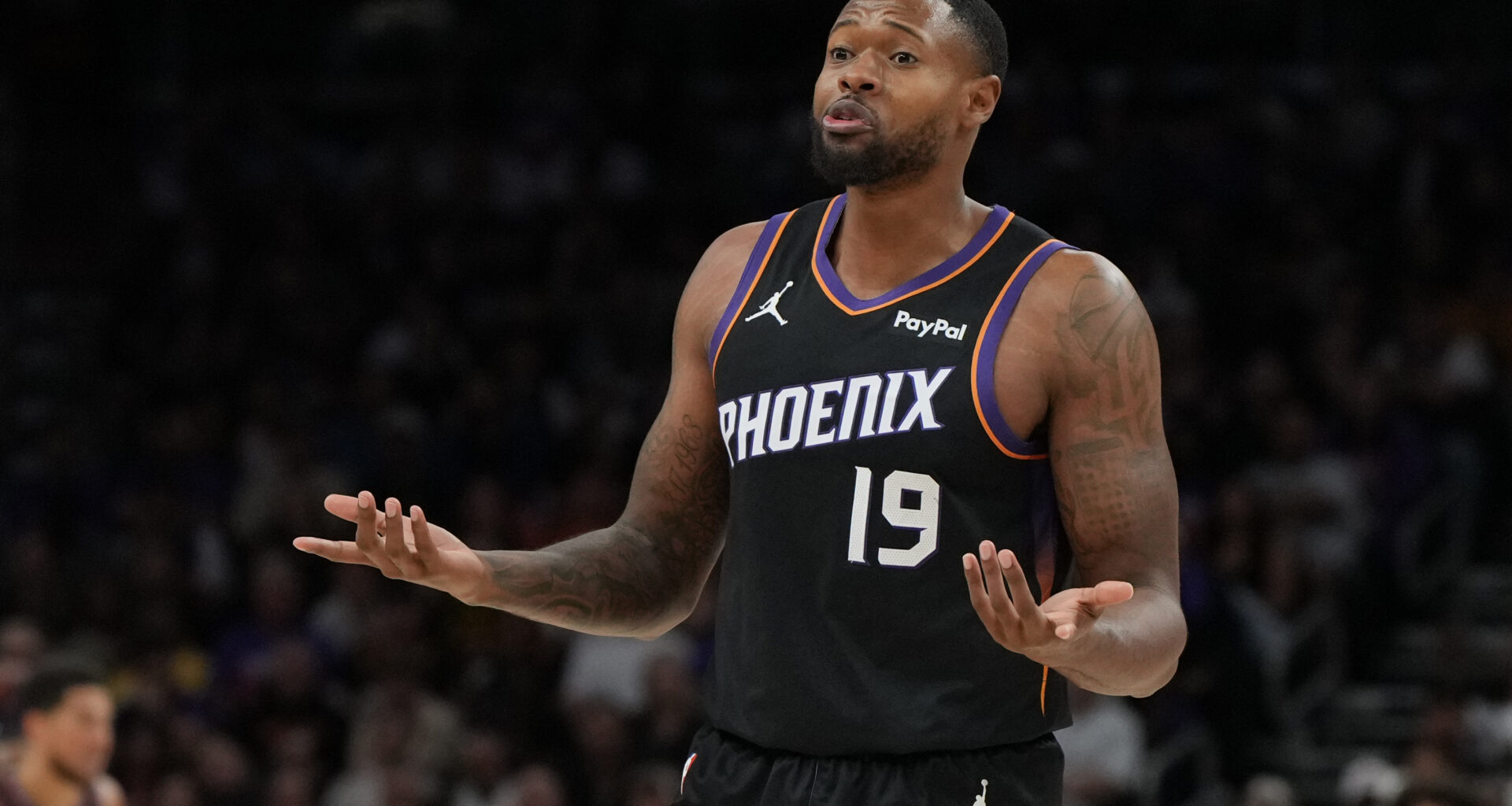
For the Heat, the expiration of the trade exception for Highsmith, who has re-signed with the Phoenix Suns after being waived by them last week, continues a largely passive approach with the mechanism.
The most notable utilization of a trade exception was the Heat using the one gained last summer with the trade of Duncan Robinson to the Detroit Pistons, that $16.8 million exception utilized to take in Portis as part of the Antetokounmpo trade that sent out Tyler Herro, Kel’el Ware, Jaime Jaquez Jr., Kasparas Jakucionis and draft capital.
Otherwise, the Heat have allowed almost all of their recent trade exceptions to expire.
$7.8 million, expired on Feb. 6, 2026: This was the salary difference generated in the trade that sent Jimmy Butler to the Golden State Warriors. A fraction partially utilized by the Heat on the acquisition of Fontecchio.
$3.1 million, expired on Feb. 6, 2026: This was from sending Josh Richardson to the Utah Jazz as part of that Butler trade.
$2.1 million, expired on Dec. 15, 2025: This was from trading Thomas Bryant to the Indiana Pacers.
$6.5 million, expired on Jan. 23, 2025: This was from sending Kyle Lowry to the Charlotte Hornets for Terry Rozier.
$2.1 million, expired on Dec. 15, 2025: This was from trading Thomas Bryant to the Indiana Pacers.
$7.3 million, expired on July 6, 2024: This was from sending Max Strus to the Cleveland Cavaliers in a sign-and-trade transaction.
$9.5 million, expired on July 6, 2024: This was from the salary dump of Victor Oladipo to the Oklahoma City Thunder.
$1.8 million, expired on Feb. 9, 2023: This was from the salary dump of K.Z. Okpala to the Thunder.
$4.7 million, expired on Feb. 9, 2024: This was from the salary dump of Dewayne Dedmon to the San Antonio Spurs.
$7.5 million, expired on March 22, 2021: This was from the multi-player deal that sent Justise Winslow, Dion Waiters and James Johnson to the Memphis Grizzlies.
$6.3 million, expired on Feb. 6, 2020: This was from the salary dump of Tyler Johnson and Wayne Ellington to the Phoenix Suns.
HEAT DOCTOR ROLE
Miami Heat team physician Harlan Selesnick has been appointed by the National Basketball Association Physicians Association as its next president, after serving as vice president for one year. He previously served as president from 1999 through 2001 and becomes the first two-time president of the organization.
Selesnick will continue in his role with the Heat, having served as team physician since the franchise’s inception in 1988.