
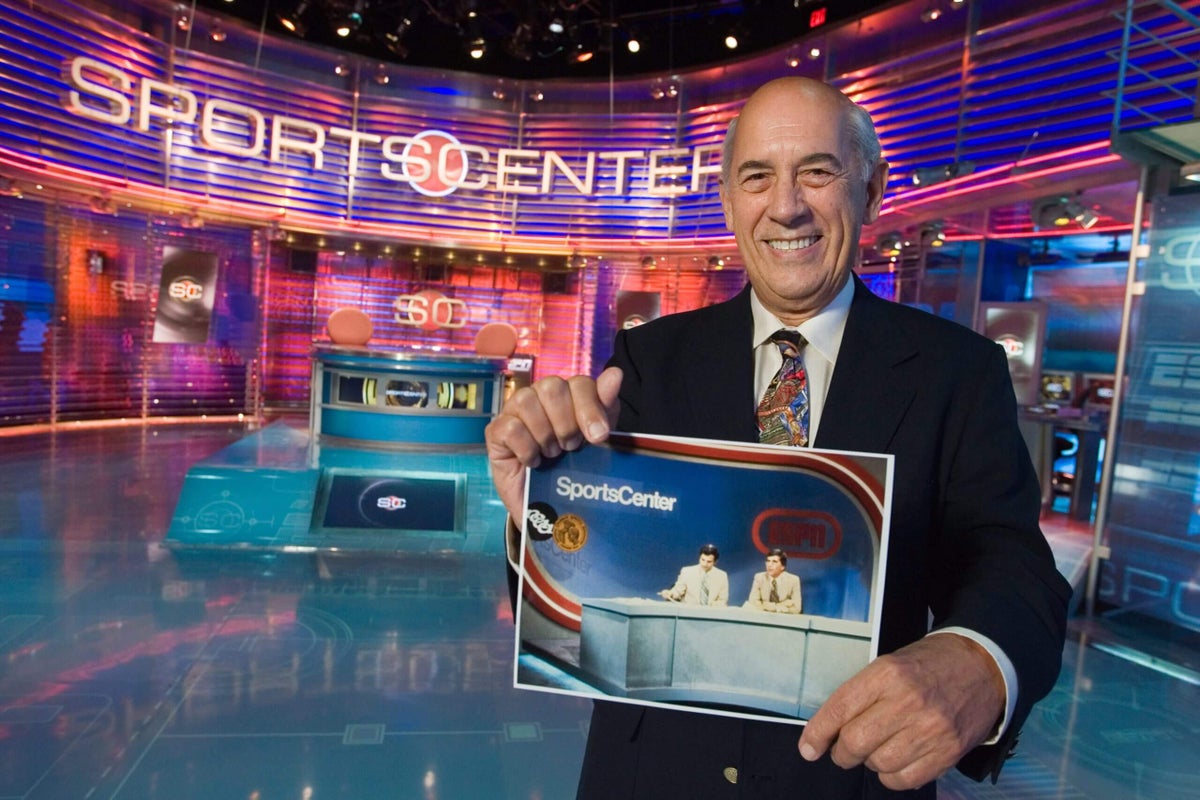
The essence of what ESPN has meant to so many viewers begins with the man who came up with the idea of the Entertainment and Sports Programming Network in 1979. It was a family affair.
Bill Rasmussen founded ESPN with his son, Scott. They gave the network the DNA of a fan. Bill was a child of the end of the Depression but developed a positive attitude that sang, “There is always next year.”
You have to own a die-hard’s optimism to get knocked down after being fired as the communications director of the New England Whalers and then choose to max out your credit cards to combine it with a $9,000 advance to acquire the emerging – but far from a sure thing – satellite technology.
The faith in ESPN Rasmussen had may seem obvious today. Nearly a half century ago, though, there were a lot of cable operators that refused to give Rasmussen a second meeting. Boy, were they wrong, and Rasmussen, who passed away on Tuesday at 93, left a legacy that touched anyone who worked or watched the network.
Over its 47 years, ESPN has risen to all-time media heights. At one point, it branded itself the “Worldwide Leader in Sports.” It was as accurate as it was obnoxious.
ESPN, as a billion-dollar cash cow, would fuel Disney’s growth in the 2000s. It would become a lightning rod, a part of the political discussion, with opinions on it coming from every direction. It began without fanfare.
In 1979, the world was in turmoil and in the midst of change. There would be peril with the Iranian Hostage Crisis and global energy tumult. Meanwhile, Margaret Thatcher would become the first female Prime Minister of the United Kingdom, and Sony debuted a listening device called the Walkman.
In sports, 1979 belonged to Pittsburgh, with Mean Joe Greene’s Steelers winning their dynasty-completing fourth Super Bowl and the “We are Family” Pirates coming back from a 3-1 deficit to beat the Baltimore Orioles.
The year would also end up belonging to Bristol, a small town in Connecticut that was between New York and Boston, but – big time media-wise – couldn’t be any further from them.
ESPN would go on to become a dynasty, like the Steelers, but it was beloved because Rasmussen set up something akin to Willie “Pops” Stargell’s Pirates.
In its opening moments in September of 1979, ESPN correctly touted itself as “heaven” for sports fans. It was 24/7, with folks on the air like Chris Berman, Dick Vitale and Bob Ley who loved the games as much as anyone on the other side of the screen. Rasmussen created a template after years of thought.
Three years earlier, Rasmussen had bought time on a religious channel in Connecticut to air a half-hour show called “Sports Only.” The program led to maybe the most iconic sports show in American history, “SportsCenter.”
In the digital age, SportsCenter is not as dominant as it once was for the YouTube/TikTok generations. Maybe ESPN is a fading dynasty, but it is still a dynasty nonetheless.
Over the next 12 months, ESPN may have the greatest event portfolio any television platform has had in history. The Super Bowl, the NBA Finals, the College Football Championship and much more will be on the network. Banking billions is old hat in Bristol.
As for Rasmussen, he never made a lot of money off ESPN. He sold 85 percent of the company to Getty Oil before the lights were officially turned on Sept. 7, 1979. According to longtime ESPN PR man and the network’s historian, Mike Soltys, Rasmussen was never bitter about his missed fortune.
That’s the beauty and the purity of Rasmussen’s legacy. Ultimately, we don’t want sports to be about the money.
The year 1979 in sports was about family and dynasties. Rasmussen began one in Bristol when no one was looking. For so many of us, ESPN has been like family – Rasmussen was “Pops.”