
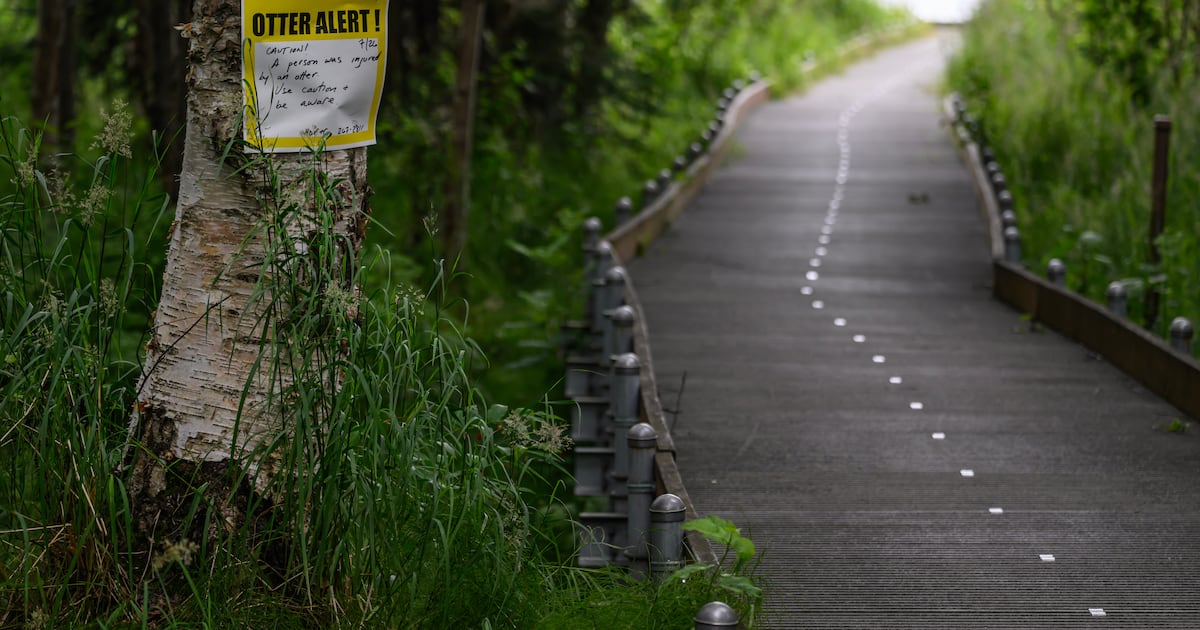
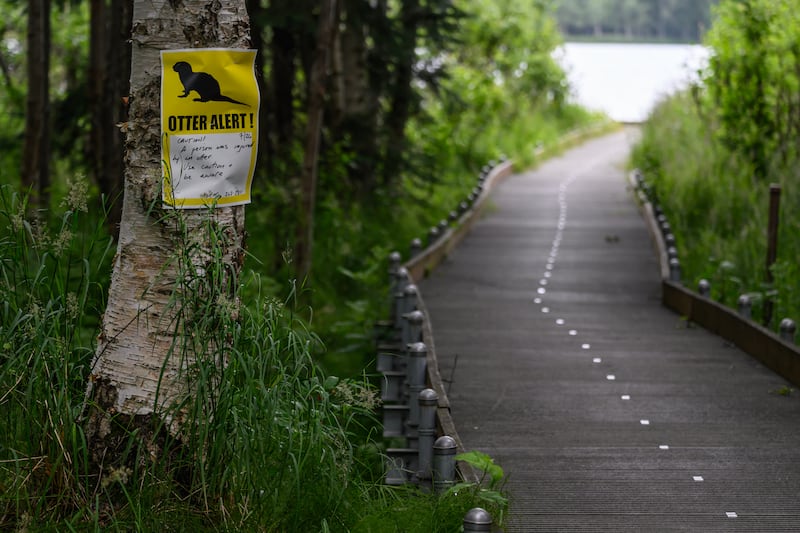
 An Alaska Department of Fish and Game sign warns of potential danger from an otter at Sand Lake in Anchorage on July 28. (Marc Lester / ADN)
Wildlife officials are warning people to avoid river otters after two recent attacks in Anchorage, including one in the Taku/Campbell area this week.
The Alaska Department of Fish and Game urged people to watch out for aggressive animals in an alert Wednesday, a day after a man was injured when an otter approached him and a group of children along Campbell Creek near Taku Park.
Late last month, a child on a paddleboard was bitten during an encounter with a group of four river otters on Sand Lake, according to the statement. Fish and Game officials said otters also acted aggressively with a dog, which wasn’t injured, in the same area.
River otters are found throughout Anchorage’s lakes and streams, often in groups, and can be territorial, biologists say. They can travel both overland and by using Anchorage’s connected bodies of water.
Fish and Game officials said in Wednesday’s statement that they had few details about the otters involved in the encounter this week, as well as their group composition.
A Fish and Game biologist didn’t immediately respond to messages Wednesday afternoon.
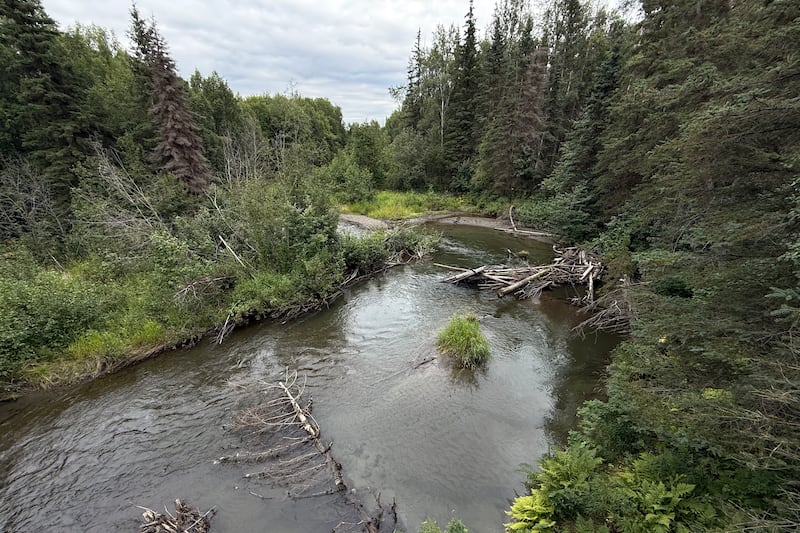 View of Campbell Creek from a pedestrian bridge near Taku Park on Wednesday, Aug. 19. (Bill Roth / ADN)
 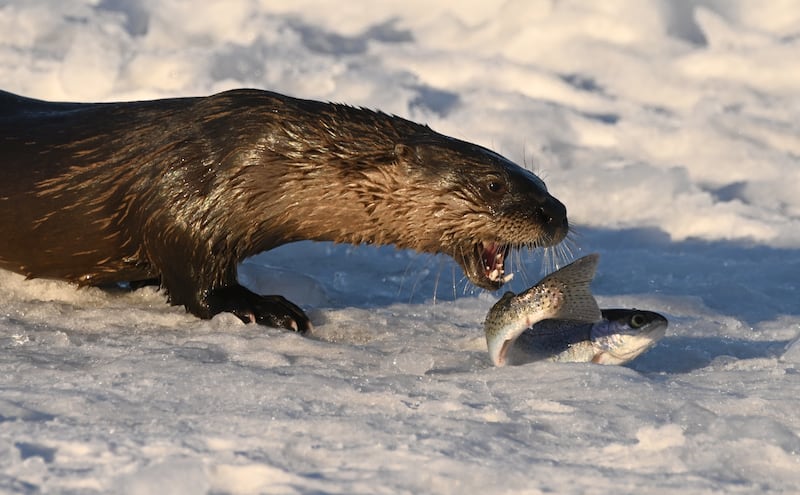 A river otter prepares to eat a rainbow trout it brought up through an ice fishing hole in a small lake in Anchorage in March 2023. (Bob Hallinen photo)
Officials discouraged people with the semiaquatic mammals on their property from allowing otters to get access to water equipment like rafts, kayaks or paddleboards. Fish and Game also said pets should be kept away from river otters.
Biologists encourage the use of bear spray or loud noise to scare off river otters acting aggressively toward humans.
Officials asked people approached by a river otter to notify Fish and Game of the encounter using the agency’s online reporting tool after leaving the area.
River otters attacking dogs or humans near bodies of water in Anchorage isn’t unheard of, but it is rare, the agency said.
Rabies hasn’t been documented in river otters in Southcentral Alaska in recent years, though wildlife officials said there was a chance humans could contract the disease from an encounter with the animal.