
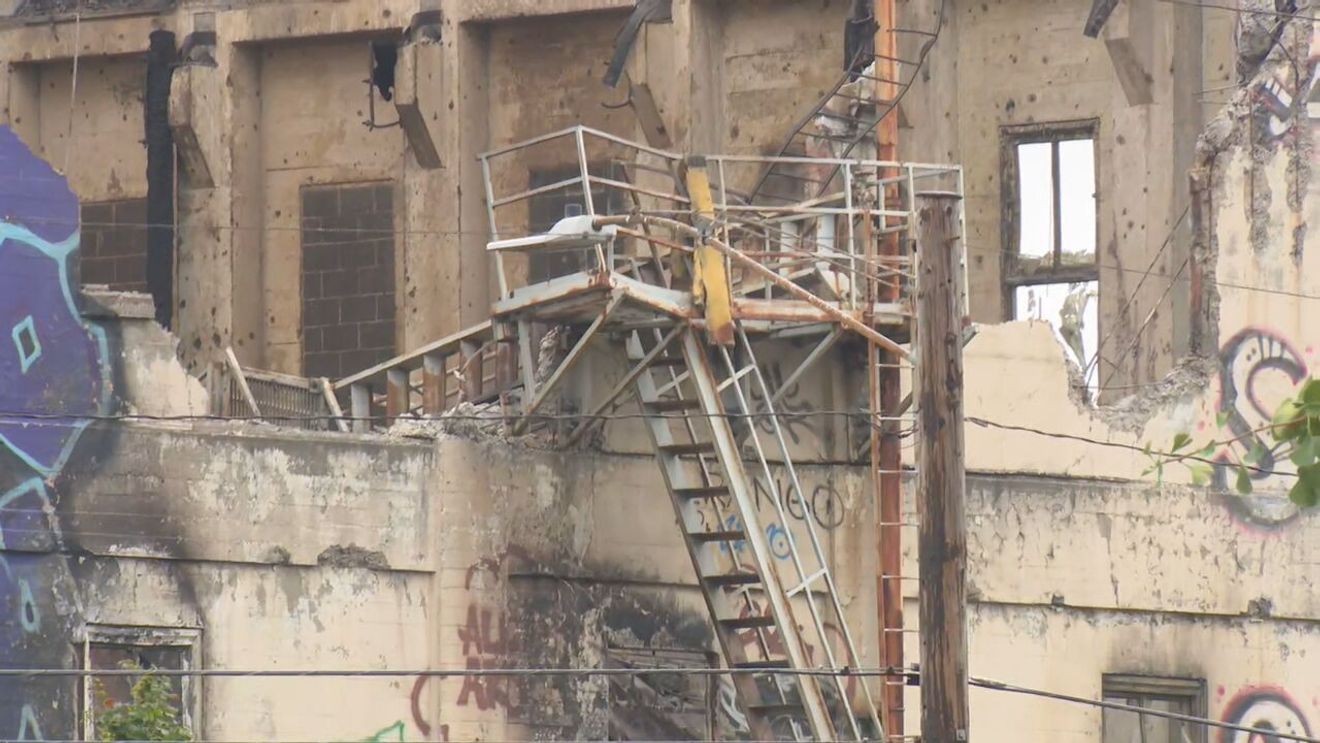
PORTLAND, Ore. (KATU) — The fire at Centennial Mills wasn’t just the loss of a piece of Portland history. It also raised concerns about potential exposure to hazardous materials, including asbestos and lead.
But the fire is also renewing questions about what happened during the decades the property sat largely undeveloped — and how much public money went into the site along the way.
KATU found the public investment stretches back decades. A September 2006 city report said that, by that point, “more than $12 million of tax increment and other funding” had been spent on the acquisition of Centennial Mills and improvements to the site and its buildings.
A city spokesperson confirmed to KATU that the more than $12 million was spent over roughly six years and involved public money.
Despite that investment, the city would spend years trying — and failing — to get a larger redevelopment project across the finish line.
Land-use and housing advocates say those years without redevelopment also carried an opportunity cost.
“That land has been sitting vacant for decades,” said Jeremiah Via with Strong Towns PDX. “There’s certainly a lot of lost taxable value that the city could use. I mean, you know, the city is in a budget crisis.”
Jennifer Shook, board president of Portland: Neighbors Welcome, said the city could have taken a more active role in working through the obstacles developers encountered.
“The city should have either kind of done more to pursue a partnership with a developer and figured out where those feasibility gaps were,” Shook said.
KATU pressed the city on why, after years of redevelopment efforts, none of those plans came to fruition.
KATU requested an interview with the city twice. Both requests were declined. Instead, a spokesperson provided a written statement that pointed to the complexity and expense involved in developing Centennial Mills.
“Extensive public investment, challenging site conditions, and federal, state, and local development obligations resulted in termination of several proposed developments,” the statement read in part.
The city ultimately sold Centennial Mills to a private developer in 2024, ending more than two decades of public ownership.
Now, following the fire, KATU is also asking city leaders what should be done differently to prevent another city-owned property from remaining undeveloped for decades.
KATU reached out to every city councilor representing the Centennial Mills area.
Councilor Olivia Clark’s team pointed KATU to a social media post from the councilor addressing the fire.
“This fire is yet another reminder of our urgent need to take action on vacant buildings,” Clark wrote in part.
For advocates, Centennial Mills now raises a broader question about what happens when redevelopment repeatedly stalls: not only what government spends trying to make a difficult property work, but what a city potentially gives up while valuable land remains unused.
SEE ALSO | Centennial Mills demolition draws spectators, concerns from nearby residents
City documents show officials initially planned to demolish the buildings and create a park. That plan was later abandoned as the city shifted its focus toward redeveloping the property. Private developers were brought in, but no project ultimately moved forward.
Meanwhile, parts of Centennial Mills continued to deteriorate. Some structures eventually reached the point where the city said demolition was necessary.
“The city should have either kind of done more to pursue a partnership with a developer and figured out where those feasibility gaps were and kind of tried to problem solve that with developers,” Shook said. “I’m not sure, you know, to what extent that was done originally.”
Shook acknowledged that redeveloping a site like Centennial Mills is not simple. Adaptive reuse of aging buildings can be more difficult and expensive than building from the ground up, particularly when developers have to balance preservation with the financial realities of a project.
Still, she believes local government has a role to play when projects struggle to become financially viable.
“I think the city has a role in helping developers succeed,” Shook said. “And I know that that can be hard in an environment where the city has a really limited budget.”
The city has also pointed to the complexity of the Centennial Mills property itself. City officials told KATU that there are numerous requirements involved in making development at the site work, in part because of its proximity to the Willamette River.
KATU has been seeking additional answers from the city about what happened during its years of ownership — including why its redevelopment efforts repeatedly failed and whether more could have been done to get a project across the finish line.
The questions come as viewers on KATU’s social media pages have raised their own questions about what Centennial Mills could have become — and why years of plans never materialized.
For Shook, the lesson extends beyond Centennial Mills. She said the city should identify what prevents vacant or deteriorating properties from being redeveloped and look for ways to help viable projects move forward.
Centennial Mills is now in private hands, but after more than two decades of public ownership, the question remains: whether Portland could have done more, sooner, to turn its plans for the waterfront property into reality.