
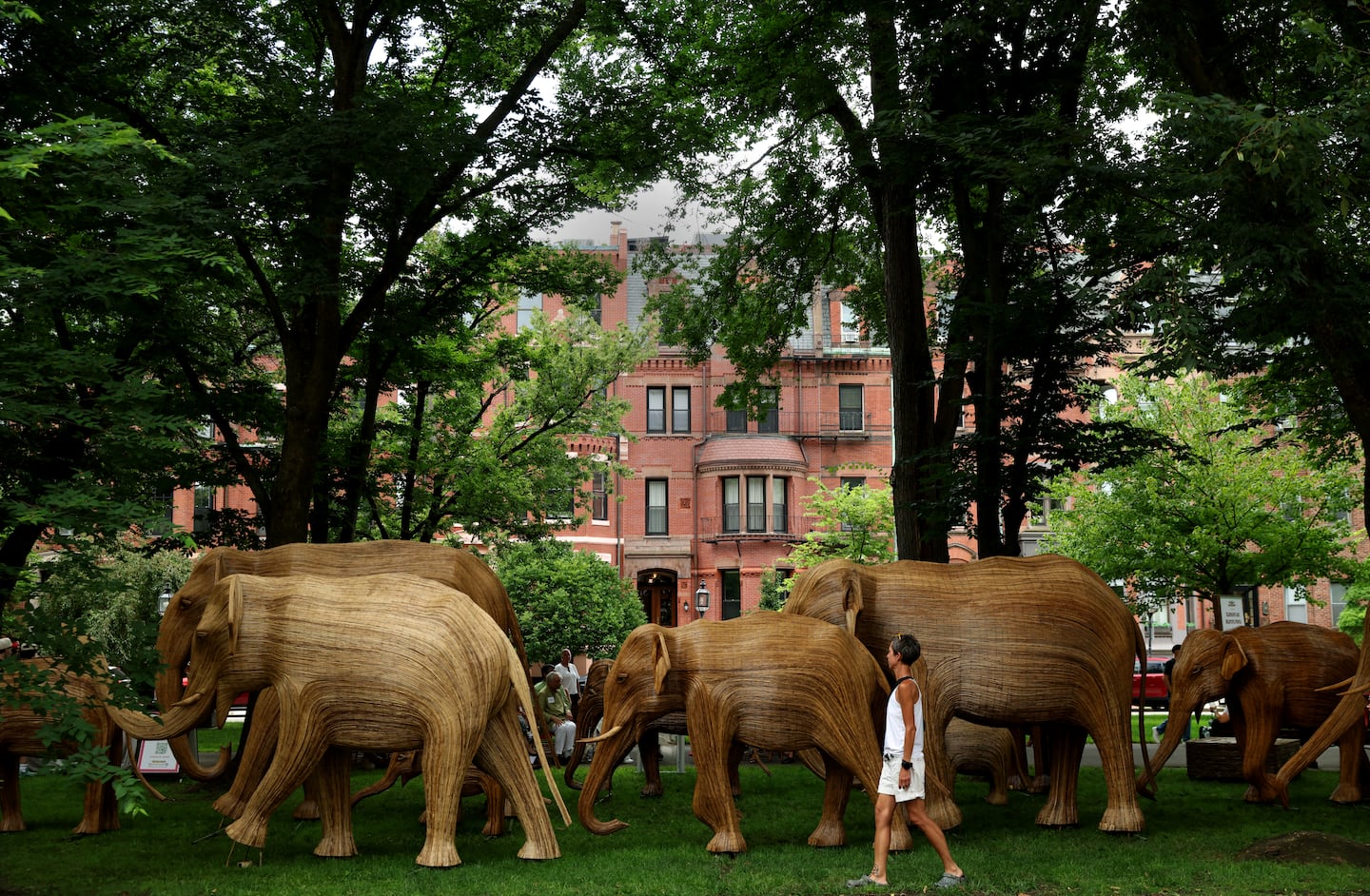
Perhaps the herd of 130 life-size elephant statues now calling it home is a sign it’s time to forget that — at least temporarily.
Boston’s Commonwealth Avenue is the latest stop for the traveling art exhibit known as The Great Elephant Migration, which aims to raise both funds for conservation efforts and awareness for the importance of human-wildlife coexistence.
Since the elephants arrived on Aug. 4 — situated on one side of the two-block stretch between Fairfield and Dartmouth streets — Boston residents and visitors have flocked to the area to take in the elephants, each of which was made by artists in India, in the image of a real wild elephant, and constructed with Lantana camara leaves, an invasive plant.
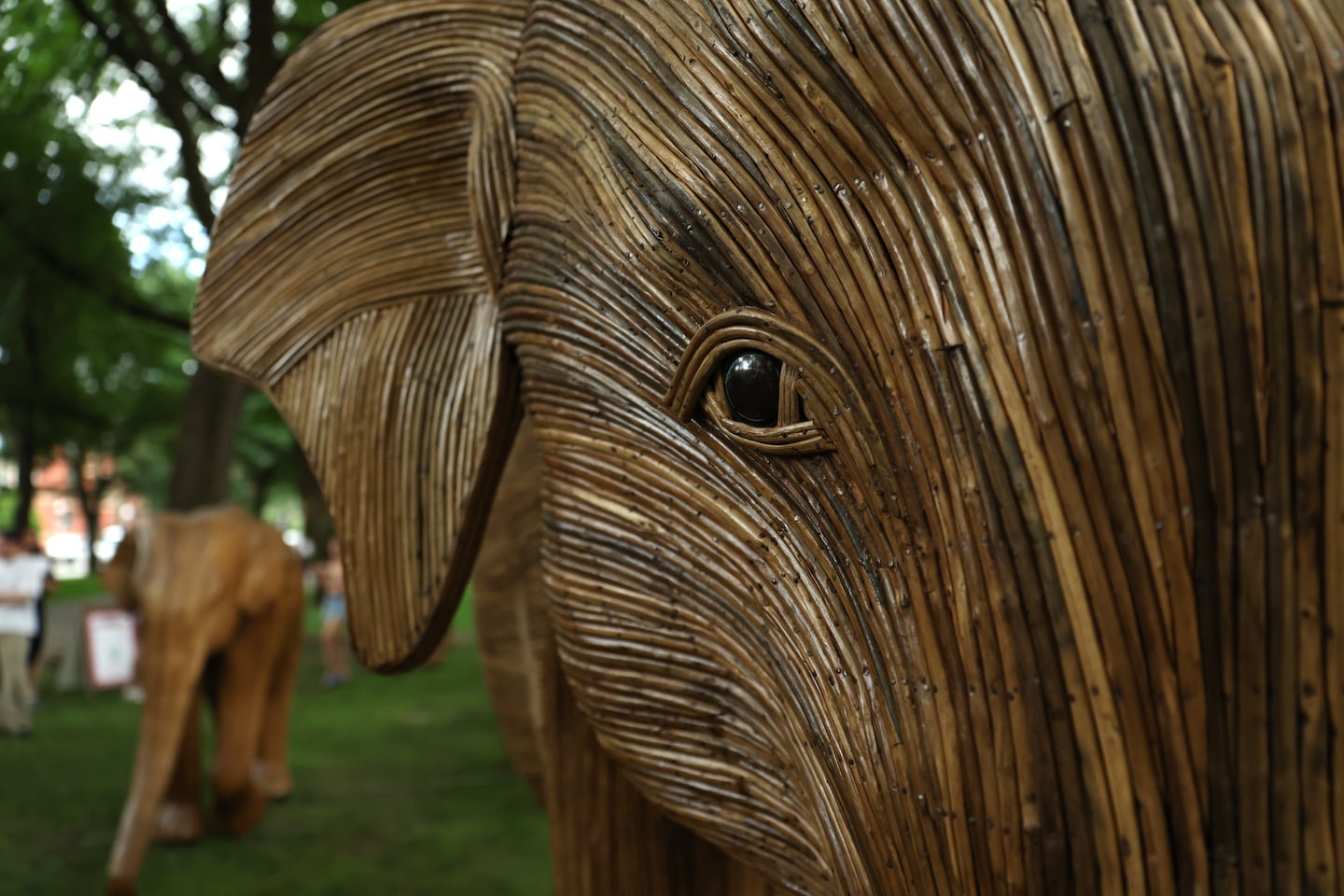 The 130 life-size elephant sculptures are handcrafted by Indigenous artisans from India’s Nilgiri Biosphere Reserve.Jonathan Wiggs/Globe Staff
Questioning outside forces has, for years, been the status quo in the Back Bay. The neighborhood’s well-heeled residents and the powerful neighborhood associations who protect their interests have long chafed at changes, big and small, be it shadows cast by a skyscraper, cannabis dispensaries, a bike lane in front of a mansion, or allowing for late night taco sales.
Past proposals to bring events or other aesthetic tweaks to Commonwealth Ave. have faced pushback, too, out of the desire to protect and preserve the historic, grand boulevard, acknowledged Meg Mainzer-Cohen, president of the Back Bay Association.
For example, she said, an annual pancake breakfast with local celebrity chefs was held on Commonwealth Ave. for many years, before being canceled because of concerns the event was damaging grass and tree roots on the mall.
But the Great Elephant Migration felt special, said Mainzer-Cohen, who first saw the display a few years ago in Newport, R.I.
She and leaders from a number of groups — including Meet Boston; the Boston Public Art Triennial; and the advocacy group Friends of the Public Garden — helped bring the display to Boston, and Commonwealth Avenue specifically.
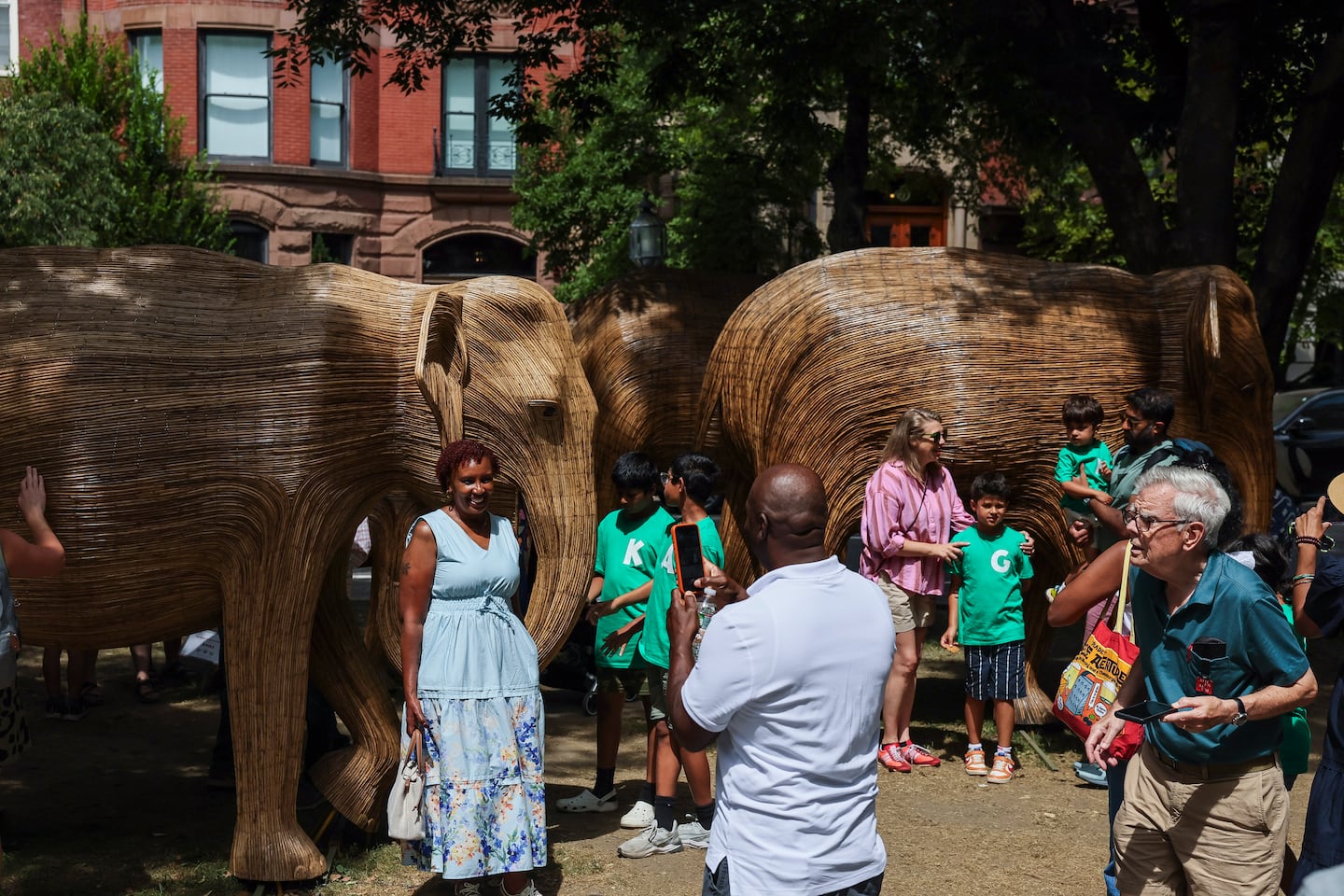 Visitors posed for photos among the elephant sculptures of The Great Elephant Migration along Commonwealth Avenue on July 10.Erin Clark/Globe Staff
“This was a good marriage of an extraordinarily special art installation in the setting of a very, very historic, profound location,” Mainzer-Cohen said.
Liza Meyer, president of Friends of the Public Garden, said there’s “not a lot of change that happens in that landscape.” But she argued that the display is also proof that any reputation Back Bay might have for resisting change is outdated.
Residents can value and appreciate the mall’s historic nature, she said, “and we can [also] experience delight in that space, introducing something new and temporary and engaging and thought-provoking.”
The neighborhood’s green light didn’t come without the necessary assurances, of course. The exhibit organizers, Meyer said, made an explicit commitment to replace and restore the grass on the mall after the display moves on.
Serge Savard, chair of the Neighborhood Association of the Back Bay, told the Globe the Great Elephant Migration organizers also provided his group with thorough traffic management and delivery plans — which he then shared with residents in advance.
He also said he has not heard a single complaint about the display, which is slated to stay until Sept. 13.
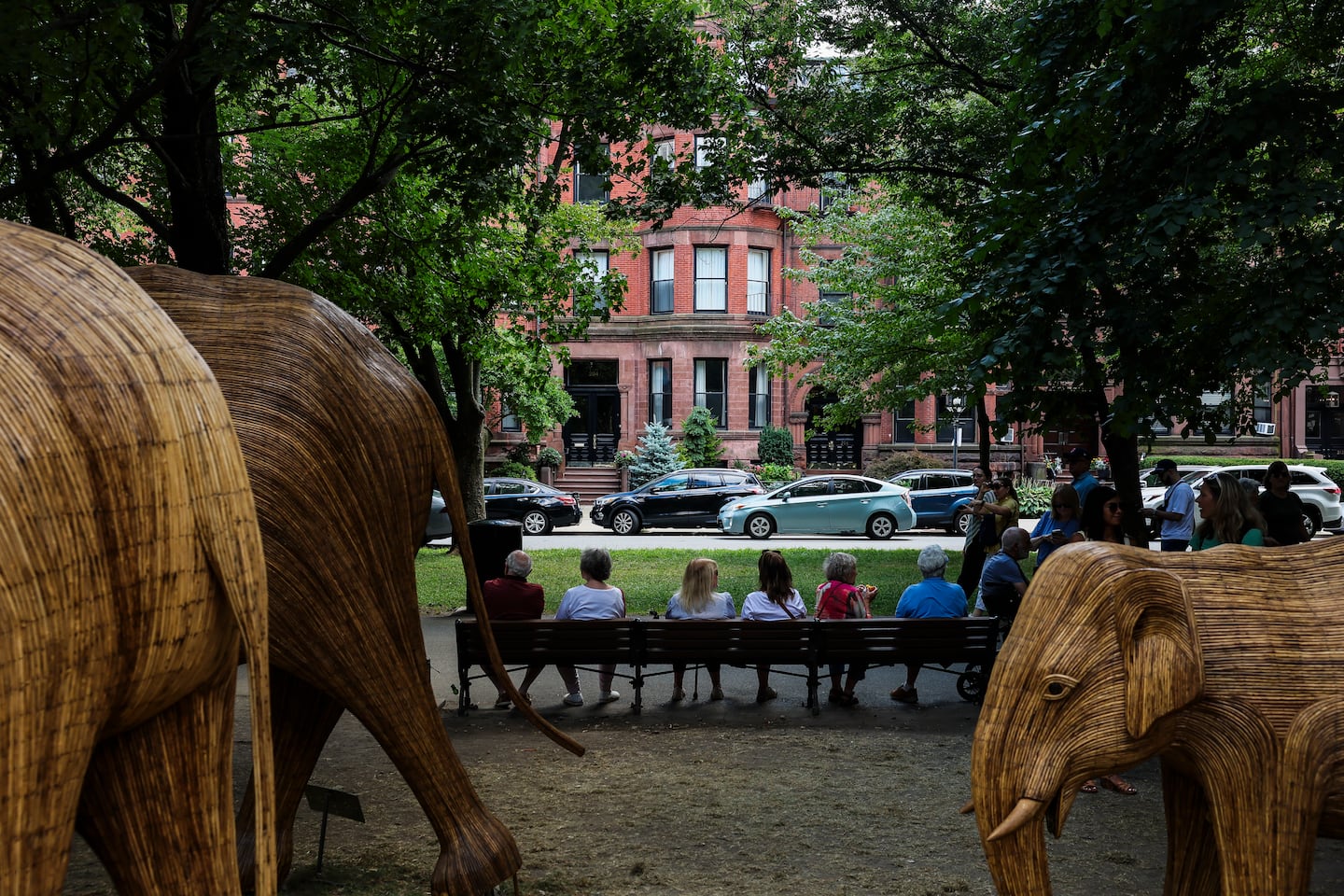 Visitors sit on a bench framed by elephant sculptures from The Great Elephant Migration and the historic brownstones lining Commonwealth Avenue in Boston’s Back Bay neighborhood on Saturday.Erin Clark/Globe Staff
“The message is so positive and the elephants are so majestic. … This has been such a success,” said Sandy Edgerley, cofounder of The ‘Quin House, a private social club in Back Bay that is the lead sponsor of the event. “I’m sure it will just further encourage . . . doing more of these kinds of very innovative initiatives.”
The sought-after exhibit has traveled all over the US, making stops in Beverly Hills, Calif.; Jackson Hole, Wyo.; Houston, Texas; and Miami Beach.
But the exhibit’s cofounder, Ruth Ganesh, told the Globe that Boston — and the stretch of Commonwealth Avenue in particular — felt like the right choice for its next stop. The avenue, which connects the Boston Public Garden and Frederick Law Olmsted’s “Emerald Necklace” park system, was “perfect” because of how it evokes the many “elephant corridors” that exist between the species’ now-fragmented habitats in India.
“We have felt the love and sense of protection for this pretty sacred spot in Boston,” Ganesh told the Globe. “It’s very special. … I don’t think there could be a more perfect place for [the elephants] in Boston.”
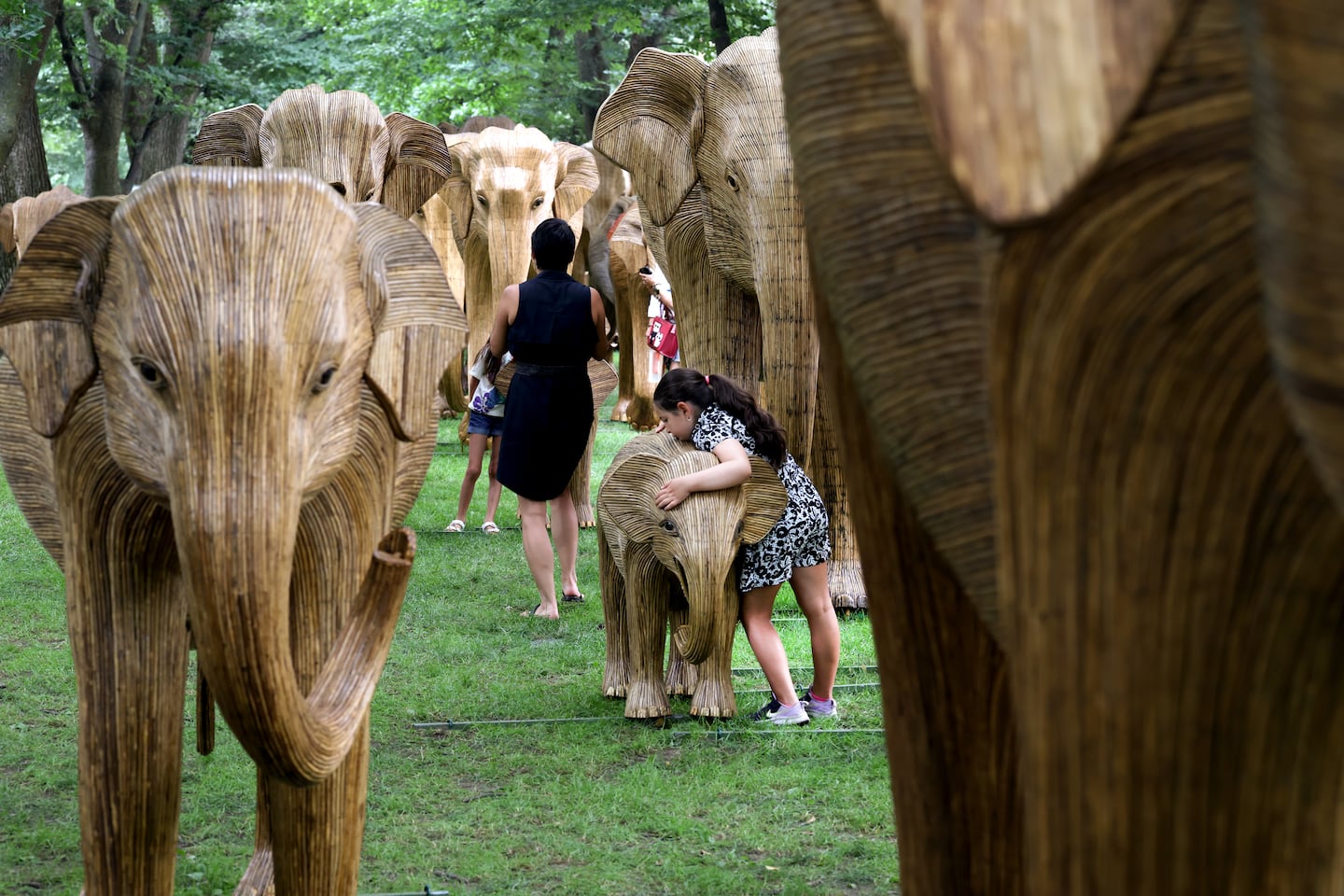 Zabel Vergara, 8, visited the The Great Elephant Migration on Aug. 8.Jonathan Wiggs/Globe Staff
One recent sunny Friday afternoon, the space was buzzing with people — young couples taking photos, children darting between the statues, people running their fingers along the elephants’ bodies and trunks.
“They’re probably not going to let us leave,” Joseph Liu said laughing as his 2-year-old son, Lenox, and 5-year-old daughter, Luna, played among the statues.
He said he, his wife, Jennifer Wong, and his children likely wouldn’t have come to the Back Bay if there hadn’t been an attraction, like the elephants, to see.
“Bringing art anywhere is a way to slow things down and get people to visit,” Liu said. “I hope people do more stuff like this because this park is underutilized for art.”
Niki Griswold can be reached at niki.griswold@globe.com. Follow her @nikigriswold.