

A partial lunar eclipse, along with a
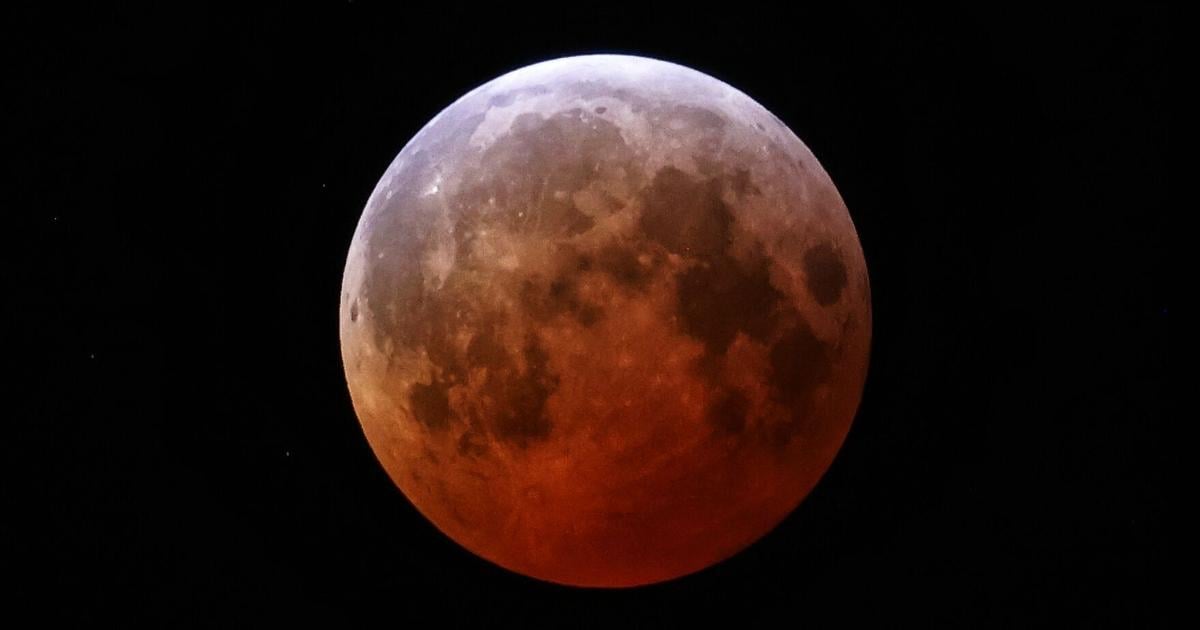
A partial lunar eclipse, along with a “blood moon,” will soon be visible in the night sky.
Visible across the Americas, Africa, Europe, and parts of the Pacific, the partial eclipse begins Thursday, Aug. 27, at 9:38 p.m. EDT, peaks in our region at 12:13 a.m. Friday, Aug. 28, and concludes around 3:01 a.m.
The same phenomenon that makes our sunsets red causes the moon to turn reddish-orange during a lunar eclipse, according to NASA. That distinct color gives the celestial event its “blood moon” nickname.
Sunlight appears white to us, but it actually contains different colors of light with distinct physical properties. Blue light scatters easily as it passes through Earth’s atmosphere. Reddish light, on the other hand, travels in a more direct line through the air.
During a lunar eclipse, the moon appears red or orange because any sunlight not blocked by the earth is filtered through a thick slice of Earth’s atmosphere on its way to the moon’s surface. It is as if our sunrises and sunsets are being projected onto the moon.
This event is a partial eclipse, meaning the sun, Earth, and moon are lining up, but not perfectly. The moon will only pass through part of Earth’s umbra. The shadow will grow and then recede without entirely covering the moon. Maximum coverage will reach 96 percent in the best viewing areas, which will be near the East Coast.
The next total lunar eclipse will occur Dec. 31, 2028.