
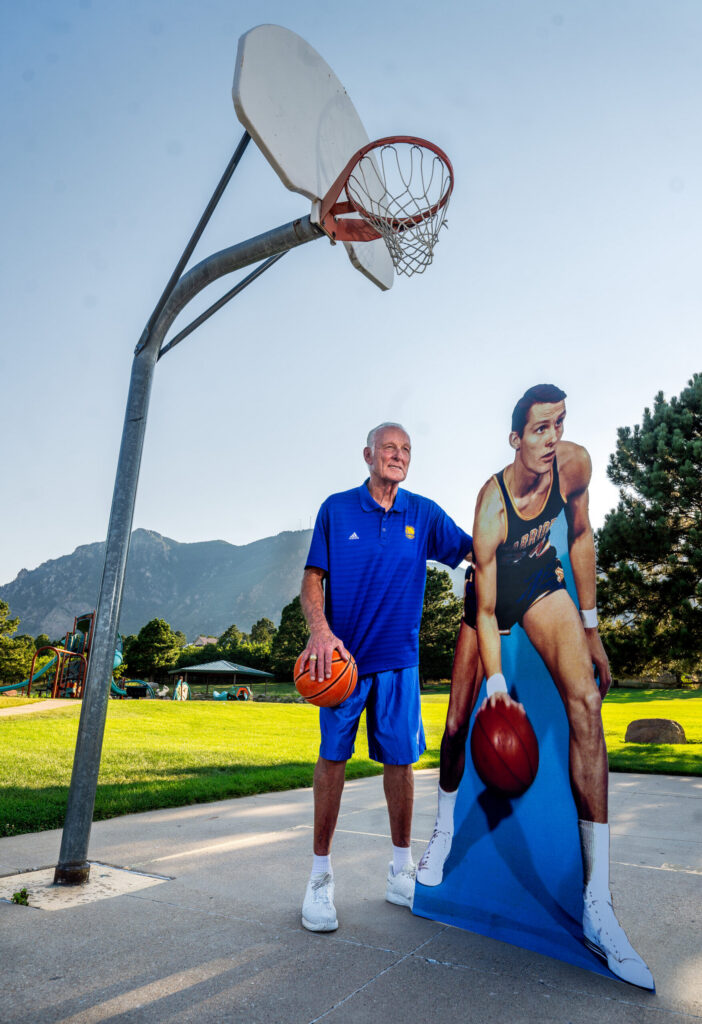
The boys here in a Colorado Springs neighborhood don’t really know the man. They just know the basketball court in his backyard, where they are always welcome to play.
Here’s Rick Barry now.
“Your wife said you were a pretty good basketball player,” one boy says.
“Yeah.”
“And you won lots of awards.”
“Yeah.”
NCAA scoring champion and All-American, 1965.
NBA Rookie of the Year, 1966.
NBA scoring champion, 1967.
NBA All-Star, first in 1966, an eighth time in 1978.
NBA champion and Finals MVP, 1975.
Basketball Hall of Fame, 1987.
The accolades go on for the most accomplished basketball player living in this city.
In the minds of these boys and the next generation, Barry is as distant as the underhanded free throw lending to his legend. The kids today call it a “granny shot,” while onlookers of Barry’s day called it automatic, reliably supplementing record point totals that made him among the all-time greats.
Barry is 82 and still striving for greatness. In pickleball, he has performed at a level few men his age dream of. He has used that 6-7 length, agility, footwork and hand-eye coordination to sweep the competition just as he did to sweep by defenders. Last year at the U.S. Senior Pickleball National Championships, he won all three events in his age group and added the game’s elusive “Triple Crown” to a pile of gold medals.
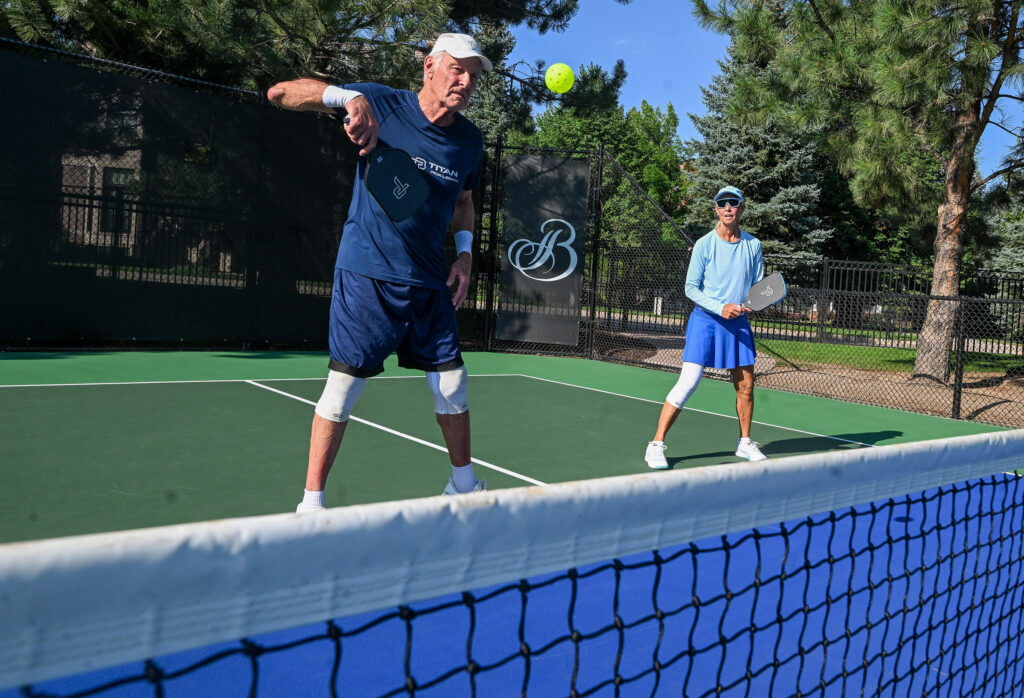 Rick Barry and his wife, Lynn, often hit the pickleball courts to play with a group of pickleball friends, on Sunday, Aug. 6, 2026. (Jerilee Bennett, The Gazette)
It’s getting to the point where competition is running thin, at least the competition Barry prefers: the kind he has always sought to test himself, the kind that satisfies a soul not easily satisfied. This explains why he had to step away from golf a while back.
The four World Long Drive titles weren’t enough. What he really wanted to do was improve his 1-handicap, which other golfers know to be elite. “I just got so frustrated with it,” Barry says.
It’s not that pickleball is frustrating in that way. Quite the opposite, Barry says: “I’ve accomplished everything I can accomplish in pickleball.”
Plus, the national circuit requires travel and long days and his wife prefers to spend the days differently at this stage of life. Also, she prefers not to play with him.
“Because he’s so hard on himself,” Lynn says. “He demands so much excellence of himself.”
Their son, Canyon, credits his mom for trying to “tone it down,” as he puts it. “Social pickleball is a little different from tournament pickleball.”
Barry has struggled to see it that way.
“I’ve said, ‘Honey, if we’re going to play a sport, if we’re going out to compete, I’m only going for one reason: to win,’” he says. “I can be social after it’s over, but don’t ask me to be social on the court. I mean, I’ll try to be nice and stuff. But I want to win. That is just part of my DNA.”
Lynn understands, a lifelong competitor herself. Her basketball number is retired at College of William & Mary, and she went on to coach and serve as an executive for USA Women’s Basketball. (The job in the Springs brought Barry here 40 years ago.)
The competitiveness is “what drove his greatness,” Lynn says. “He was unwilling to accept mediocrity in himself and others.”
But yes, “there is such a thing as social pickleball,” she says. And even in social pickleball, “he gets a look on his face,” she says. It’s a look coaches, teammates, fans, foes and the press knew throughout Barry’s mercurial basketball career.
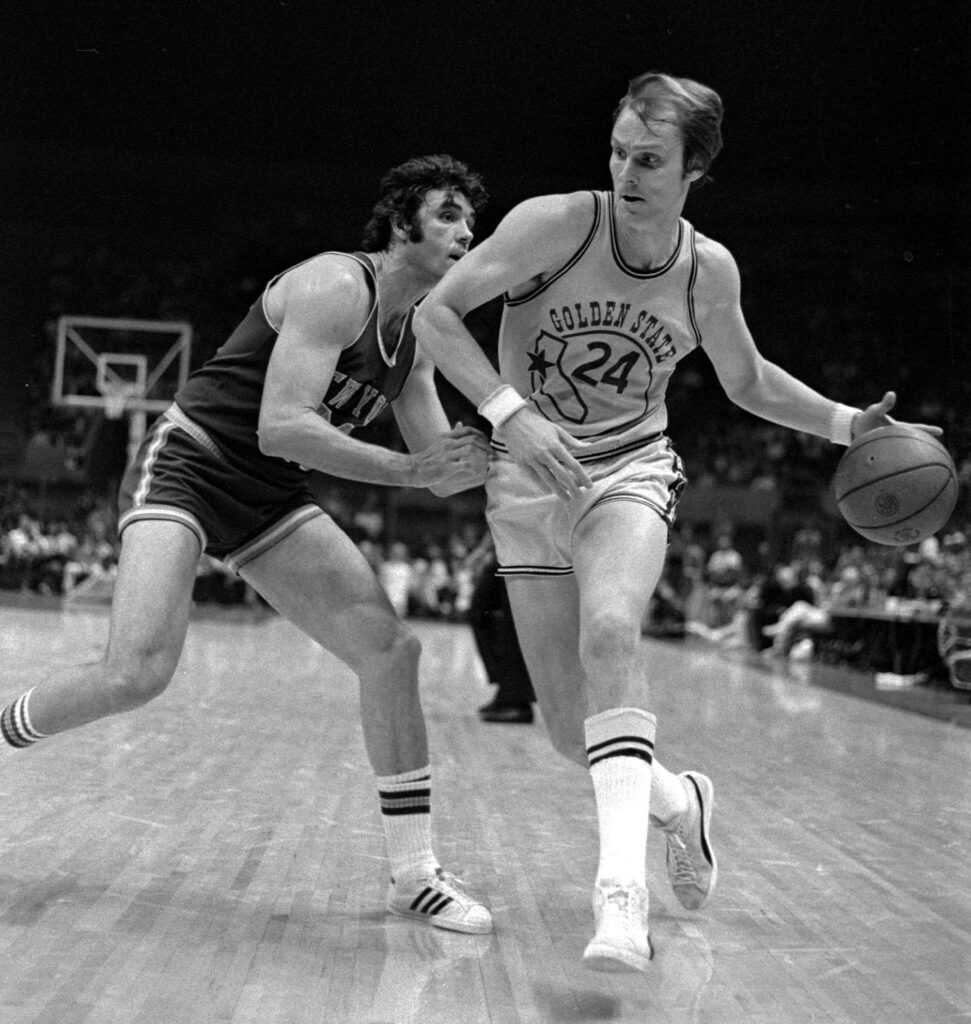 *Golden State Warriors Rick Barry (24) drives past the New York Knicks Dave DeBusschere (22) in this file photo taken in Oakland, Calif., on March 14, 1974. (Associated Press file)
“If you watch him close, you can see it come out in his eyes,” Bill Sharman, his coach with the San Francisco Warriors, once said. “You can see the anger boil up and spill over. He tries to control himself, but it’s beyond him sometimes.”
The coach added: “To Rick’s credit, the madder he got, the harder and better he usually played.”
So he’d throw the ball sometimes and throw fists other times. He’d argue with refs, his bosses and teammates. And a reputation would follow him to the Naismith Memorial Basketball Hall of Fame, which remembers Barry as “an aggressive force” with “an untampered desire to win.” The Hall of Fame bio continues: “Occasionally, his fiery competitiveness would grate on rivals ー and teammates, too.”
A quote from one teammate, Mike Dunleavy, is often cited: “You could send him to the U.N., and he’d start World War III.”
Google Barry and these are some of the things you’ll read, alongside mention of him being the only player ever to lead the NCAA, NBA and ABA in scoring ー the ABA being another source of controversy that also rises to the top of search engines.
This bothers Barry, the things people read. That quote from Dunleavy, a friend who was being more funny than serious. That line from Bill Simmons’ “The Book of Basketball,” in which he refers to Barry as “a d—” (this being the reason Barry isn’t properly credited as a trailblazer for players seeking new contracts today, in Simmons’ view).
“How do you call yourself a professional journalist when you write a book and you have the audacity to call somebody a d— and you don’t even know them?” Barry says, his voice rising. “I just get so tired of reading everybody bringing up all this stuff. Oh, Rick, he was hated, nobody liked him, blah, blah, blah.”
He sighs. “Look, I’m not the greatest person in the world. I have my shortcomings for sure. But I’m not a bad person. And so I’m trying to let people realize that’s not who I am.”
It seems this is his goal after pickleball. This is the reason why he’s been filming for a documentary on his life and career. “There’s too much of a perception about me out there,” he says.
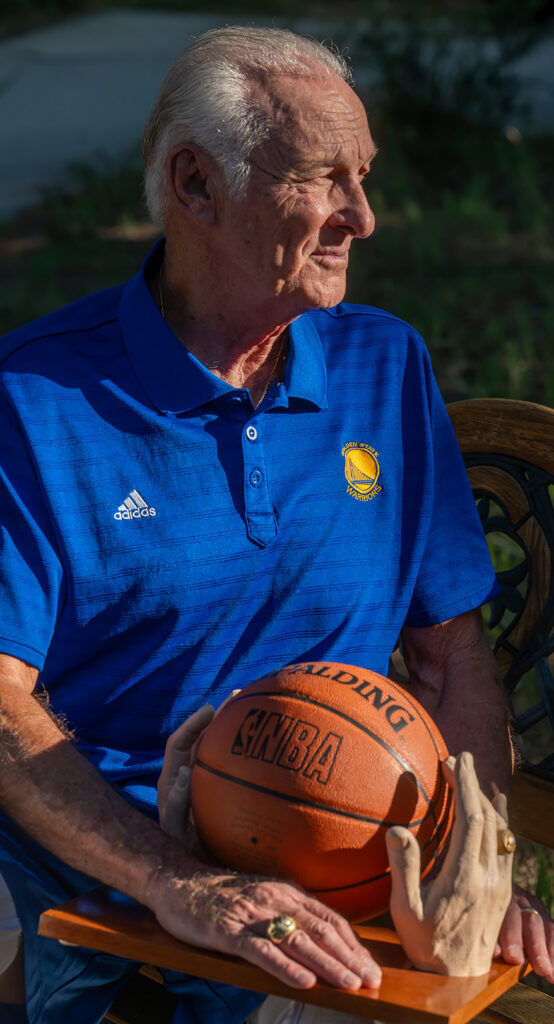 NBA Hall of Famer Rick Barry holds a sculpture he had commissioned of his hands wearing a replica of his NBA Championship ring, which he is wearing in the photo. Barry won an NBA Championship with the Warriors in 1975. He was named the NBA Finals MVP after they swept the Washington Bullets. (Jerilee Bennett, The Gazette)
***
Barry was recently seen in another documentary. “Soul Power: The Legend of the American Basketball Association” chronicled the league that rose in 1967 to rival the NBA before merging about 10 years later.
The ABA countered the NBA with a fast, high-flying, three-point-shooting brand of basketball personified by the likes of Julius “Dr. J” Erving and Pat Boone, the celebrity entertainer and owner of the Oakland Oaks. NBA executives shrugged off the upstart, empowered as they were with tradition, media rights and the best players under contract.
“It was truly David and Goliath,” Boone said in the documentary, “and we put a wonderful stone in our sleeve named Rick Barry.”
Barry had followed up his Rookie of the Year campaign by leading the NBA in scoring in the 1966-67 season. His 35 points per game were better than Oscar Robertson, Jerry West, Elgin Baylor and Wilt Chamberlain, whose Philadelphia 76ers bested Barry and the Warriors in the Finals.
It seemed unlikely the rising star would flip to the ABA. But Barry’s college coach was slated to lead the Oaks, the man who also happened to be his father-in-law at the time.
“I was branded money hungry,” Barry says now, his voice rising again. “Had nothing to do with money.”
But of course he had every right to take more money from Boone and the Oaks. Or at least he thought he had every right.
Warriors ownership sued Barry, claiming he was violating his contract. A judge ruled in the Warriors’ favor, giving Barry the option to return to the team or sit out a season.
“I said, Oh, great, I will choose not to play,” Barry said in the “Soul Power” documentary. “Why? Because I will control the destiny of my basketball career.”
Destiny, what was and what could have been, would be contemplated later.
The season missed was the first in a series of unfortunate events for Barry in the ABA — a four-year period he has remembered as “great in a lot of ways” and “horrible in a lot of ways.”
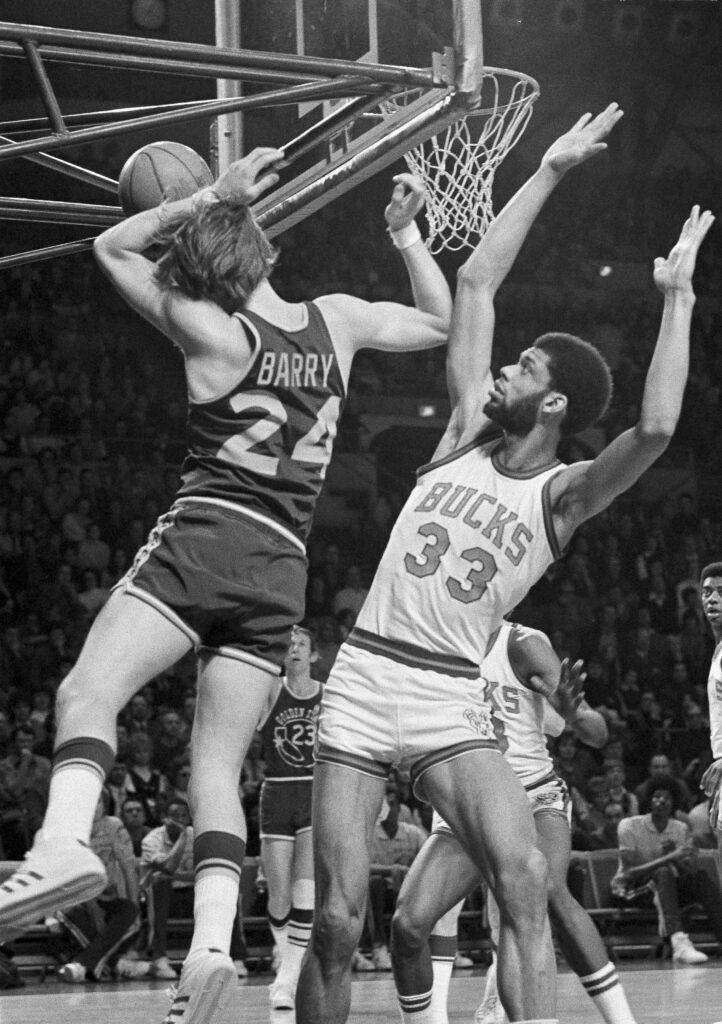 The ball hits the lower supports of the basket as Rick Barry (24) of the Golden State Warriors is cut short by Kareem Abdul-Jabbar (33) of the Milwaukee Bucks in Milwaukee, Wis., April 1, 1973. (Associated Press file)
Great for the championship the Oaks won in Barry’s season back, horrible for the bruising style of play that often sidelined him with injury. He was limited to 35 games in which he averaged a league-leading 34 points. But he would not wear the ring, “because I don’t feel like I was an integral part of the team.”
The next season, the Oaks became the Washington Caps ー much to Barry’s dismay.
“If I wanted to go to Washington, I’d run for president,” he said in what was only the next comment to rub people the wrong way.
A year later, as the Caps were moving again to Virginia, his comments appeared in Sports Illustrated: “My son Scooter is supposed to go to nursery school … I don’t want him to go down there to school and learn to speak with a Southern accent.”
Barry was successful in getting himself traded to the New York Nets for two more high-scoring seasons in the ABA through 1972. That year, “Confessions of a Basketball Gypsy: The Rick Barry Story” was published.
By then, the writer Bill Libby found a player who “was only 26 but seemed much older. His face seemed tired, his body pale. His bad knee was bound in a heavy brace.”
The knee was left with no cartilage, but Barry continued regularly outscoring everyone else. He continued traveling with different teams, continued court battles with employers; the one with the Warriors was just the first. “I cannot keep the cases straight anymore,” he said in the book.
Barry was “a complex man” in Libby’s view, “trapped by his own decisions, those of his owners, managers and lawyers and the complexities of big business athletics.”
He was “a pain in the pocketbook and backside,” according to another writer. “I feel sorry for him,” wrote another.
To his wife at the time, it all seemed to weigh on him back home. “He’s terribly moody,” she said in the book, swinging between joy and silence. “Few people go to such extremes. Few people are harder to get to know.”
***
When Clifford Ray was traded to the Warriors in 1974, Barry went to pick him up at the airport.
“Which was interesting,” Ray recalls with a chuckle. He was well aware of the fiery star who was back in the NBA ruffling feathers.
“It took a bit, but after a while it got to where we understood one another,” Ray says, “and then the only thing I had to worry about was talking to the young players who had never played alongside Rick Barry.”
Yes, Barry would push them to be better, but never more than he would push himself. This might have been best showcased that first season with Ray, culminating in a 4-0 sweep of the Washington Bullets in the Finals ー considered one of the biggest upsets in championship history.
That Barry finished fourth in MVP voting that season might have been a hint at how peers felt about him. A friend for life has always known Barry to be misunderstood, the person mistaken for the intense competitor.
“I think every great player has an edge,” Ray adds. “But man, if you went to Roselle Park in New Jersey where he’s from, you can’t tell me you wouldn’t understand him. They all got an edge in that part of New Jersey.”
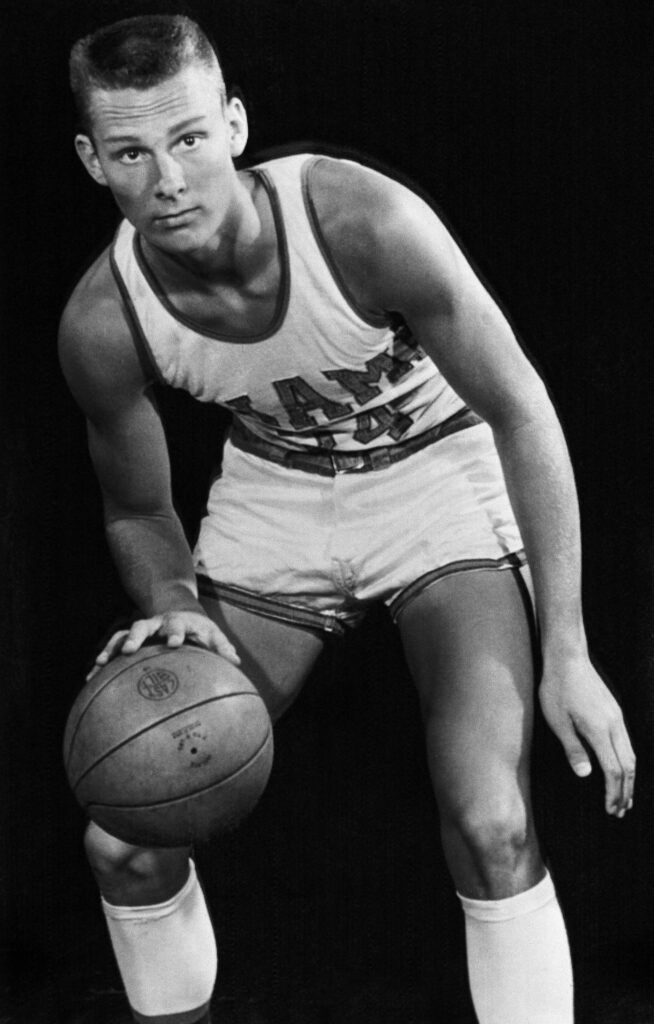 University of Miami’s ace, Rick Barry, in Miami, Dec. 18, 1964, who holds the national collegiate scoring with a 37.8 average. (AP Photo)
Barry was born there in 1944, named Richard III after his father, who scraped a living at Western Electric and coached his boy’s basketball team. The man was a stickler when it came to fundamentals. Dribbling with the wrong hand, not boxing out for a rebound or a bad pass could result in a benching.
“He was a perfectionist,” Barry says. “All that stuff I got from him.”
He did not discipline much off the court, Barry recalled in his book. “But when he did, I was well aware that I had been disciplined.”
This included soap in the mouth for cussing. And this included a belt after the boy cussed his dad out for putting that soap in his mouth.
“Confessions of a Basketball Gypsy” recounts other fits of anger. One involved a nun at school: “I had done something and she grabbed me, and when she did I punched her in the arm.” Barry was relegated to the principal’s office for two months while refusing to apologize.
And yet that attitude was in stark contrast to the “very sensitive and very shy” kid Barry knew himself to be. He recalled feeling “awkward” due to his appearance: gangly, fast-growing limbs and crooked teeth.
“It influenced his personality development more than anything else,” his brother said in the book. “When he smiled, he didn’t smile. Soon he had forgotten how to smile, to laugh. He got the reputation of being moody. People thought he was stuck up, but he was just shy.”
He was not shy on the basketball court. Not with the high school coach he bickered with and not with coaches and team owners to come, along with any ref or player he deemed in his way.
Maybe he was not confident off the court. But on the court, he knew he had to be confident, fiercely confident.
And maybe that confidence looked arrogant to some, angry to others. “I tried to get him to control his temper,” his dad once said, “but it’s hard to change people.”
***
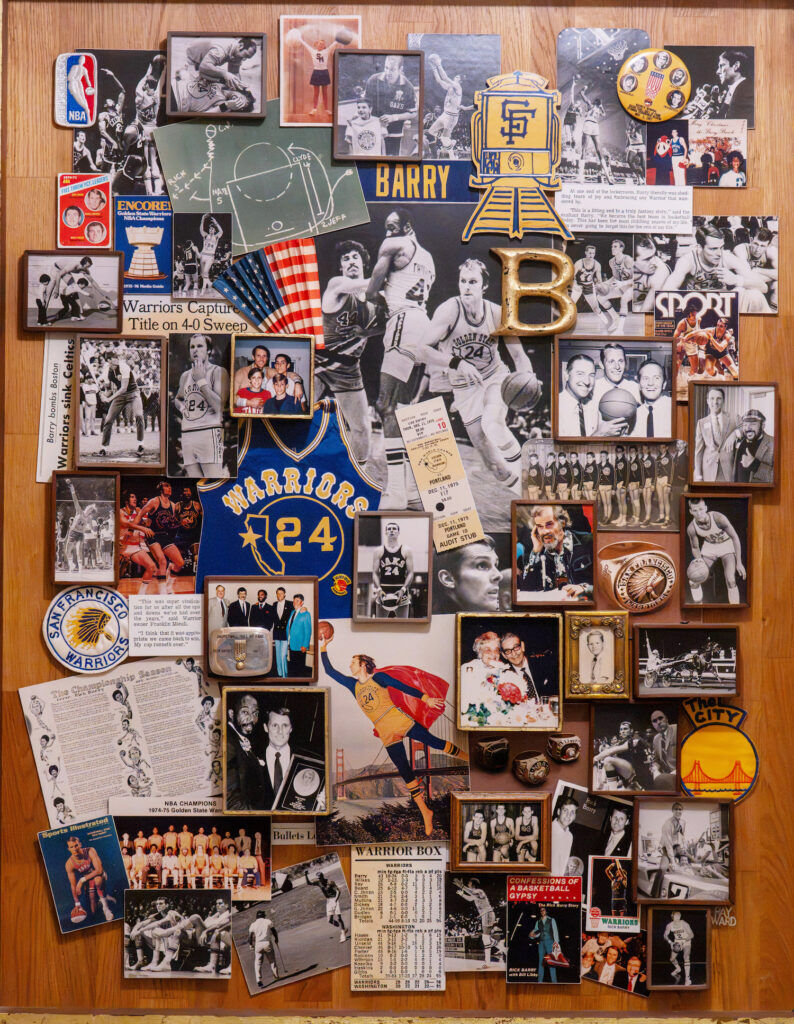 When Rick Barry retired, the Warriors made this collage as a present to him, depicting the highlights of his career with them. Barry won an NBA Championship with the Warriors in 1975. He was named the NBA Finals MVP after they swept the Washington Bullets. (Jerilee Bennett, The Gazette)
Barry has changed, friends and family say. At least slightly.
“Friends that have known him for years and years say to me, ‘Lynn, he’s just mellowed out so much,” his wife says. “And I’m like, What? What could he have possibly been like before? Because he’s still very Type A.”
That’s just how she has known him since 1986. He was retired from basketball by then, calling games on TV and going through a second divorce. He had four kids.
“That’s a lot of baggage,” he says. “Lynn was even told by her boss, Well, you know, he’s got a reputation, you need to be careful, blah, blah, blah. Fortunately, she got to know me as a person.”
She got to know him as “very generous” and “very kind.” He would donate his time and money to charity events. He would rush to a friend and former teammate in need, Ray being one. “I can tell you so many stories like that,” he says.
His son, meanwhile, can’t tell you how many birthday texts he sends. “Every time he meets someone, he asks them when their birthday is and he puts their birthday in his phone,” Canyon says.
That’s the thoughtful person Lynn got to know. And yes, she says, he was “very competitive.” And “brutally honest.”
Maybe that’s why broadcasting didn’t work out. “Accentuate the positive, not the negative,” Barry recalls as the expectation. “But any good play that happens, something bad happens, and that’s how you teach the game, by talking about both.”
Watch the guys on TV today, Lynn says. “My god, brutal. He was ahead of his time in that regard as well, with his broadcasting.”
And in terms of his playing, other onlookers have said. This includes the man behind the NBA logo, Jerry West.
“Rick Barry could be, or could have been, the greatest forward in the history of basketball,” he once said.
If it weren’t for the move to the ABA, what could have been?
“Rick gambled and lost,” a friend and teammate, Nate Thurmond, once said. “He most definitely made a mistake.”
Maybe, Barry has thought. Maybe not.
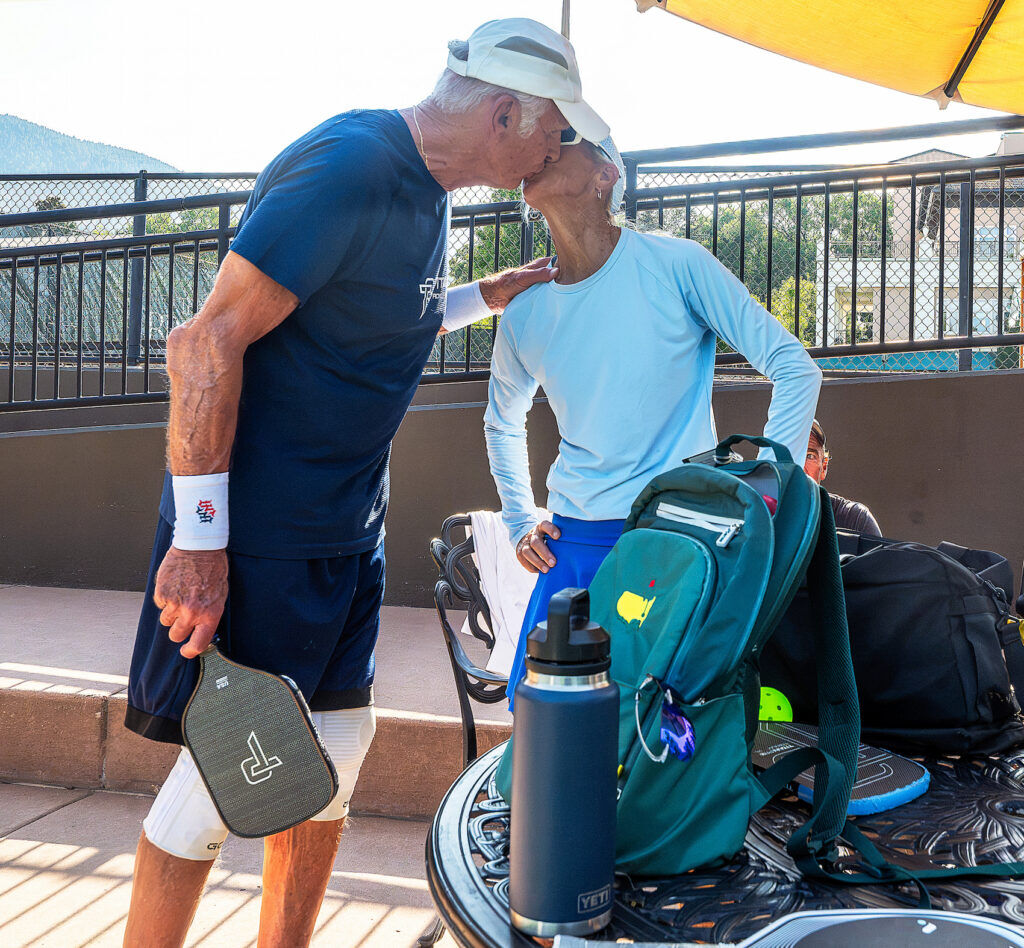 Rick Barry and his wife, Lynn, at the pickleball court Aug. 6, 2026. (Jerilee Bennett, The Gazette)
He often references Star Trek. “The space-time continuum would be screwed up if I didn’t go” to the ABA, he says, “and there’s a good likelihood I never would have met my current wife and I would not give that up for all the money in the world.”
Here is someone who understands him. Lynn wants others to understand him.
“He wants to be the best at everything he does, and how do you fault that? But how do you go about it? How do you portray that drive and that thing?” she says. “That’s where I’ve just tried to make him more aware.”
To not be so intense on the pickleball court, to be more encouraging. To just relax on fly-fishing trips. Fly fishing is another hobby-turned-competition.
“We call our dad a catcherman. If he goes fishing, he wants to be catching fish,” Canyon says.
He has returned from trips with “a full stat breakdown,” the son says ー fish spotted, hooked and landed. As in those trips, family game nights have gotten heated.
“For people who don’t know him, that competitiveness can come off as a little harsh or brash,” Canyon says. “But growing up around it, we always knew he meant the best and loves you.”
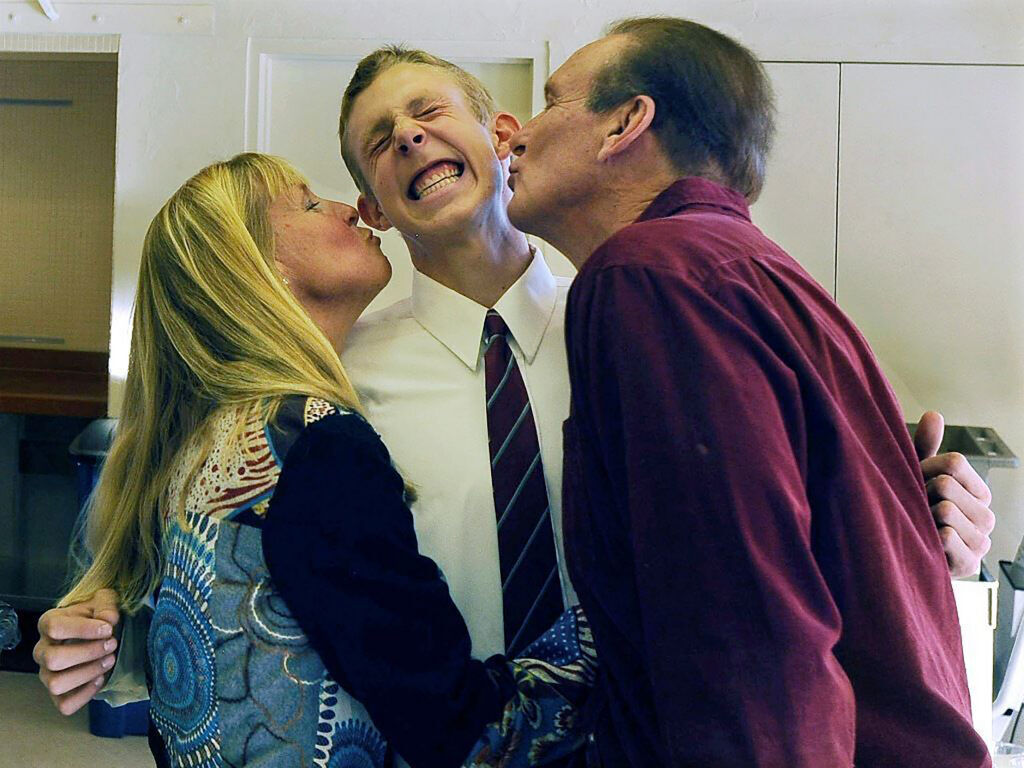 In 2011, Cheyenne Mountain High School guard Canyon Barry signed his National Letter of Intent to play NCAA Division I basketball at the College of Charleston. He clowns around with his mom and dad, Lynn and Rick Barry, after the ceremony. Canyon became the next member of his immediate family to play Division I basketball. (Jerilee Bennett, The Gazette)
He talks about his kids like they are his greatest accomplishment. “For all five (sons) to get Division I college basketball scholarships, are you kidding me? What are the odds of that?”
He’s asked about odds a lot. About his legacy and what could have been. He thinks about another game he loves, bridge.
“You have to play the bad hands as well as the good hands, because there’s strategy involved,” he says. “You get dealt good cards and bad cards, and you got to learn to play both of them, to make the most of them. That’s what I try to do in life.”
Anyway, “I don’t live in the past,” he says, “and I don’t worry about the future.” Better to live in the present, he knows.
Not that he’s good at sitting still. If he is, he’s usually playing some game on his phone to sharpen his mind.
“He’s not good at just sitting alone with his thoughts,” Lynn says. “His mind is just too active to allow that.”
And so it seems unlikely that he would love cruises. But he loves the wide-open water and the wide-open sky, loves the excursions and seeing the world. Yes, he loves cruises.
“And a lot of them have soft serve machines,” he says. “I love soft-serve ice cream.”
 Lynn and Rick Barry are avid cyclists and were cycling at Glacier National Park in the Summer of 2026. (Courtesy photo)
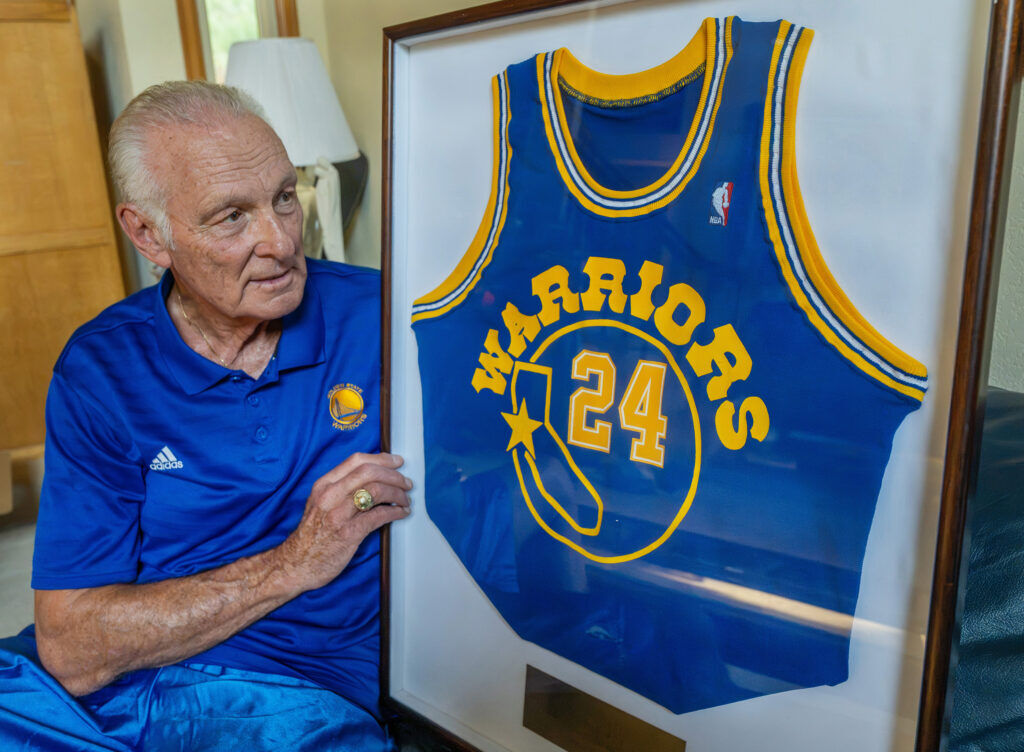 NBA Hall of Famer Rick Barry was the fourth Warrior to have his number retired by the franchise. Barry won an NBA Championship with the Warriors in 1975. He was named the NBA Finals MVP after they swept the Washington Bullets. (Jerilee Bennett, The Gazette)