
India’s wealth landscape is entering a generational shift, with Barclays’ latest Ownership Shift report estimating that around ₹73 trillion could be transferred to women leaders over the next decade. The report also highlights a gap between growing investment intent and preparedness, with women increasingly looking to build wealth, diversify into alternatives and shape their own legacies.
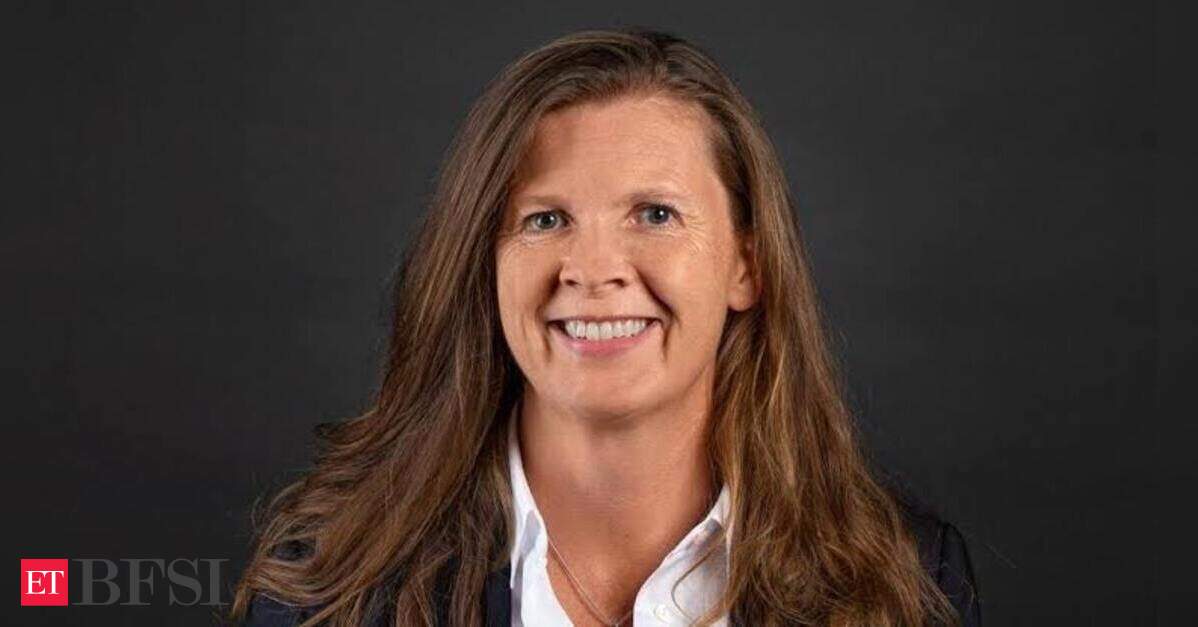
Against this backdrop, ETBFSI spoke to Annabelle Bryde, Head of Barclays Private Bank International, and Adrish Ghosh, Head of Barclays Private Bank India, on how this ownership shift could reshape wealth management, succession planning, global diversification and private banking.
Bryde said India’s entrepreneurialism, the number of companies being created and their growth rates stand out globally. However, she said entrepreneurs also face concentration risks when most of their wealth and cash flow remain tied to the businesses they own. The next opportunity, therefore, is to help families build more diversified portfolios while balancing liquidity needs with longer-term investments such as private equity and other alternatives.
AI, meanwhile, is expected to change the economics of private banking primarily by improving the productivity of bankers rather than replacing the human relationship. Bryde said the technology can take away administrative work and help bankers spend more time understanding clients, while Adrish highlighted the potential for AI-driven analytics, reporting and data management to improve client outcomes.
Here are the edited excerpts from the interview:
Q: The report estimates that women in India could inherit ₹73 trillion over the next decade. Is this fundamentally changing who controls capital in India?
Annabelle Bryde: Absolutely. It is a huge shift. And I think the important thing is that this isn’t just about women receiving wealth. It is about what they then do with that wealth and the decisions they make around it.
If you look at some of the conversations we have had with clients globally, there is a very clear evolution from being a recipient of wealth to being an active decision-maker around wealth. That means deciding how much goes into businesses, how much gets invested, how much is used for philanthropy and what kind of legacy they want to create.
For India, with this significant transfer of wealth coming through, that could be a very meaningful change in the way capital is allocated.
Adrish Ghosh: The report also shows that 86% of the women surveyed have wealth creation as their key objective. So the intention is not simply to preserve inherited wealth; it is to continue building it.
Q: One of the biggest contradictions in the report is that 40% want to allocate new capital to alternatives, but only 14% are highly familiar with and actively invested in them. Is the wealth-management industry failing to educate this new investor?
Annabelle Bryde: I think that is one of the biggest opportunities for the industry. Alternatives come with a very different time horizon. You may be locking up capital for three, five, seven years or even longer.
That can be a significant hurdle because you’re giving up liquidity and taking an opportunity cost. So clients can sometimes become more defensive than their strategic asset allocation would otherwise suggest.
With private equity, for example, you almost need a conveyor belt. You start investing, the investment matures, you invest again and over time the vintages become self-sustaining. Getting onto that conveyor belt is important if alternatives are going to become a core part of a family’s portfolio.
The other critical element is education. If you’re asking someone to lock up their money for seven years, they need to understand exactly what that means, what opportunities they may be giving up and how the asset class behaves across different market scenarios.
Q: Does that suggest there is a confidence problem rather than a capital problem among women investors?
Annabelle Bryde: I think that’s fair. What we see is that the appetite is there, but the confidence and familiarity need to catch up.
The role of the advisor therefore becomes much more than simply executing an investment decision. It is about helping clients understand the risk-reward, doing the due diligence on counterparties and helping them make decisions with conviction.
Q: The report also finds that only 23% of women who have inherited wealth have fully structured plans for the next transfer. Why is succession still such a weak spot among wealthy families?
Annabelle Bryde: Succession is difficult because ultimately it forces families to have conversations about control, mortality and the future. The current owner may think, “I’ve got plenty of time left, why do I need to do this now?”
There can also be a lack of confidence in the next generation. Maybe you have four children, three are involved in the business and one is doing something completely different. Then you have to think through questions of equity and equality.
These are complex and sometimes uncomfortable conversations. Our role as a private bank can be to facilitate those discussions and help families take the first steps. Often, simply starting the conversation is the most important thing.
Adrish Ghosh: In India, wealth creation on this scale is still relatively recent. A large proportion of families are first- or second-generation, so succession planning is still evolving.
Q: India is now one of the world’s major wealth-creation stories. What does India do better than established wealth centres, and where does it still have room to mature?
Annabelle Bryde: The level of entrepreneurialism is incredible. The number of companies being created, the growth rates and the industries that are becoming attractive — those are things we are very envious of in Europe.
Where there is still room to develop is diversification. If you’re an entrepreneur and most of your wealth and cash flow are tied up in one business or industry, you have a very concentrated risk.
In Europe, we often see entrepreneurs taking the majority of their risk in their businesses and then taking a much more conservative approach with their liquid wealth. India is still developing that financialisation of wealth, and there is a significant opportunity to diversify away from concentrated business exposure.
Q: How are Indian family offices evolving? Are they increasingly competing with private banks?
Annabelle Bryde: The very largest family offices can build direct relationships with private equity funds themselves. But that’s a very thin slice of the market.
For the broader family-office universe, diversification becomes important. They may want different vintages, strategies, geographies and sectors, without committing the minimum amount required to every individual fund.
That’s where a private bank can aggregate demand, access opportunities and potentially negotiate from a position of scale. The fundamental principle remains the same: don’t put all your eggs in one basket.
Adrish Ghosh: Indian family offices are still at an earlier stage than those in the West. Many are starting with one or two investment specialists, but those individuals may not have access to the entire global opportunity set.
That’s where a global institution becomes relevant, particularly when families want to diversify outside India.
Q: How important will India be to Barclays International’s wealth strategy over the next five years?
Annabelle Bryde: India is one of our key markets. Asia more broadly, along with the Middle East and our home market in the UK, are geographies where we’re really doubling down.
India has an enormous potential client base. If you simply look at the top 1% of 1.5 billion people, that’s already a very significant number of potential clients.
But the sweet spot for us is families with cross-border needs — families with businesses, investments and family members across different jurisdictions. That’s where having a global platform becomes particularly relevant.
Q: How will India change the economics of private banking for Barclays over the next three to five years?
Annabelle Bryde: It is clearly a growth engine for us. And one of the advantages of India is that wealth is being newly created.
In a mature market such as Europe, you’re often trying to win assets from another bank or wealth manager. That’s inherently harder than being there when new wealth is being created.
If we’re there before a wealth event — before a business sale, partial sale or liquidity event — we can help families plan for what happens next. If you accompany them through that journey, you’re much better positioned to become a long-term private banking partner.
Q: Is the private bank model itself under pressure as family offices become more sophisticated?
Annabelle Bryde: I don’t think the role disappears. The very large institutional-like families may choose to do more themselves, but the broader client base still needs access, diversification and expertise.
The value is not simply in providing an investment product. It is in bringing together opportunities, due diligence, execution, research and global expertise.
Adrish Ghosh: In India, one or two specialists within a family office won’t necessarily have access to the wider spectrum of opportunities. A global bank can bring that broader network and execution capability.
Q: You have spent much of your career at UBS and now lead Barclays’ international private bank. What does Barclays do differently from the Swiss private-banking model you grew up with?
Annabelle Bryde: For us, it’s about being personal and detailed while still having the backing of a very large institution.
I often describe Barclays as being small enough to have a boutique approach, but backed by a massive history and balance sheet. We spend a lot of time understanding the client’s situation, their needs and the issues that could arise in the future.
And then there is the wider Barclays franchise. We’re one of the major investment banks outside the US, so clients can access industry experts, research, global conferences and people who are working with other companies in their sectors.
That broader connectivity is extremely valuable.
Q: How will artificial intelligence change the economics of private banking?
Annabelle Bryde: I see AI as an enabler of the banker, not a replacement for the banker.
With complex families, the personal relationship and trust remain incredibly important. You can ask ChatGPT a question, but ultimately you often want to double-check that recommendation with somebody you trust and who has experience.
Where AI can make a real difference is freeing bankers from administrative work. Call summarisation is a simple example. Something that previously took 30 or 40 minutes can now be done almost instantly.
That time can then be spent with another client. And that’s where the real value lies, allowing bankers to spend more time understanding clients’ situations, wishes and objectives.
Adrish Ghosh: AI will also change what clients expect from us. They will expect faster analytics, portfolio reporting and insights. Internally, we’re already using AI extensively, and the next step is to use it more effectively in client delivery.
Q: What does the next generation expect from a private bank that their parents did not?
Annabelle Bryde: The next generation is much more interested in opportunities outside the traditional asset classes. They are more globally minded, more digitally native and more willing to explore new investment ideas.
But they also want to understand what they are doing. They don’t simply want someone to execute instructions.
Adrish Ghosh: New sectors, technology, new-age investments and alternatives are clearly at the forefront for the next generation. Historically, there was a much stronger bias towards real assets in India. That is changing as the next generation increasingly looks at financial assets and proper asset allocation.
Published On Aug 26, 2026 at 08:18 AM IST
Join the community of 2M+ industry professionals.
Subscribe to Newsletter to get latest insights & analysis in your inbox.
All about ETBFSI industry right on your smartphone!