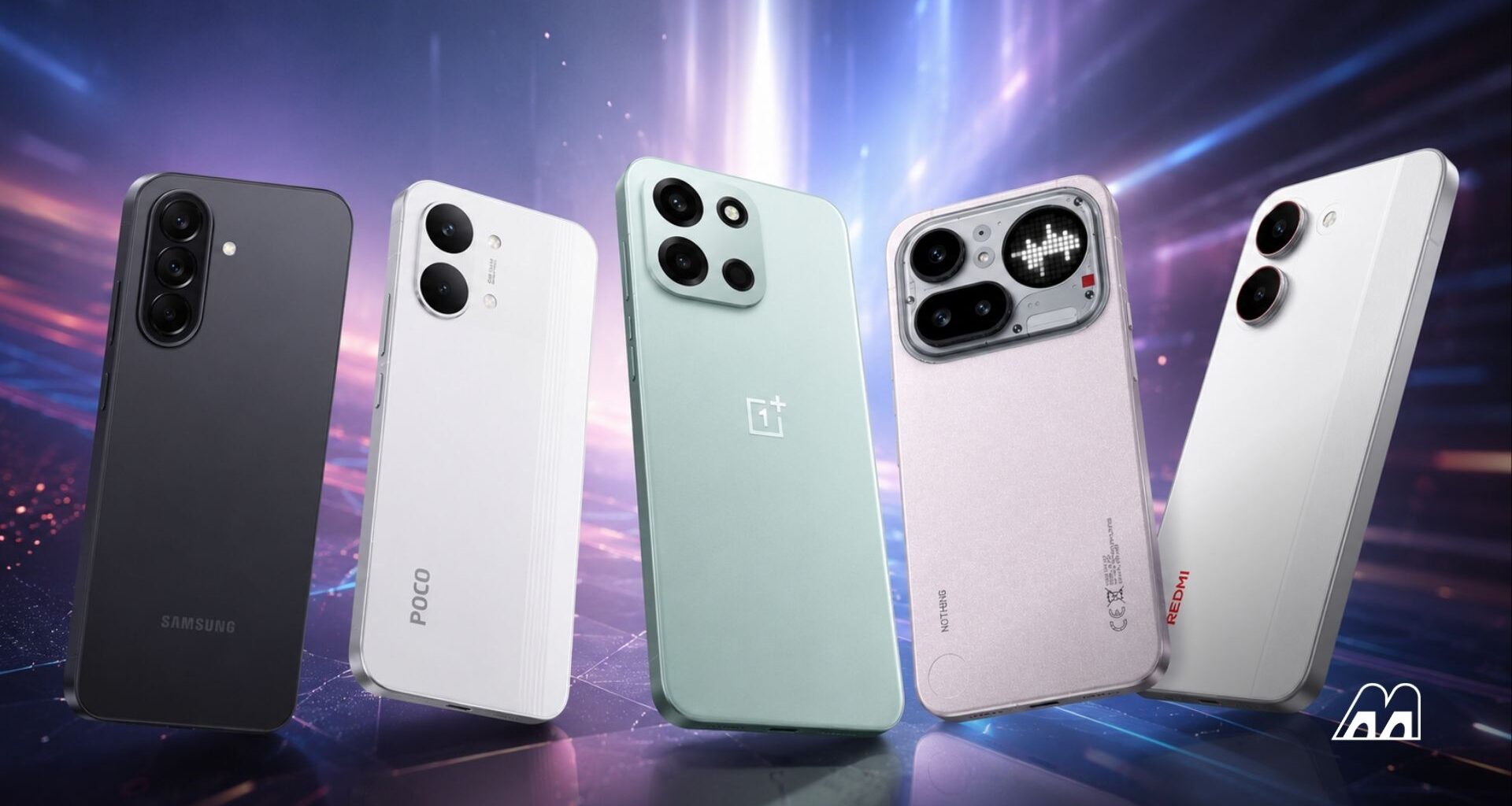
The Vivo V80 Lite 5G launched in late August with a solid feature set: 6.83-inch 1.5K AMOLED display, 7,050mAh battery, Sony IMX852 50MP camera, and IP68/IP69 durability. It’s a well-rounded phone at around $450. But “well-rounded” doesn’t mean it’s the best option for everyone. Here are five alternatives that beat it in areas that might matter more to you.
What You’re Comparing Against
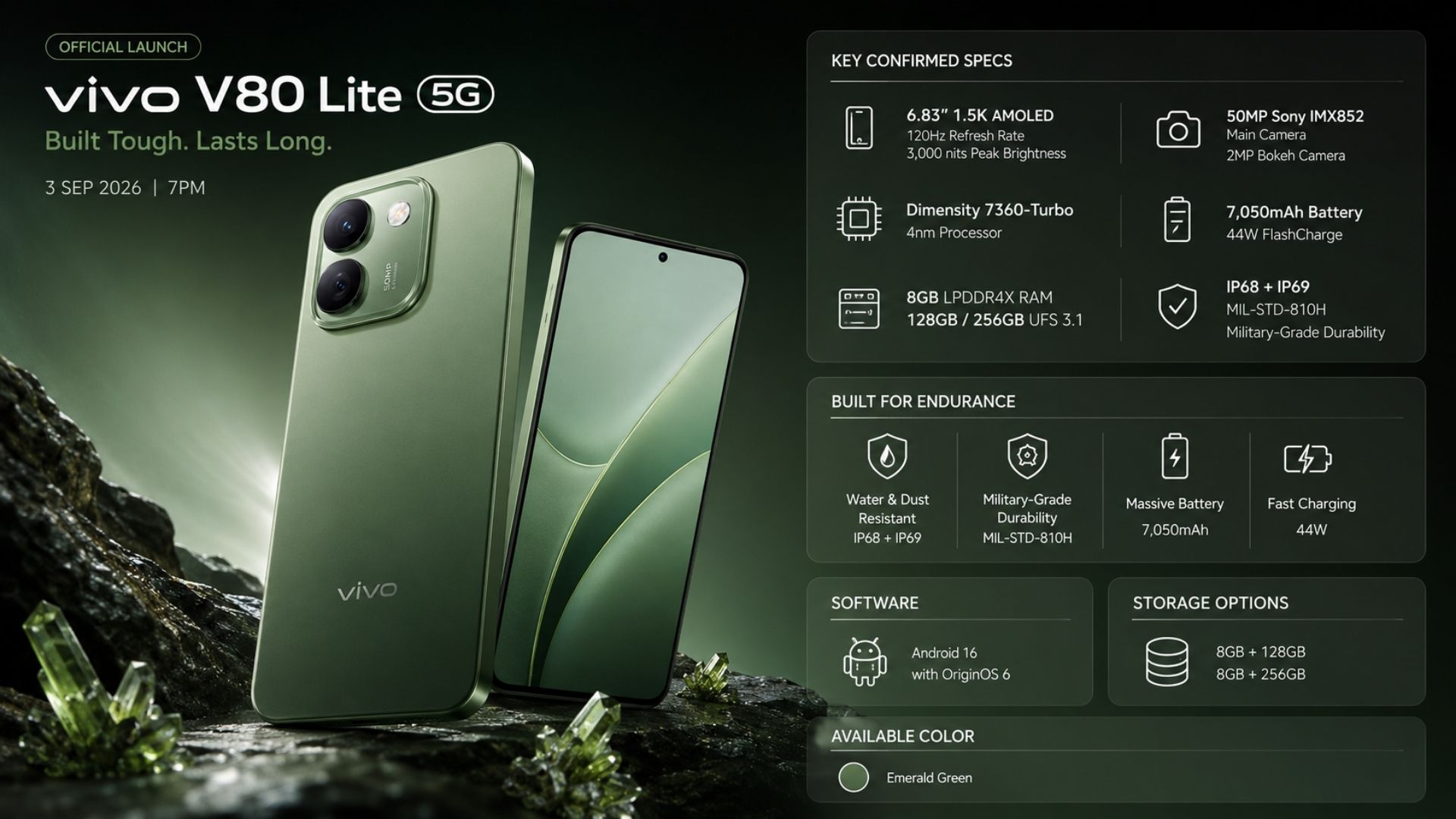
Before we look at alternatives, here’s what the Vivo V80 Lite 5G brings to the table:
SpecVivo V80 Lite 5GDisplay6.83″ 1.5K AMOLED, 120Hz, 3,000 nitsProcessorDimensity 7360-Turbo (4nm)RAM/Storage8GB LPDDR4X / 128GB or 256GB UFS 3.1Main Camera50MP Sony IMX852 + 2MP bokehBattery7,050mAh, 44W chargingDurabilityIP68 + IP69, MIL-STD-810HOSAndroid 16, OriginOS 6
It’s a phone designed for people who want durability and battery life above everything else. The MIL-STD-810H certification across seven surfaces is genuinely impressive at this price. But the 44W charging speed and Dimensity 7360-Turbo processor leave room for competitors to attack.
1. OnePlus Nord CE 6 — Best Overall Alternative
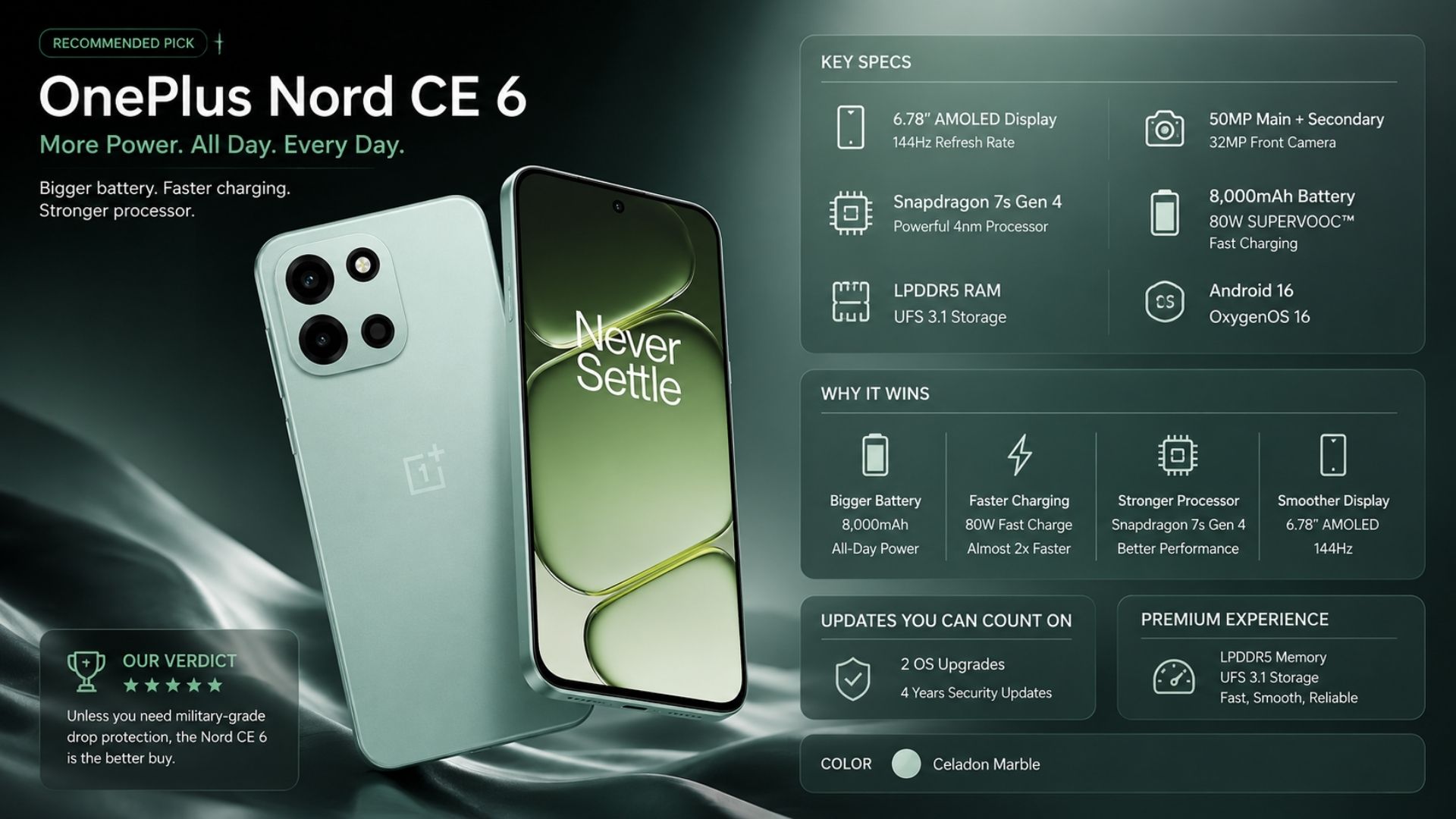
Why it wins: Bigger battery, faster charging, stronger processor.
SpecOnePlus Nord CE 6Display6.78″ AMOLED, 144HzProcessorSnapdragon 7s Gen 4RAM/StorageLPDDR5 / UFS 3.1Camera50MP main + secondary rear, 32MP frontBattery8,000mAh, 80W fast chargingOSAndroid 16, OxygenOS 16Updates2 OS upgrades + 4 years security
The Nord CE 6 wins across the board for daily use: nearly 1,000mAh more battery, almost double the charging speed, smoother 144Hz display, and a Snapdragon 7s Gen 4 that outperforms the Dimensity 7360-Turbo in benchmarks. The Vivo fights back on durability — its MIL-STD-810H and IP69 ratings give it an edge in harsh environments.
Our verdict: Unless you need military-grade drop protection, the Nord CE 6 is the better buy.
2. Redmi Turbo 5 — Best for Charging Speed
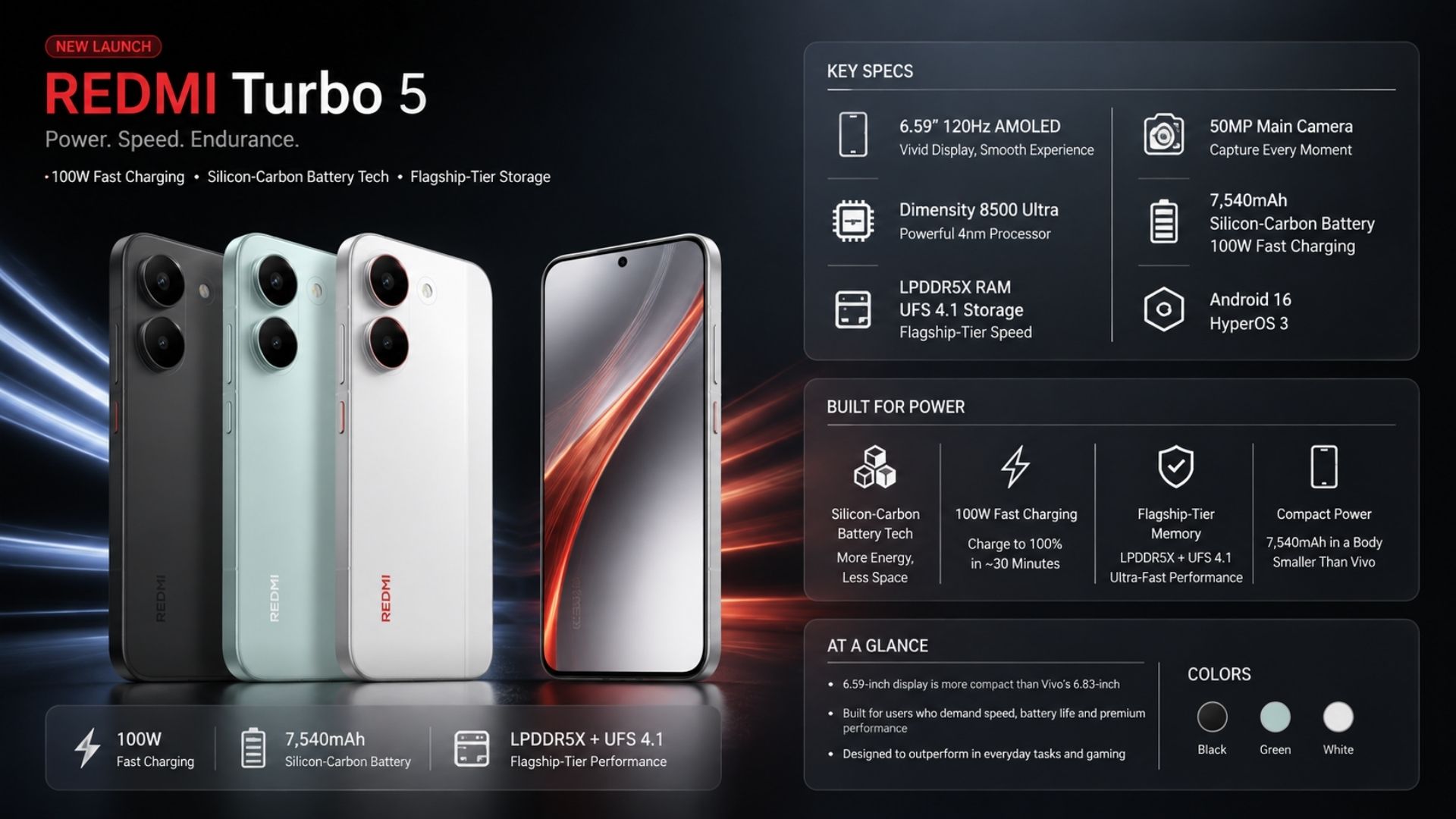
Why it wins: 100W fast charging, silicon-carbon battery tech, flagship-tier storage.
SpecRedmi Turbo 5Display6.59″ 120Hz AMOLEDProcessorDimensity 8500 UltraRAM/StorageLPDDR5X / UFS 4.1Camera50MP mainBattery7,540mAh silicon-carbon, 100W chargingOSAndroid 16, HyperOS 3
Silicon-carbon battery tech packs more energy into less space — that’s how the Turbo 5 fits 7,540mAh into a body smaller than the Vivo. The 100W charging fills it in roughly 30 minutes. LPDDR5X RAM and UFS 4.1 storage match flagship-tier memory performance.
The trade-off: a 6.59-inch display is noticeably smaller than the Vivo’s 6.83 inches.
Our verdict: Best if charging speed is your top priority and a slightly smaller display is acceptable.
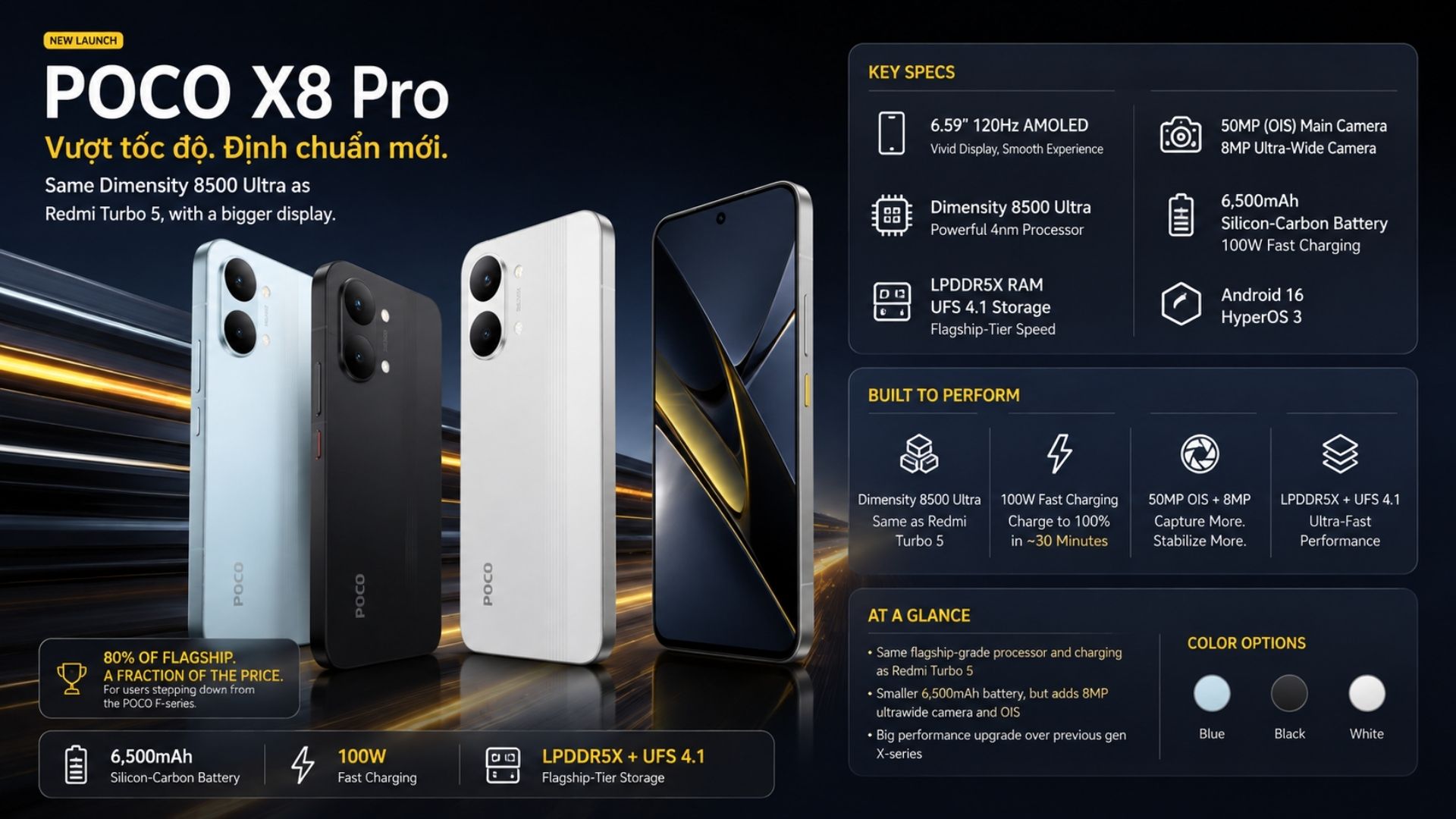
3. Poco X8 Pro — Best Value-for-Specs Ratio
Why it wins: Same Dimensity 8500 Ultra as the Redmi Turbo 5, with a bigger display.
SpecPoco X8 ProDisplay6.59″ 120Hz AMOLEDProcessorDimensity 8500 UltraRAM/StorageLPDDR5X / UFS 4.1Camera50MP (OIS) + 8MPBattery6,500mAh silicon-carbon, 100W chargingOSAndroid 16, HyperOS 3
These two share the same processor and charging system. The difference: the Poco has a smaller 6,500mAh battery but adds an 8MP ultrawide camera and OIS on the main shooter. For users stepping down from the Poco F-series, the X8 Pro delivers about 80% of the F9’s experience at a fraction of the price.
Our verdict: The best pick for balanced performance, camera versatility, and fast charging.
4. Nothing Phone 4a Pro — Best Camera System
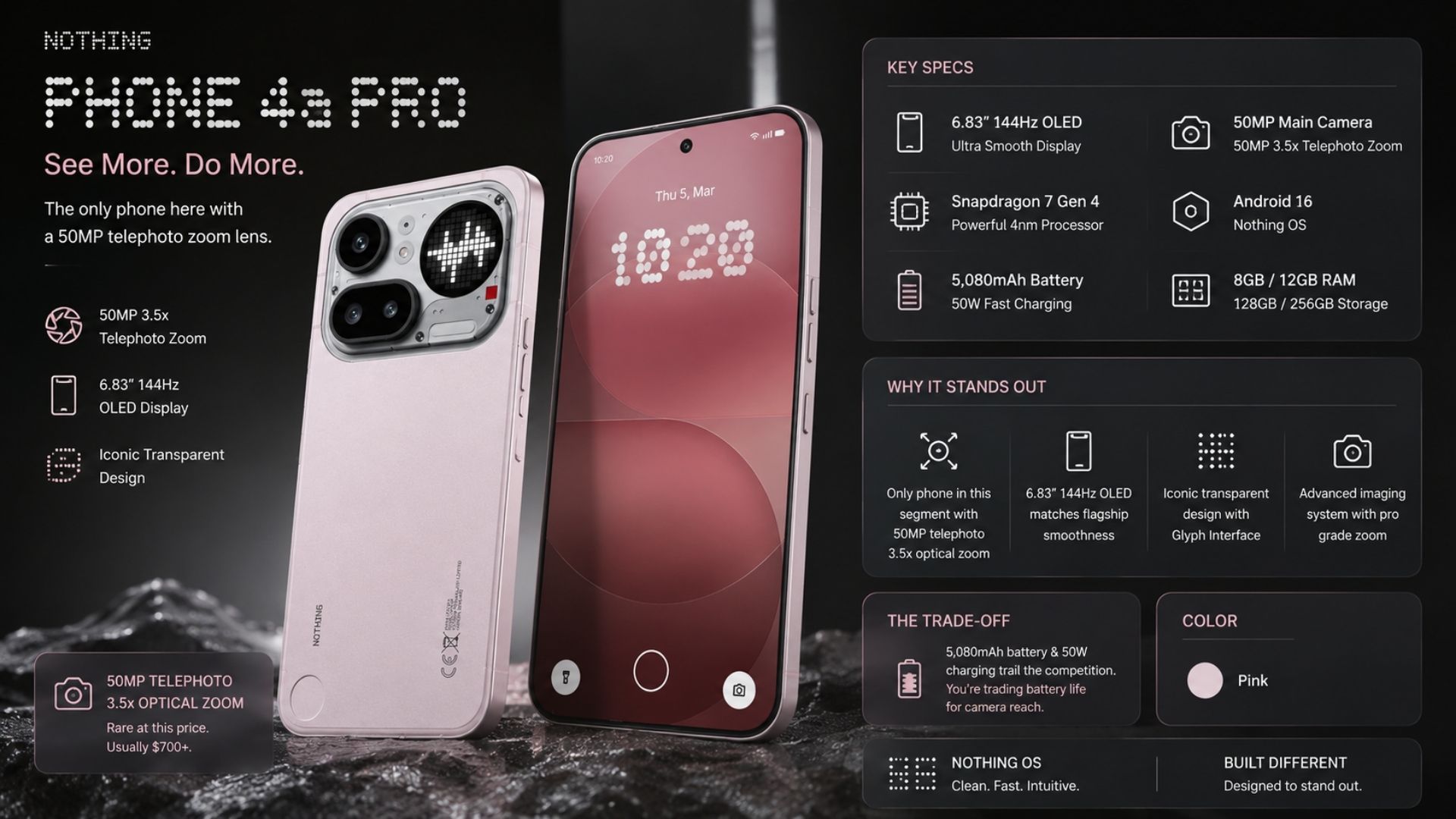
Why it wins: The only phone here with a 50MP telephoto zoom lens.
SpecNothing Phone 4a ProDisplay6.83″ 144Hz OLEDProcessorSnapdragon 7 Gen 4Camera50MP main + 50MP 3.5x telephoto zoomBattery5,080mAh, 50W chargingOSAndroid 16, Nothing OS
A 50MP telephoto lens with 3.5x optical zoom at this price is rare — you’d normally pay $700+ for that. The 144Hz display matches the Nord CE 6, and Nothing’s transparent design stands apart from every glass slab on this list.
The catch: 5,080mAh at 50W charging trails every competitor here. You’re trading battery life for camera reach.
Our verdict: The pick for photography-first buyers. Just keep a charger nearby.
5. Samsung Galaxy A37 5G — Best for Long-Term Software Support
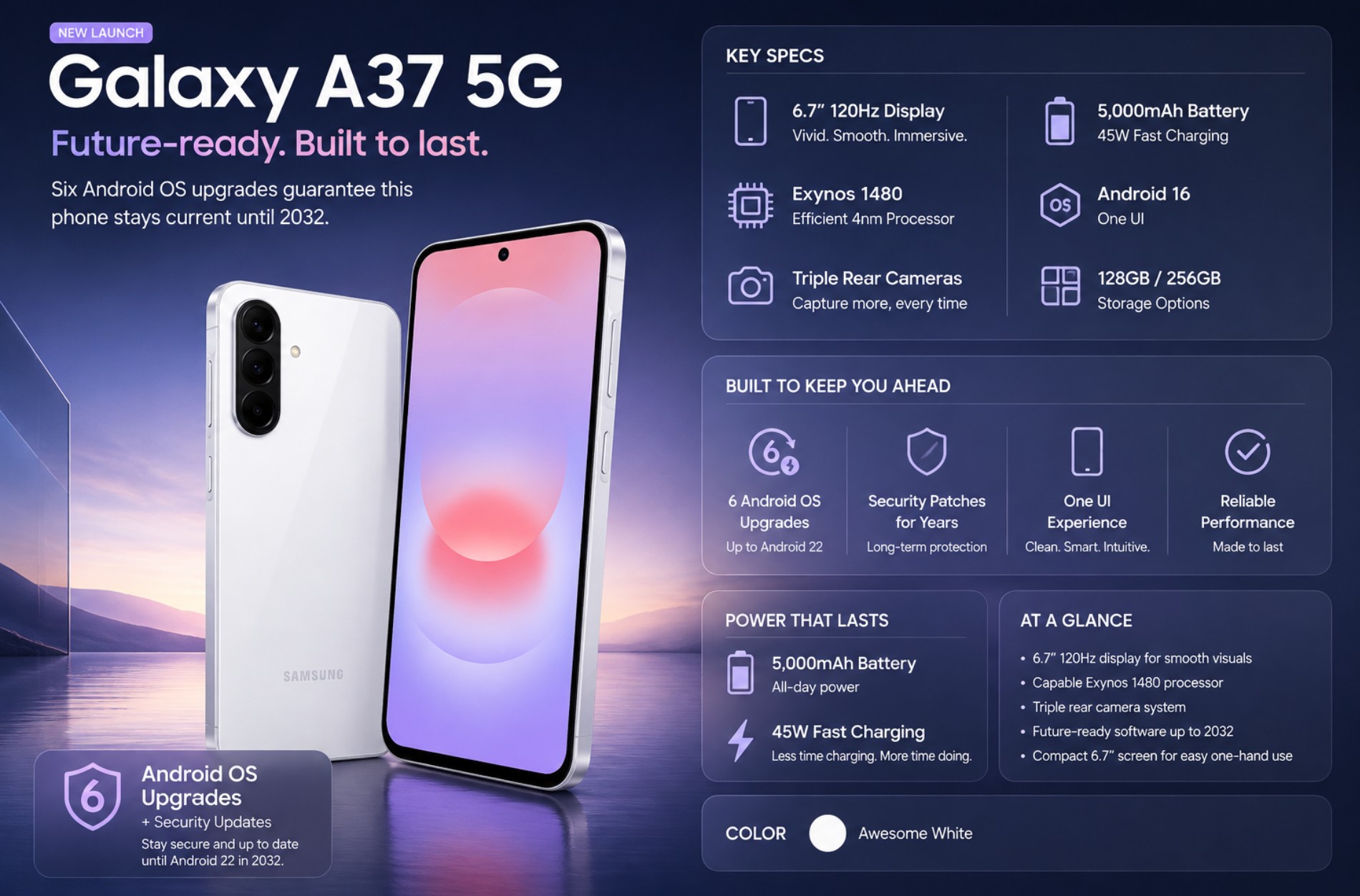
Why it wins: Six Android OS upgrades guarantee this phone stays current until 2032.
SpecSamsung Galaxy A37 5GDisplay6.7″ 120Hz displayProcessorExynos 1480CameraTriple rear camerasBattery5,000mAh, 45W chargingOSAndroid 16, One UIUpdates6 OS upgrades + security patches
Samsung’s update policy is the Galaxy A37’s most compelling feature. Six Android OS upgrades mean this phone will receive Android 22 — a level of software longevity that no other manufacturer in this list promises.
The Exynos 1480 processor is capable but not best-in-class at this price. The 5,000mAh battery with 45W charging is the smallest and slowest in our comparison. And 6.7 inches makes it the most compact screen here.
You’re trading present-day hardware for future-proof software. That’s only valuable if you keep phones for 3+ years. If you upgrade every 1–2 years, the hardware gap makes the others better picks.
Our verdict: The smart buy for anyone who wants one phone that lasts until 2030.
The Final Call: Which Alternative Should You Pick?PriorityBest PickBest overallOnePlus Nord CE 6Fastest chargingRedmi Turbo 5Best valuePoco X8 ProBest cameraNothing Phone 4a ProLongest updatesSamsung Galaxy A37 5G
The Vivo V80 Lite 5G remains a solid phone — especially if durability and the Sony IMX852 sensor matter to you. But every alternative on this list beats it in at least one area. Your best choice depends on which trade-off you’re most willing to make.
FAQsIs the Redmi 17C 5G a good budget alternative below $200?
The Redmi 17C 5G costs under $200 and offers 5G connectivity with a 6,000mAh battery. However, it sits a full tier below the Vivo V80 Lite 5G in processor power, display quality, and camera specs. It’s best for buyers whose budget is strictly capped and who prioritize 5G access and battery life over performance.
How does Vivo’s V70 Lite 4G differ from the V80 Lite 5G?
The V70 Lite 4G has a bigger 8,100mAh battery but drops to a weaker Unisoc T7300 chip and loses 5G connectivity entirely. It’s designed for markets without reliable 5G infrastructure — think Central Asia and the Middle East. If you have 5G coverage, the V80 Lite 5G is the clear pick despite the smaller battery.
Which phone on this list is best for mobile gaming in 2026?
The Redmi Turbo 5 and Poco X8 Pro share the Dimensity 8500 Ultra processor, making them the strongest gaming performers here. Both handle demanding titles at high settings with minimal frame drops. The Redmi’s 100W charging also means less downtime between sessions. The iQOO X concept phone represents the bleeding edge, but these are the practical choices available today.
Does the Poco F9 Pro make these phones obsolete?
No. The F9 Pro starts at €799 — roughly double what these phones cost. It targets a completely different buyer who wants flagship performance (Snapdragon 8 Elite Gen 5, 200MP camera). The phones on this list serve the budget-to-mid segment where value per dollar matters more than peak specs.
Are any of these phones available outside India and South Asia?
Yes. The OnePlus Nord CE 6 and Samsung Galaxy A37 5G have the broadest global availability. The Poco X8 Pro is available in select European and Asian markets. The Nothing Phone 4a Pro sells in Europe, the UK, and India. The Redmi Turbo 5 is initially China-focused but typically reaches global markets under the Poco branding within a few months.
Vincee Cole is a technology journalist with four years of experience covering the full spectrum of modern tech — from consumer devices, artificial intelligence, to quantum computing, blockchain, and digital assets. His reporting cuts through complexity to deliver stories that are sharp, grounded, and relevant to both general readers and industry insiders. Previously, he worked with fintech research teams across Southeast Asia, analysing how emerging technologies are reshaping financial systems at scale.