
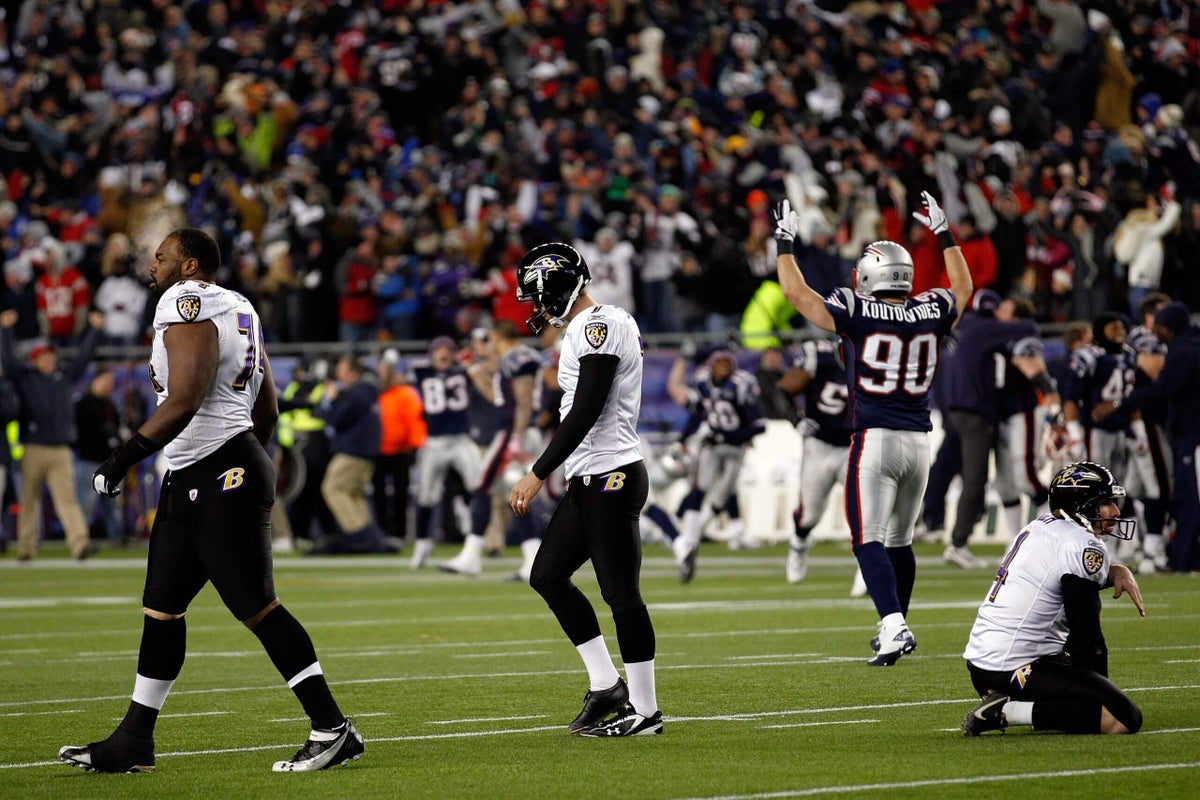
In recent days, a former Philadelphia Eagles staffer posted footage of the New England Patriots displaying seemingly disorienting videos of opposing kickers on the enormous Gillette Stadium end zone video screens as they attempted field goals. The images showed the uprights from the reverse angle, which could be disconcerting to the kickers as they lined up and got their bearings.
Then came evidence that the Patriots didn’t do that for their own kicks, instead opting for a static, non-moving image.
Then came the statistics showing that opposing kickers have struggled at Gillette Stadium more than anywhere else, while Patriots kickers have had little trouble there, despite it being an outdoor stadium.
All of it put together, and brought to the forefront by former Eagles strategy and analytics coach Ryan Paganetti, yielded grand thoughts of evil genius. Classic Bill Belichick, the idea went. Always looking for any small advantage to bring his team, which is part of how he helped bring about multiple dynasties in New England.
But the full story is apparently a bit less sinister and a lot less provocative.
How NFL teams mess with opposing kickers
Robert Mays
It goes like this, according to a league source familiar with the operation: In the early 2010s, a few years into Stephen Gostkowski’s 15-year career, the kicker raised an issue to Patriots coaches. During his field goal attempts, the team showed video of him on the huge boards behind the uprights, as it did on all field goal tries, for both home and away teams. It’d be easier and less distracting, he noted, if that could be changed to a static image.
So, the Patriots checked with the league, which made it clear that, during a field goal attempt, video boards in the stadium have to either show all-22 camera angles (which the Patriots had been doing) or static imagery.
That’s how, at Gostkowski’s prompting, the Patriots continued showing all-22 footage during their opponents’ kicks but switched to a static image during their own.
As Graham Gano, who spent 16 years as an NFL kicker, noted on X: “This used to happen a lot in different places over the years.”
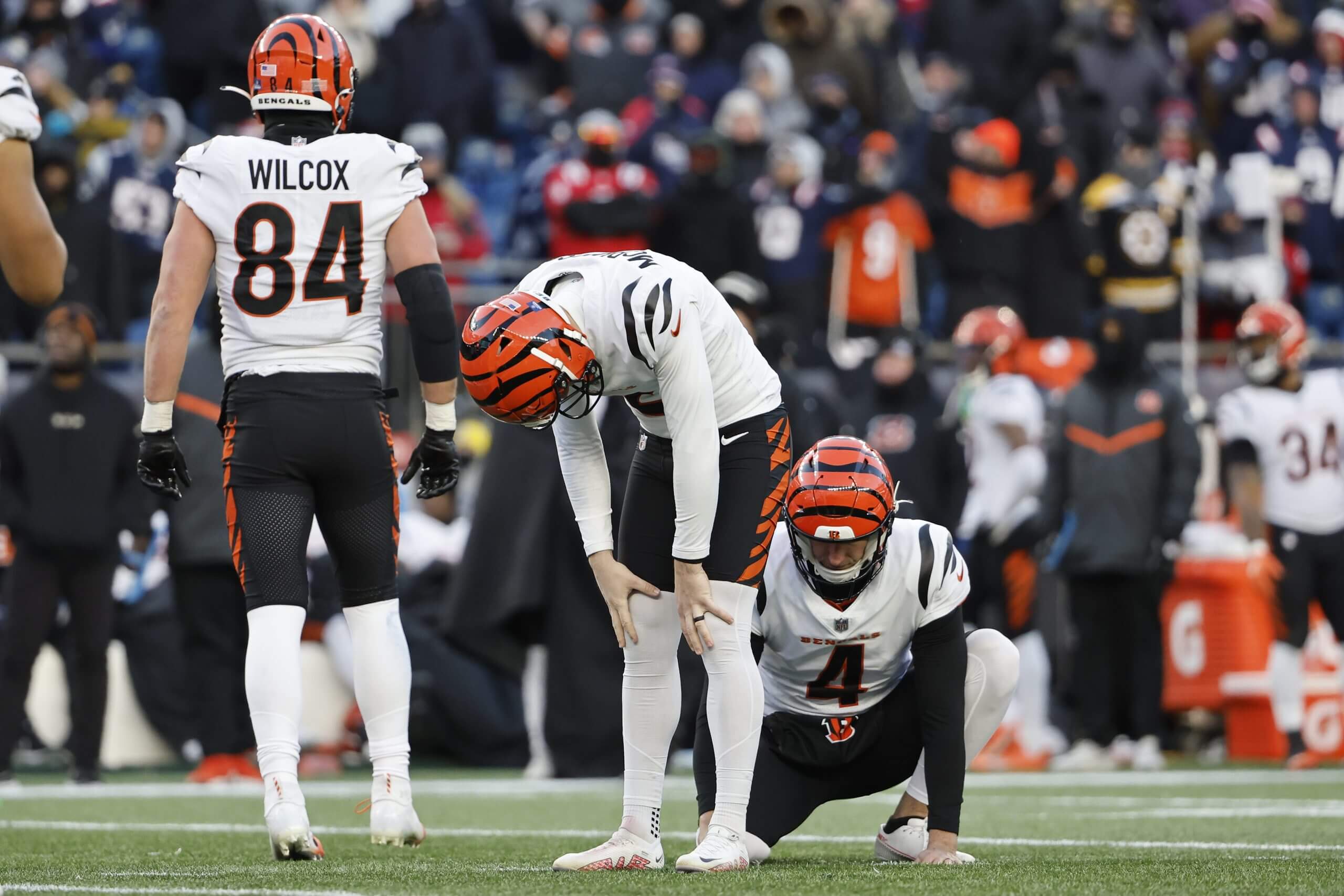
Evan McPherson of the Cincinnati Bengals reacts after a missed field goal in Foxborough against the Patriots in December 2022. (Winslow Townson / Getty Images)
While the story would have been juicier if this had been some cunning Belichick scheme that caused the NFL to intervene, a league spokesperson said what the Patriots have been doing is above board.
Here is the NFL rule on what can be on the video screen during a field goal:
“All video and ribbon boards must show either a static image (e.g., no flashing images, blinking effects, moving text/images, etc.) or an all-22 view (e.g., high sideline, high end zone, etc.) during field goal attempts and extra point attempts. Any flashing, moving or blinking text/images displayed on video boards or ribbon boards during field goal attempts and extra points are considered a violation of this policy. The prohibition will begin when the kicking team reaches the line of scrimmage and continues through the signal by the Game Officials following the kick.”
Still, it remains interesting that the Patriots have been much better than their opponents at making field goals at Gillette Stadium. From 2000 to 2025, visiting teams at Gillette Stadium had the lowest made field goal percentage of any team’s opponents at home. Some of that could be because the Patriots play outdoors in the Northeast (the three teams whose opponents have the best field goal percentage — the Atlanta Falcons, Minnesota Vikings and Dallas Cowboys — all play indoors).
While Patriots opponents since 2000 have made just 75 percent of their field goal tries at Gillette Stadium, Patriots kickers have made 84 percent of their tries in Foxborough (though it’s also fair to note that for most of that time, they rostered two of the generation’s best kickers in Adam Vinatieri and Gostkowski). The league-average field goal percentage for road teams in that span is 82.5 percent.
According to one former special teams coordinator, whose team played in New England several times during this era, his kickers never complained to him about the video board.
The idea of distracting kickers with something beyond the uprights isn’t new. Colleges have gotten creative with it. The University of Minnesota displayed what became known as the “Dramatic Gopher” on the video board behind the uprights.
And there are other NFL teams that show static images behind the goal posts when their kickers attempt field goals, then show all-22 video when the opposition is kicking.
The Patriots’ story would’ve been more fun if it had been another example of how Belichick left no stone unturned in seeking competitive advantages.
But the real story has more to do with Gostkowski looking for a way to help his kicks split the uprights.
— The Athletic‘s Jeff Howe and Mike Jones contributed to this story.