
FARGO — When Amber Dillard of Hettinger, North Dakota, was diagnosed with multiple endocrine neoplasia, she wasn’t surprised.
She’s the fifth generation in her family to have the tumors on her pancreas.
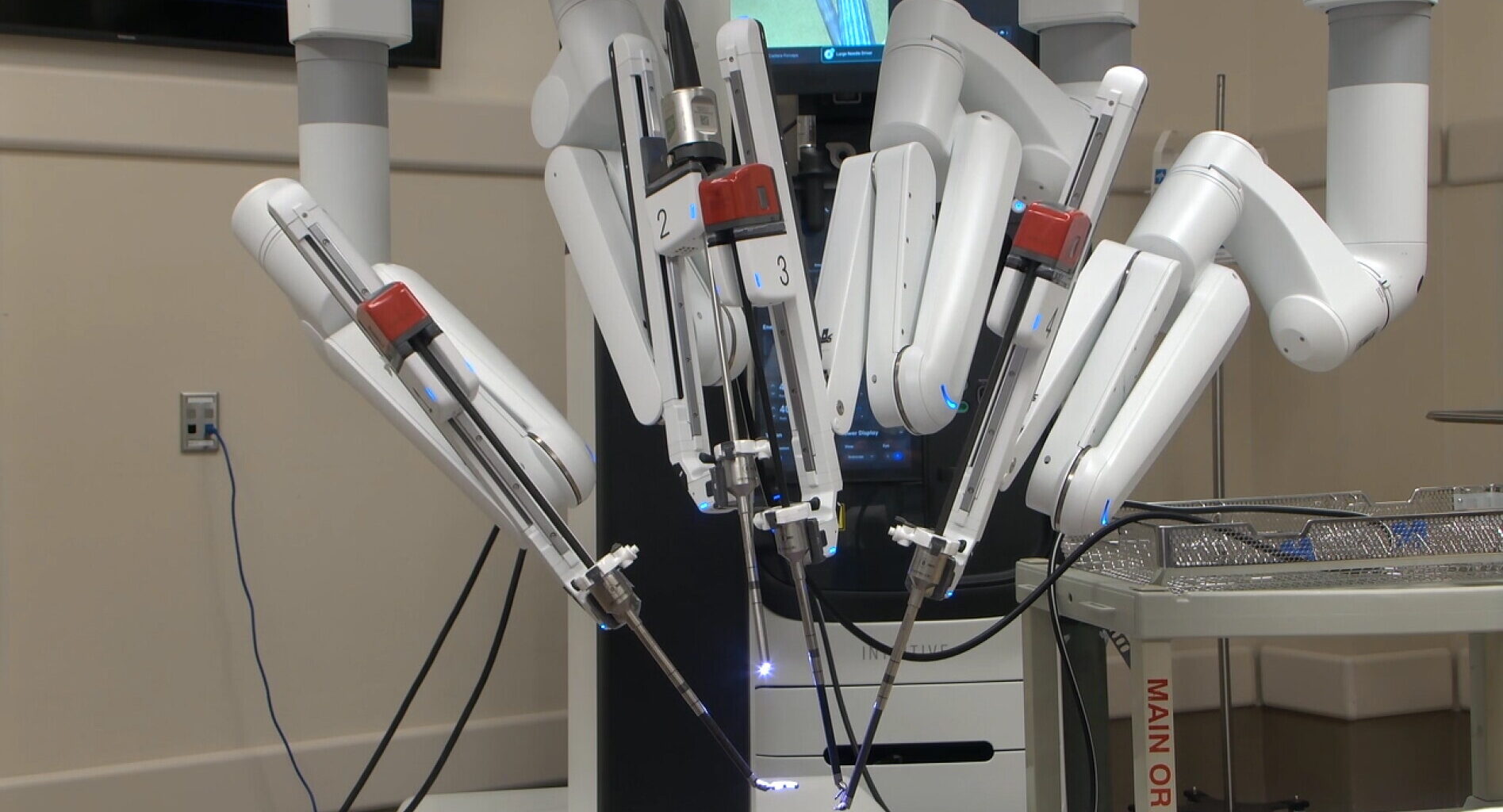
What was shocking was “who” would perform the surgery: a robot.
“That’s one of the biggest advantages to just get the patients back to their baseline and recovery significantly quicker,” said Dr. Kiarash Mashayek, a surgeon at Sanford Health in Fargo.
Mashayek has also done two other robotic Whipple surgeries and is a huge proponent of robotic surgery.
“I love the robots. I do almost 90% or 95% of my surgeries robotically,” Mashayekh said.
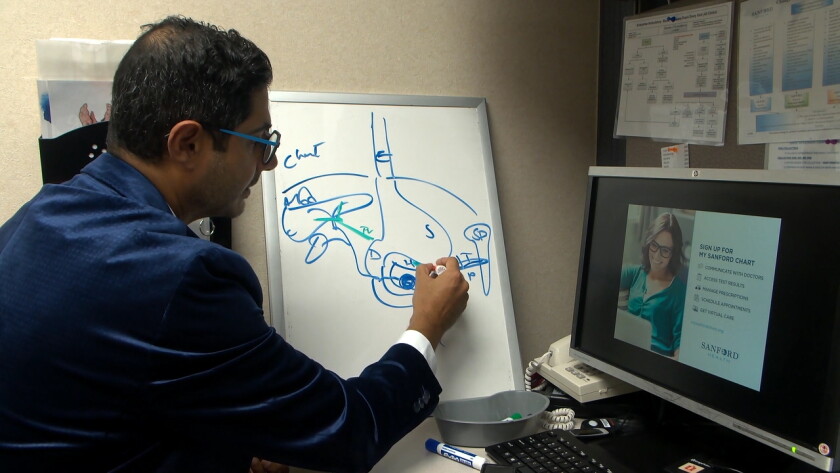
Dr. Kiarash Mashayek explains the Whipple procedure at Sanford Health, describing the complex surgery and the use of robotic technology to help patients recover more quickly.
Josh Mathisen / WDAY
But he hasn’t always been an advocate of the robotic Whipple.
“I always I was a true believer that open surgery will be a better surgery for the patients for different reasons,” he said.
But as Mashayekh looked into the robotic Whipple and considered what it could mean for patients, he realized it could be a game-changer.
And Dillard can attest that it is.
“Tomorrow will be a month after my surgery, and I’m pretty much back doing a lot of the same things that I did before,” she said.
While the surgery has benefits, it doesn’t come entirely without risks.
“If bleeding happens, it will be significantly harder to control, but, if you do it carefully and control everything, I think that even the technicality and the outcomes in terms of the surgery and the margins and the oncologic outcomes is even better,” Mashayekh said.
For Dillard, the results were clear and she hopes other patients are made aware of the benefits.
“The robotics of this procedure, I think, are really something that need to be talked about more because robotics really just mitigate a lot of post-surgical infection and other complications that can come from doing a traditional Whipple,” she said.
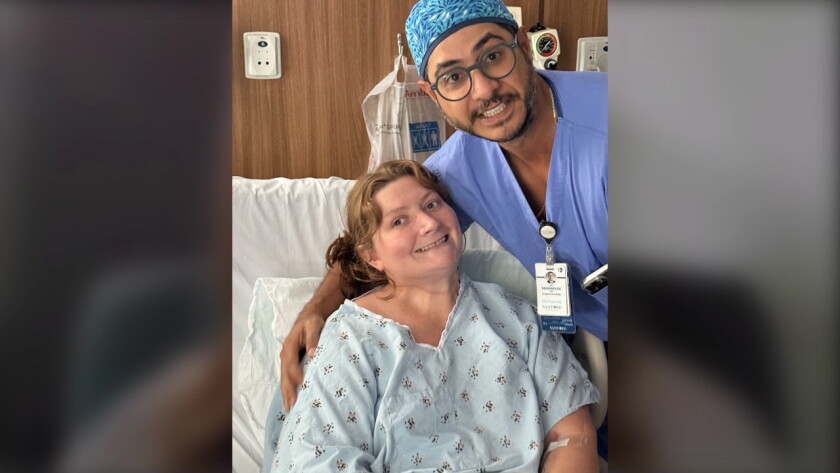
Amber Dillard with Dr. Kiarash Mashayek after her robotic Whipple procedure.
Contributed