
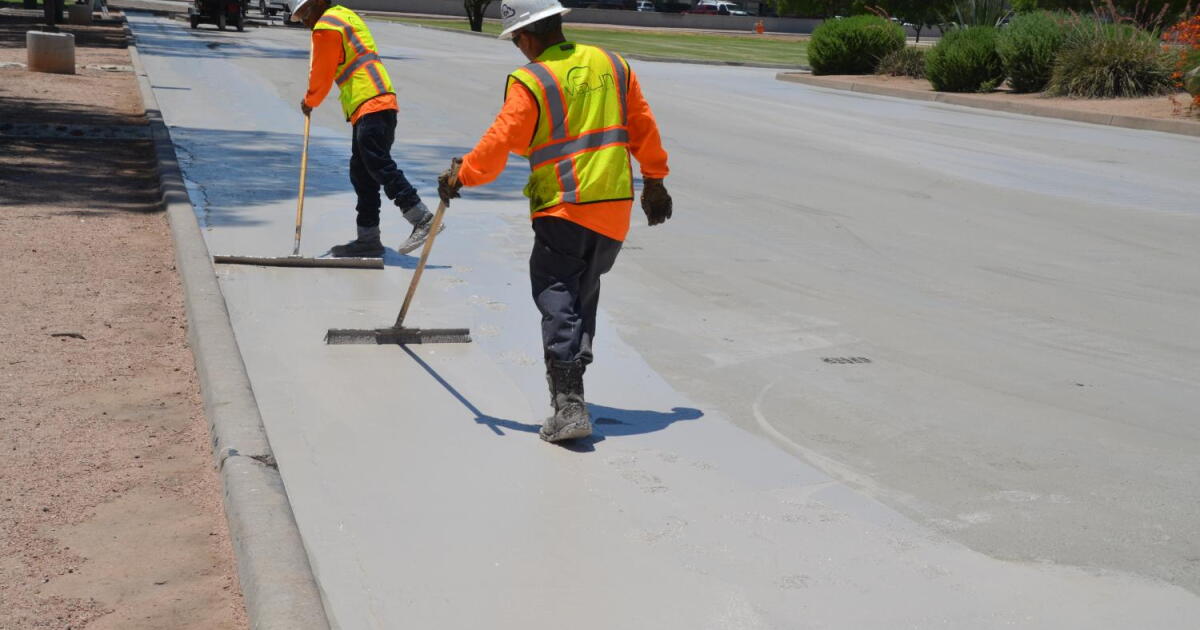
Phoenix has now covered 200 miles of city streets with cool pavement. The city has been applying the light, reflective coating since 2020 with the goal of reducing the urban heat island effect.
In cities across the U.S., summer nighttime temperatures are warming even faster than daytime highs, according to climate scientists. Human-caused carbon pollution traps heat close to the surface of the earth. And the asphalt and concrete that cover most urban areas absorb sunlight throughout the day, boosting temperatures, even after the sun sets.
In scorching-hot Phoenix, a few extra degrees of nighttime heat can be dangerous.
A 2021 analysis by the city and Arizona State University showed cool pavement reflects light, keeping treated surfaces 10 to 12 degrees cooler than traditional asphalt on hot afternoons.
That makes a difference when it comes to overnight air temperatures, said Ryan Stevens, engineering manager with Phoenix’s Street Transportation Department.
“Air heats from the ground up, so where we can cool the ground, that’s going to help reduce some of that heat that’s going into the air,” Stevens said.
The study by the city and ASU showed nighttime air temperatures over cool pavement averaged 0.5 degrees cooler than air above non-treated surfaces.
If you walk across one of the treated streets on a hot afternoon, the study showed, the reflected light from cool pavement may actually make you feel a little hotter. So Stevens said cool pavement is being applied only in areas where people do not congregate for long periods of time.
“If you’re on the sidewalk, we found there was no difference in heat exposure between being on a regular street next to you or a cool pavement street next to you,” Stevens said, adding that when people do cross the street, they typically do so quickly. “If there is any increase in exposure, it’s a very short time, and that doesn’t negate the positives of reducing that surface temperature.”
And in addition to reducing temperatures, Stevens said the coating comes with other benefits.
“We expect a cool pavement coating to last about eight years and a traditional asphalt pavement that’s a similar material, we would generally expect to last two to three years,” Stevens said.
Stevens said the city plans to continue applying the coating to more streets in the years ahead and said completing 200 miles is an important milestone.
“The city is almost 5,000 miles across the whole city, so 200 miles doesn’t seem like a lot. But that’s probably thousands of homes that we’ve been able to install the cool pavement on and several dozen neighborhoods. So it’s a great accomplishment,” Stevens said.
You can see a map of cool pavement locations on the city’s website.