
Ten years ago, we made a decision which has shaped our finances since. We decided to send my eldest son to a private secondary school in south London.
He was offered a partial scholarship and it seemed like an opportunity that was too good to turn down. Now, with a lingering mortgage, barely any savings and most of an inheritance spent, I still don’t regret the decision.
It’s very easy to bracket all private schools as being full of privileged children. The reality is very different. The private secondary school both my sons attended is both culturally and socially diverse and renowned for offering generous bursaries as well as sports, music and academic scholarships to around 40pc of its pupils. It seemed like a good fit for my son Kamran.
When he began year seven in 2017, the fees seemed manageable. He was offered a small academic scholarship and a music award, which meant that he could continue and be supported in his passion for playing the piano and clarinet as well as singing in the school’s well-known boys’ choir.
The school paid for his music lessons, as well as giving us a small discount from the fees of around 10pc. In total, we were paying around £17,000 a year.
Myself and my husband both had relatively secure jobs at the time and were earning around £120,000 between us. But sending Kamran and then his younger brother Zak, starting in 2021, has required continual financial trade-offs.
We initially remortgaged our house to cover the additional cost. It meant that we were not constantly scrambling to find the money for the fees but it has also meant that, a decade later, we are still paying off a mortgage that might otherwise have been cleared.
While friends and neighbours were building large extensions and having family holidays at all-inclusive destinations several times a year, we did little to improve our home and I perfected the art of the budget holiday. Our lifestyle had to be more restrained. Neither of us has expensive gym memberships and I manage our everyday living expenses carefully.
Our boys have never suffered from the lack of luxury in our lives – if anything, it has kept them more grounded.
For us, the sacrifices have been worth making. Kamran was thriving both academically and musically at his secondary school. He took part in musical performances across Europe, travelling with the school choir, gaining the confidence along the way he so lacked at primary school, both from his peers and teachers.
He eventually left for a local grammar sixth form at 16, having obtained straight nines at GCSE, and is now in his second year of medical school.
My younger son Zak, now 16, went to a state primary, which we felt provided little support or guidance during the lockdowns. The contrast with my older son’s private secondary could not have been greater. Kamran had a full timetable of online lessons and, more importantly, much-needed structure.
Somehow, Zak still passed the highly competitive 11-plus entrance exam for a local grammar as well as another very sought-after private school in Surrey.

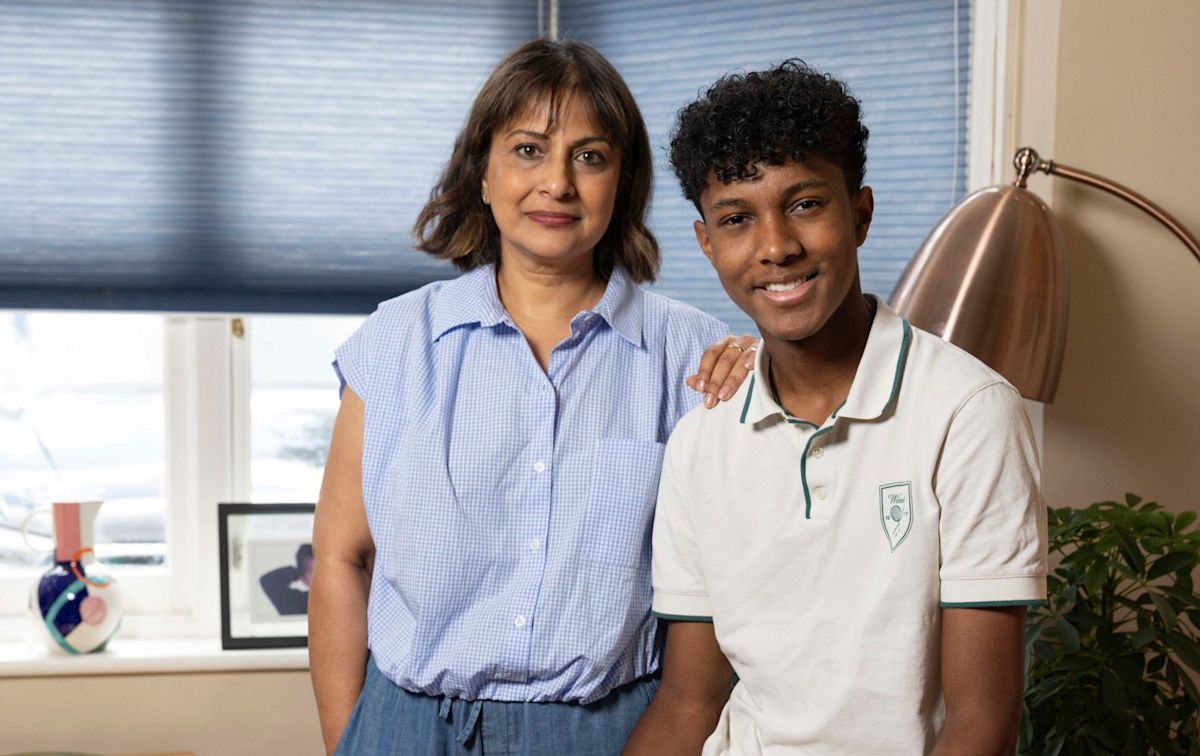
Zak had options – but Maria and her husband were sure that a private school was the right decision – Jeff Gilbert for The Telegraph
Despite this, at the height of the Covid pandemic when so much felt out of our control, it felt right to send him to the same secondary school as his brother. We knew he would thrive and he too was awarded a 20pc sports scholarship. Like his brother, he achieved straight nines at GCSE.
But the financial effect on us has been brutal at times.
Most of Zak’s education has been paid for using an inheritance I received and in the last few terms, I have dipped into my pension pot too. The addition of VAT on school fees last year has meant that we have been paying about £8,000 a term, almost double the amount we were paying a decade ago.
Some may argue that “the cream rises to the top” regardless of where a child is educated and that the money would have been better spent on private tutors. Having had my children at both private and state schools, I don’t believe the sporting, musical and academic opportunities on offer – as well as the confidence that inspires – are comparable.
According to data published by the Independent Schools Council (ISC), the number of children at independent schools has fallen by 30,000 since the introduction of VAT on school fees by the Labour government in 2025.
The latest census published by the ISC found that between 2025 and 2026 alone, pupil numbers fell by 3.5pc.
Megan Rimmer, a chartered financial planner at Quilter Cheviot, notes that while private school fees have undoubtedly become a bigger financial commitment for many families, following the addition of VAT, the wealth manager has not seen large numbers abandoning private education altogether.
While some are opting to use private education strategically, such as from GCSE or from A-levels onwards, others are making sacrifices elsewhere, either by cutting back on holidays, reducing discretionary spending or accepting that they may need to work longer before retiring.
“Education is a deeply personal decision and many parents are willing to make significant trade-offs if they feel it will benefit their children’s future opportunities,” she says. “However, it is important that this doesn’t come at the expense of long-term financial security.”
Rimmer advises families to take a holistic approach to their finances and ensure that they are not solving a short-term challenge while creating a longer-term one.
While in our case, our home’s value has appreciated sufficiently to have made remortgaging worthwhile, and our joint income has increased sufficiently to negate any longer-term impact, Rimmer warns that any borrowing to fund fees can place additional pressure on household finances and make it harder to save for future goals.
Things could have turned out very differently for us financially but watching our boys thriving, I have never doubted that we made the right decision.