
The second half of the 20th century was a golden age of American painting, and Colorado artists were fully engaged in the making of modern and contemporary work during that time. A cluster of painters, who became known as the Boulder Armory Group, emerged in the late 1960s and carved out a distinct place for this region, far from the East Coast epicenter of the movement.
A new exhibit, produced by Denver’s Rule Gallery in a satellite space in the Golden Triangle, brings the era back. “Patterns of Influence” features work by local stars of the genre — some who are no longer living and others who continue to produce work — including Dale Chisman, Clark Richert, Margaret Neumann, Joe Clower, John Fudge and more.
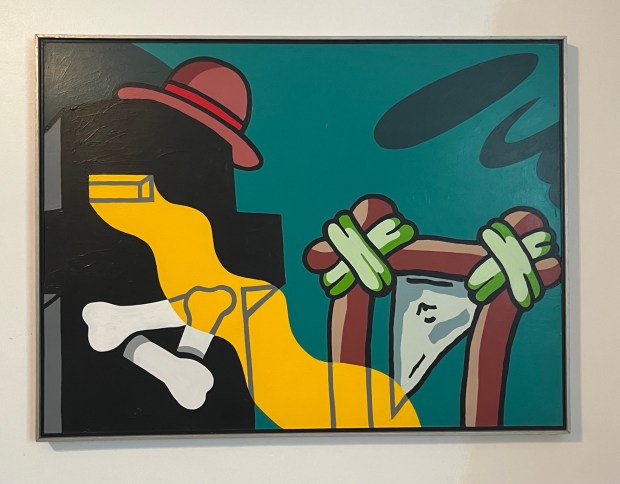 An untitled acrylic on board painting by Paul Gillis from 1986.
(Daniel Tseng, Special to the Denver Post)
The show is organized by veteran curator Simon Zalkind and takes place at the soon-to-close Z Art Department, an exhibition space founded by Randy Roberts, that has long served as a headquarters for both art and design in Denver.
With so many familiar names who defined that era in the mix, the exhibition has a sentimental feel, especially because it has the Rule brand. That gallery’s owner, Robin Rule, first opened the business in 1991, bringing much of this work before the public and helping to establish the commercial side of these artists’ practice.
Rule died in 2013, and Valerie Santerli, one of its current directors (along with Rachel Beitz), explained that “Patterns of Influence” is as much about place as it is art. With Z Art Department shutting down, the timing seemed right for a reunion of sorts — a chance to look back with a keen perspective.
It also gives the public an opportunity to see this varied work corralled together one (last?) time and to evaluate its staying power. In that way the show is a celebration, but also a test. How does it hold up?
Fairly well, in this particular arrangement. And that is saying a lot because expectations are always high when the output of these artists goes on display. Curator Zalkind did not include a massive number of objects in his show, but he chose wisely.
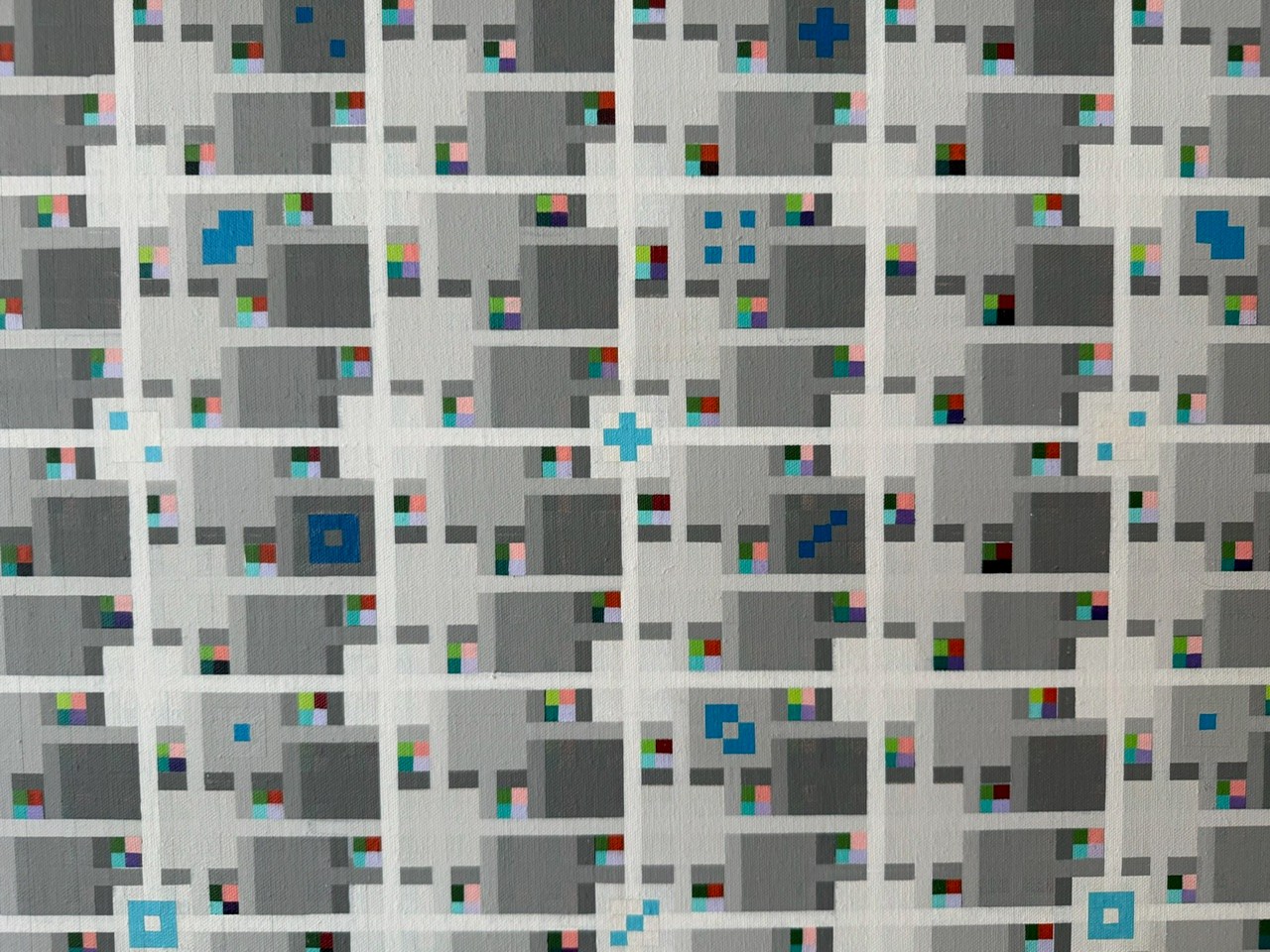
That lasting power is particularly strong in the efforts of Richert and Neumann. There is a timelessness to both of their work and it comes from different places. Richert, at his best, was a master of geometric abstraction, reinterpreting objects, ideas and elements into complex configurations of lines, circles and various multi-sided shapes.
The paintings can be mesmerizing, such as the one in this show, titled “Argon,” inspired, one assumes, by the noble gas and taking the form of endless, connected squares and rectangles with minor alterations of color and patterns taking place throughout the work. Richert, who died in 2021, made it in 1980, at the height of his deepest thinking.
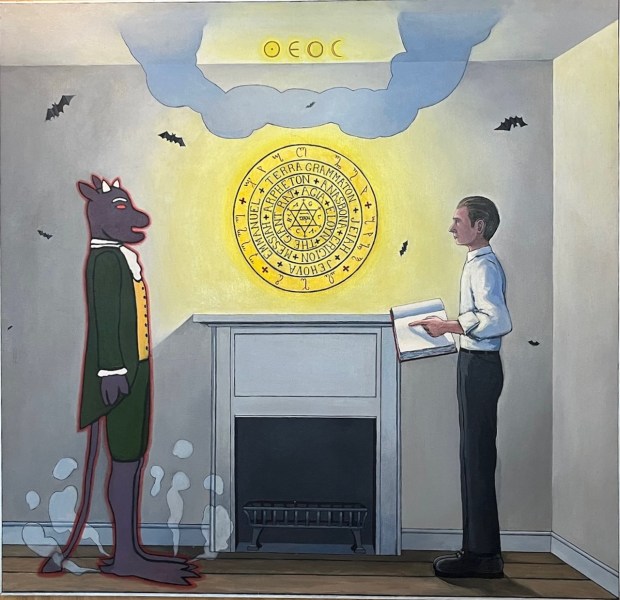 John Fudge’s “Do You Believe in Magic #2,” an oil on canvas work from 1966.
(Daniel Tseng, Special to the Denver Post)
Neumann’s paintings take a converse approach. They are often figurative, though never easy to decipher. Her works are mysterious dives into the human psyche, how we see ourselves and maneuver through an unpredictable, sometimes intimidating, universe.
This show has her 1981 acrylic titled “Puppet Master,” an emotionally dark work dominated by shadows and muted colors. It is one of her best pieces, and part of a career that continues today.
The fact that “Patterns of Influence” covers so much stylistic ground fits with the habits of the artists it has assembled into the exhibit. The group, named after the former Armory Building north of the CU Boulder campus where many attended school, did not have any distinct style. It was less a collective and more a bunch of colleagues whose careers coincided.
In its literature, Rule describes their bond as “something more durable: proximity, camaraderie, risk, debate and the daily exchange of ideas among individuals developing their own artistic voices and commitments at the same time.”
That means the group is wide enough to cover the satirical cartoon images dreamed up by John Fudge and Paul Gillis, as well as the minimalist sculptures of Jim Johnson and Andy Libertone. It includes Chisman’s abstract expressionist oil works and Richard Kallweit’s abstract paintings and sculptures, which might be seen as similar to Clark Richert’s pieces, though with a considerably warmer tone.
In some ways, all of these works seem dated, but in a good way. They mark an era when abstraction and pop art were still newish and having their heyday. They feel original and, in that way, historic and collectible. No doubt, these artists were, and continue to be, influential. Many of them taught at various institutions across the region, so generations of students carry on their ideas.
They also contributed to the collective identity of Colorado as a place where innovative art gets made. With the assistance of Rule and other local dealers, they helped develop a collector base here. At its core, every art ecosystem is fueled by buyers — they keep cash flowing, and artists fed so they can do great work. That network has not gone away.
One thing to note: this show closes relatively soon and its public hours are limited. So, do check the website for availability or give it a call. Rule is always good at accommodating people who want to see art.
“Patterns of Influence” continues through Sept. 13 at Z Art Department, 1136 Speer Blvd. Info: 303-800-6776 or rulegallery.com.