
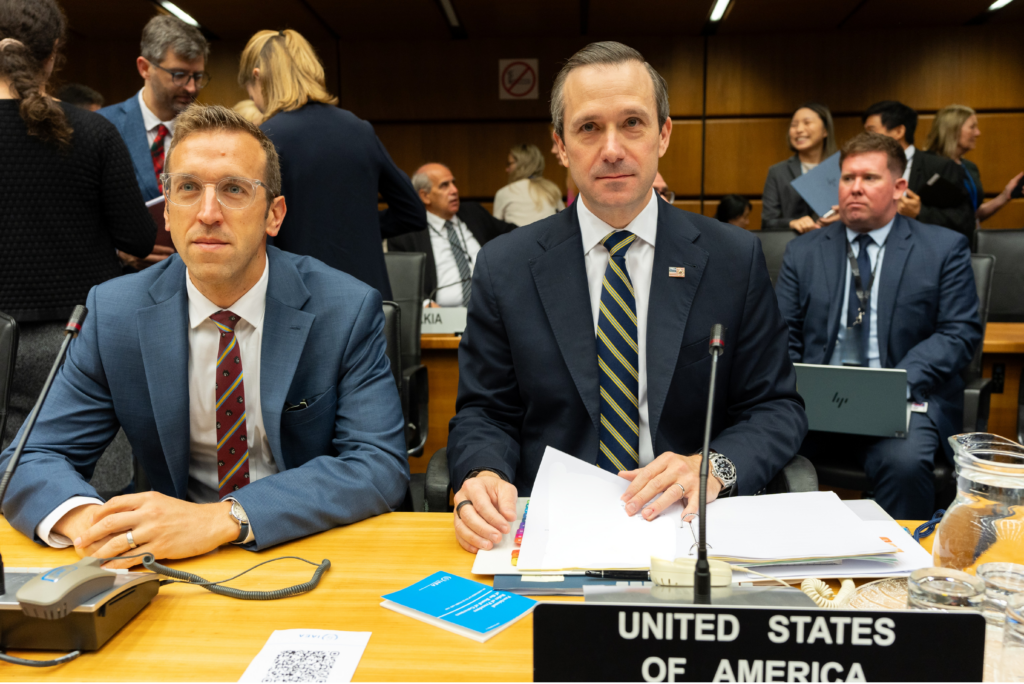
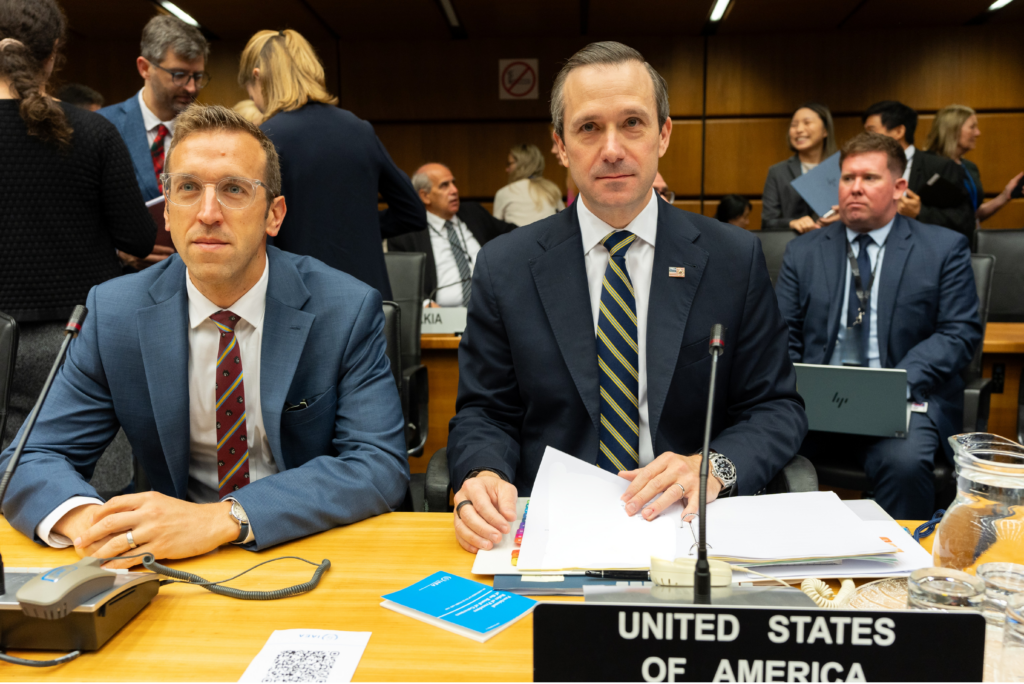
U.S. Statement – As Delivered by Ambassador Griffith – Agenda Item 3 – Nuclear and Radiation Safety
Vienna, Austria, September 7, 2026
Chair,
The United States takes note of the 2026 Nuclear and Radiation Safety Report. We thank the Secretariat for its efforts to implement nuclear and radiation safety activities and support Member States considering or planning for nuclear power or use of radiation technology. Regrettably, I must highlight several paragraphs in the report that the United States rejects. The references to climate change in paragraphs 135, 138, and 139 reflect a politicized view that goes beyond the Agency’s scope on external events.
Regardless, we recognize the importance of the Secretariat’s work to support the global nuclear safety frameworks that enable the safe and secure deployment of nuclear technologies. The United States remains the largest contributor of regular assessment and extrabudgetary funding for IAEA nuclear safety activities. We call on other Member States to increase their share of the burden in providing voluntary contributions for these important efforts.
Examples of the Agency’s good work abound. We are encouraged by the Agency’s expanded work addressing AI applications in nuclear safety. We applaud the progress of the Nuclear Harmonization and Standardization Initiative (NHSI) to enable global small modular reactor (SMR) deployment. We encourage the Secretariat to develop tailored and proportionate safety standards for fusion that support its safe and timely deployment. The IAEA’s nuclear safety efforts enable the peaceful uses of nuclear applications and are critical to maintaining public acceptance.
The United States was honored to host the recent launch of the ATLAS initiative and welcomes the focus on nuclear safety and regulatory activities in several of its project groups. ATLAS could be essential for shaping the international framework for the deployment of civil nuclear-powered ships and floating nuclear power plants under the highest standards for nuclear safety, security, and safeguards.
The United States encourages Member States to become Party to all relevant safety-related conventions. We congratulate Mongolia and Uzbekistan on becoming party to the Convention on Nuclear Safety and note the successful Tenth Review Meeting of the Contracting Parties earlier this year, which reached a consensual outcome that retained a focus on the essential technical nature of the convention. We also welcome the accession of Bangladesh and Burma to the Joint Convention on the Safety of Spent Fuel Management and on the Safety of Radioactive Waste Management. We regret that the Working Group on Burden Reduction and Efficiency of the Joint Convention Peer Review Process could not produce more concrete results.
We appreciate the Agency’s outreach efforts on the Convention on Supplementary Compensation for Nuclear Damage (CSC), which is the only mechanism for establishing a worldwide nuclear liability and compensation regime. We encourage Member States to announce your commitment to join the CSC in your General Conference National Statement. Swift ratification of the amendment adopted in January by all Contracting Parties will broaden the appeal of the Convention by exempting Parties with no nuclear reactors from paying into the supplementary fund.
Thank you, Chair.
U.S. Statement – Agenda Item 3 – IAEA Board of Governors Meeting