
Trade disruptions hit all firms. But they rarely hit them equally.
The Strait of Hormuz disruptions are no exception.
Large companies can spread risk across suppliers, markets and financing sources. Small and medium-sized enterprises (SMEs) typically cannot.
As energy, transport and financing costs climb, margins shrink and supply chains become disrupted. The pressure can force firms to scale back production, postpone investment or exit altogether. Exclusion becomes a constant risk.
The economic consequences extend beyond the firms themselves. SMEs generate much of the world’s employment and entrepreneurial activity.
When SMEs falter, growth becomes less inclusive and less resilient.
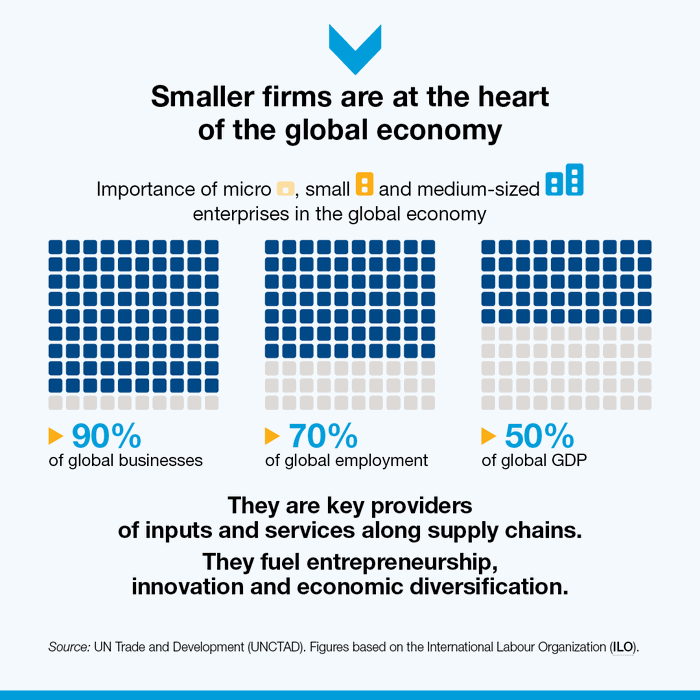
Smaller firms are at the heart of the global economy. They are key providers of inputs and services along supply chains. They fuel entrepreneurship, innovation and economic diversification.
The risk of exclusion is higher for smaller firms
What is the risk of an SME exclusion effect?
Smaller firms face the risk of exclusion from value chains even when global trade volumes recover from shocks.
Rising energy bills, freight rates, insurance premiums and financing constraints place heavier burdens on SMEs than on large firms.
Why it matters
When SMEs are pushed out from value chains:
Unemployment risesHousehold incomes declineSocial vulnerability increases
Trade resilience requires SMEs to remain part of value chains. Otherwise, recovery may simply mask greater concentration among larger firms.
Past shocks reveal the greater vulnerability of smaller firms
Policy considerations
Policy responses should address both continuity and inclusion of SMEs.
Enhance monitoring of SMEs’ trade participation during shocks. Assess resilience not only through trade flows and sales, but also through SMEs’ ability to maintain market connections and operations during and after disruptions.Safeguard SMEs’ access to finance. Strengthen access to trade finance, liquidity and working capital, which become critical when costs rise and delivery times and payment cycles lengthen.Strengthen public support for trade and logistics services. Improve SMEs’ access to reliable and affordable logistics, trade facilitation, market information and other business support services, particularly in developing economies.Foster SME resilience and market participation. Support SMEs’ productivity and competitiveness, as well as their ability to maintain and diversify supplier and customer relationships, particularly in developing countries, to safeguard jobs, foster innovation and strengthen resilience to future shocks.
As engines of job-creation, micro, small and medium-sized enterprises are critical to every country’s future.
António Guterres
Secretary-General of the United Nations