
Armadillo discovered in Ohio could mark ‘significant milestone’ in state’s history
 OXFORD, Ohio —
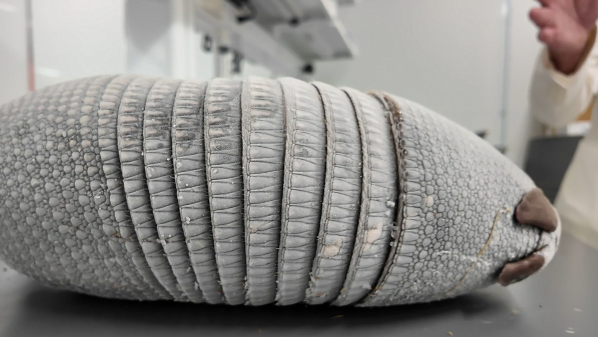
Researchers at Miami University in Oxford, Ohio, have documented the first natural occurrence of an armadillo in the state, a discovery described as both surprising and historic.
Dr. Tereza Jezkova, an associate professor of biology at Miami University, said, “It is, possibly the first documented occurrence of natural occurrence of armadillos in Ohio.”
The armadillo, described as gray, scaly, and with oddball eyes, was found outside its typical habitat range. Dr. Jezkova explained that this armadillo appears to have arrived in Ohio without human assistance. “Well, I was not surprised. I was pleasantly surprised,” she said.
Graduate students at Miami University have been tracking the Mexican long-nosed armadillo as it advances northward, moving beyond areas where its physiology would normally allow it to survive.
“Right now, we don’t know how they do it, what the mechanisms are,” Jezkova said.
When asked if the armadillos could negatively impact other species in the region, Jezkova responded, “No, so far, we don’t believe so.”
The armadillo, which was found as roadkill, is now being preserved in Dr. Jezkova’s lab for further study. It will eventually be displayed at the Hefner Museum of Natural History on Miami University’s campus.
Some armadillos are known to carry bacteria related to leprosy, but researchers have not found evidence of this in armadillos discovered in northern areas.
This discovery offers researchers a unique opportunity to learn more about the species’ migration and adaptation as it moves into new territories.