
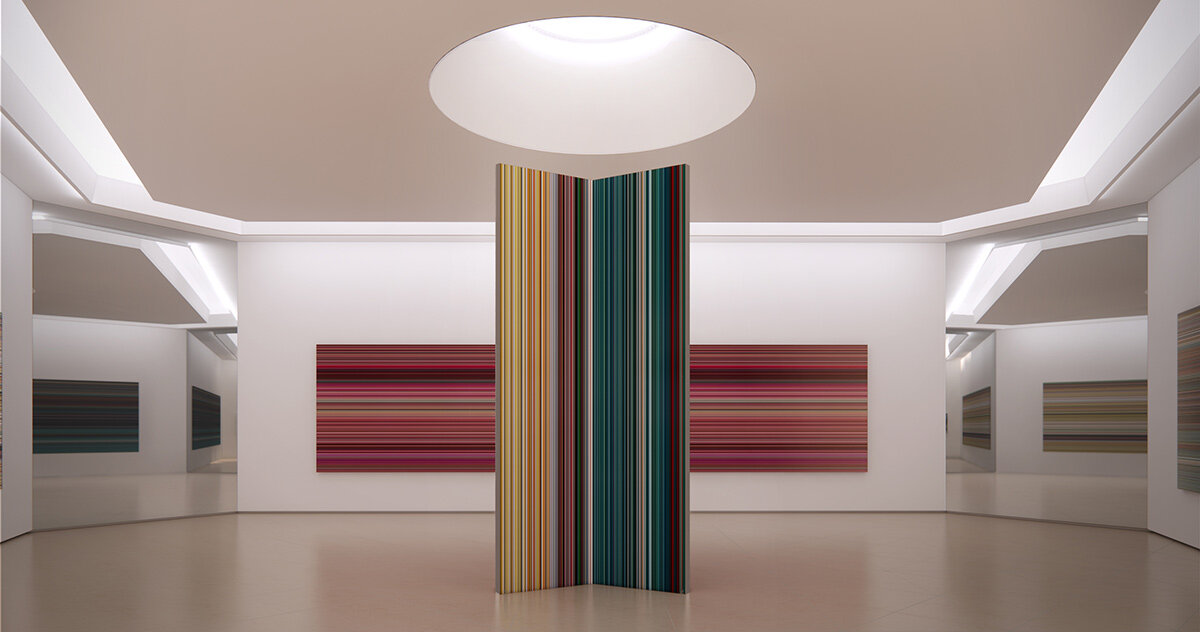
Strip paintings translated into three dimensions
A Gerhard Richter painting can begin with a photograph and end as something far more experimental. In Doha, one of those studies is becoming a building. The German artist has designed a permanent hexagonal gallery pavilion for MIA Park that takes the visual system behind his Strip paintings and expands it into a space visitors can walk inside. Realized with Selldorf Architects, Doha Pavilion: Gerhard Richter will open on November 20th, 2026, beside the Museum of Islamic Art.
Its six exterior walls are wrapped in repeating printed patterns derived from Richter’s 2011 artist’s book Patterns. The source goes back another year, when Richter digitally divided an image of his Abstract Painting (724-4) fromdes 1990 into two vertical strips, then kept subdividing the image until it reached 8,192. Each strip was mirrored and repeated into a horizontal symmetrical pattern. What began as a way of taking a painting apart now covers the surface of the building.
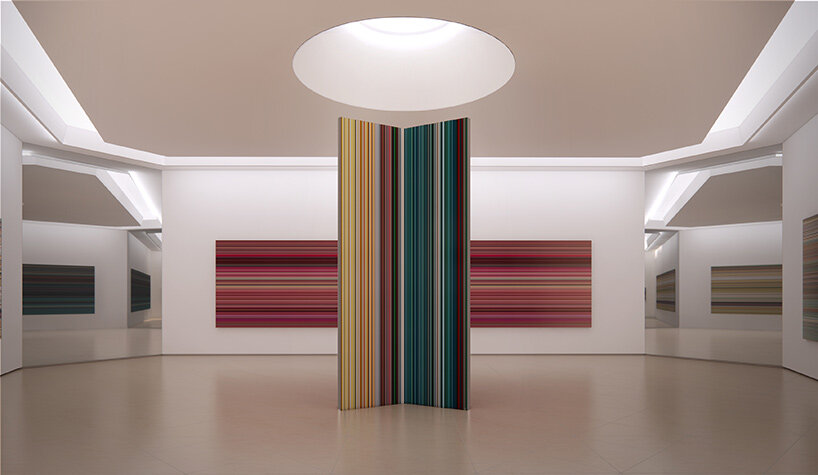
Doha Pavilion Gerhard Richter (interior) | visualization © Selldorf Architects
gerhard richter’s images multiply along the interior
Three large-scale Strip paintings line the interior walls of the Gerhard Richter pavilion in Qatar, which push the same process almost to the limit of what the eye can register. Each horizontal band corresponds to a slice of the original photograph only 0.08 millimeters wide. At the center, the artist places Strip Tower, a freestanding sculpture designed specifically for the pavilion, lifting the bands away from the wall and into the room.
Two floor-to-ceiling Mirrors occupy the narrower walls between the paintings. Richter has worked with mirrors since the 1980s, and here they make the pavilion behave differently as people move through it. Paintings repeat across their surfaces, visitors enter the image, and the compact interior seems to stretch far beyond its actual footprint. The room becomes part gallery and part optical device.
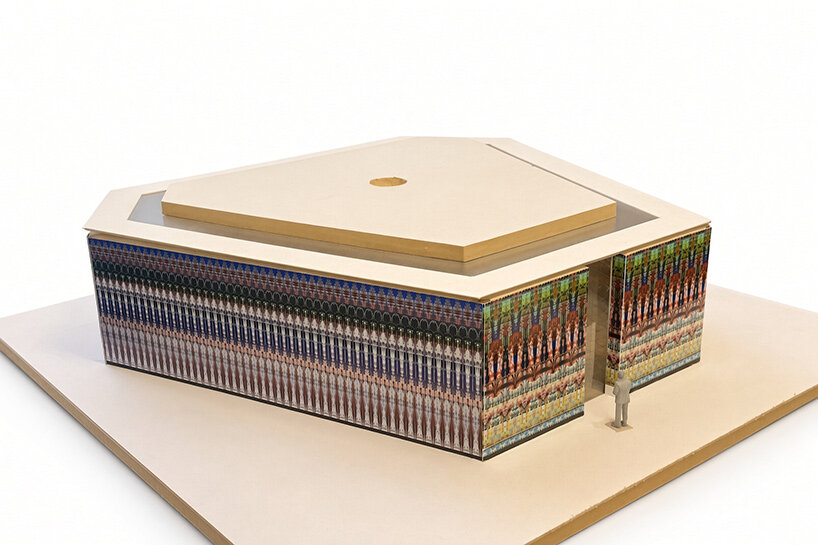
architectural model of Doha Pavilion Gerhard Richter | image courtesy of Selldorf Architects
an idea that began with a visit to doha
Richter traces the pavilion back to a trip to Doha in 2013, two years after he began developing the Strip paintings. He recalls the city’s architecture and history giving him the idea for a structure that could bring several threads of the work together. ‘The Pavilion’s exterior features decorative tiles based on the Patterns that first led me to the Strips,‘ he explains. ‘Doha is the right place and the only place for my Pavilion.‘
The repeated symmetry across the facade also draws a connection to the geometries of Islamic art, where patterns can continue far beyond the visible edge of a surface. Here, that logic passes through Richter’s digital process and comes back at architectural scale. A stone sculpture titled Brunnen (Well) sits directly outside, extending the work into MIA Park.
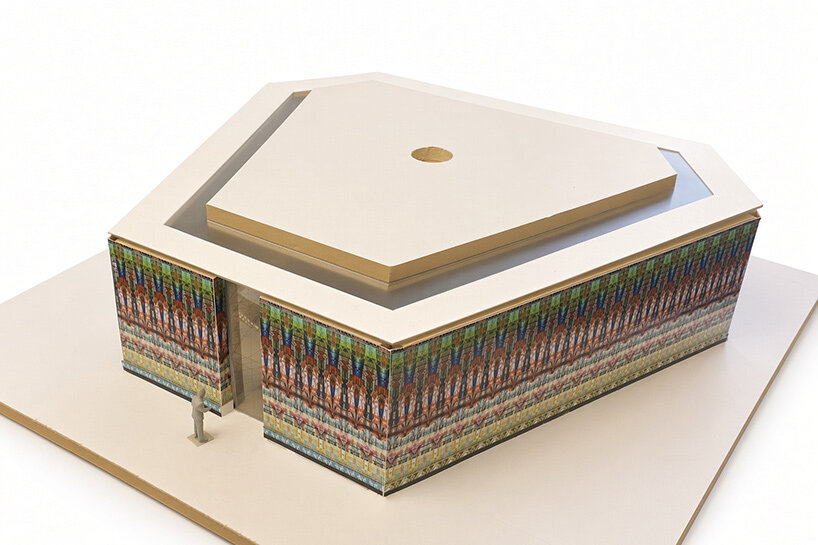
architectural model of Doha Pavilion Gerhard Richter | image courtesy of Selldorf Architects
opening with the first Rubaiya Qatar
The pavilion will be inaugurated on November 20th, one day before the opening of the first Rubaiya Qatar, a new international visual arts quadrennial running through April 30, 2027. More than 50 regional and international artists will participate across museums and public sites in Doha, with Richter’s pavilion joining the city as a permanent work after the inaugural edition closes.
There is something pleasingly circular about where Richter’s process has ended up. One painting was photographed, divided again and again, mirrored across thousands of slivers, and eventually translated into the walls of a building. Inside, those fragments return as paintings and sculpture while the mirrors pull whoever enters into the composition. A digital experiment from more than a decade ago has gained a fixed address in Doha.
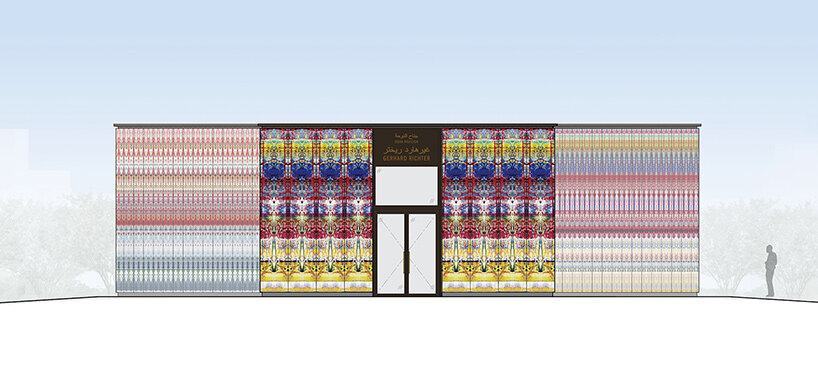
Doha Pavilion, north elevation © Selldorf Architects
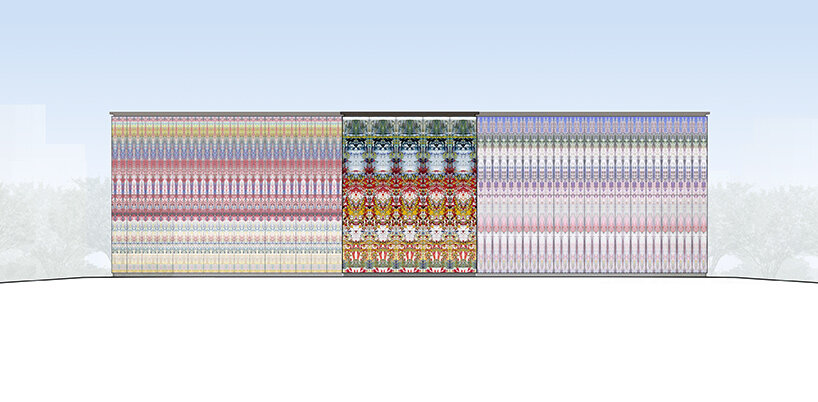
Doha Pavilion, southwest elevation © Selldorf Architects