
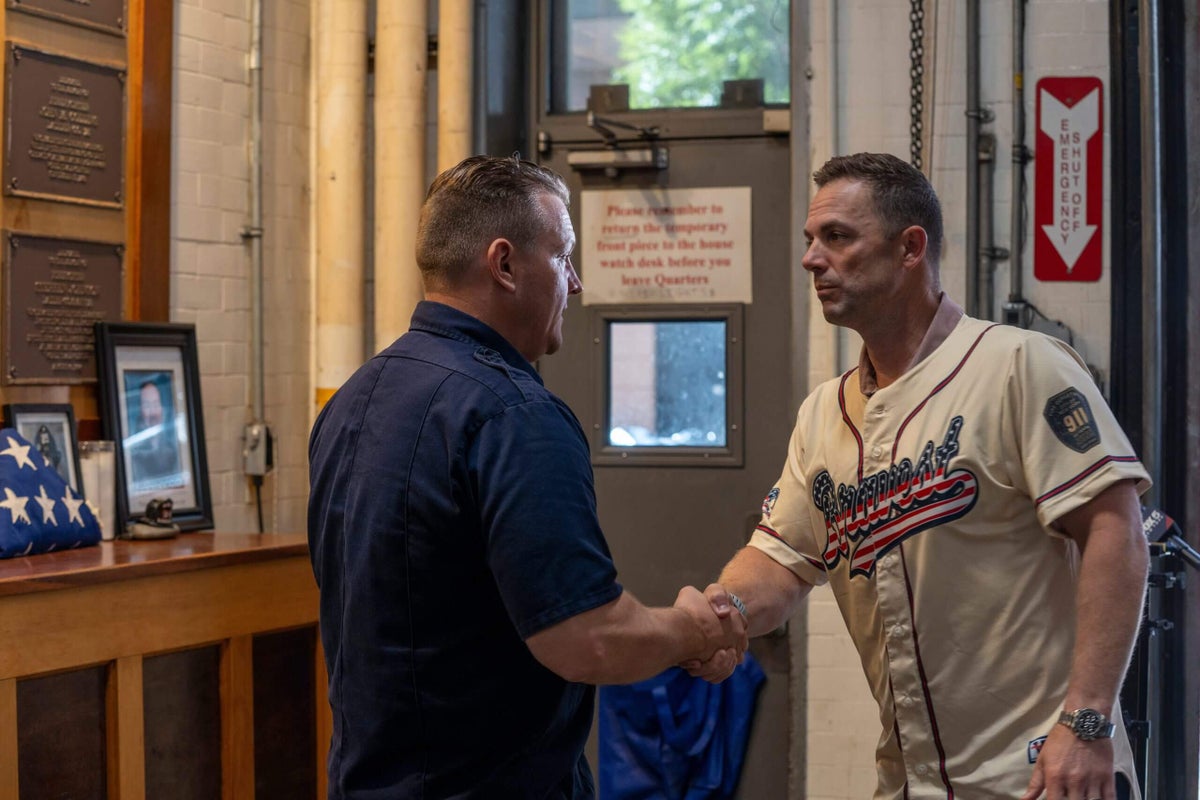
NEW YORK – In the summer of 2001, a month or two before everything changed, Robin Ventura played golf with a man named Chris Quackenbush. Soon after, Quackenbush came to a game to see his friend, Bobby Valentine, the New York Mets’ manager. Ventura recognized him during batting practice and said hello.
That was that, or it would have been, if not for what happened. And when it did, Ventura remembered the conversation and how it made him feel — not as a veteran ballplayer, but as a young father. He will never forget.
“His son kept looking at him,” Ventura said by phone last week, “and he had this look of admiration towards his dad, like, ‘This is so great.’ He just couldn’t believe he was down on the field. And I’d had my son probably three years before and I remember thinking, ‘Gosh, it would be so great to —’ I don’t know. You kind of want your kids to look at you like that.
“And when it happened, and he was there and didn’t make it, it just — I do go back and look when I go down there and go to the pools, and I find his name. And I don’t know why, but I just remember that moment of thinking of his son, what he’s going to miss, and what Chris is going to miss. It’s a tough thing. You’re going back to how insignificant you are at that moment.
“Those are the things that stick with you, that baseball, yeah, it could be kind of a good thing to come back and play, get people to cheer, laugh maybe, something like that. But in the end, you don’t know how much it helped or didn’t help. You feel a little overwhelmed by all of it.”
Ventura is 59 years old now. His hair is gray, his children are grown. He helps coach the baseball team at Oklahoma State, his alma mater. It’s been a decade since he managed the Chicago White Sox, more than two since he last played in the majors. His Mets career was over by the end of 2001, with a trade across town to the Yankees.
Yet there was Ventura in Manhattan this week, with his old Mets teammates, on another brilliant Tuesday morning in the sweet spot between summer heat and autumn chill. For all of the franchise’s misadventures, the Mets — led by ones who were there for that sad September — get this right.
They meet annually at a firehouse, this time Ladder 25/Division 3/Collapse Rescue 1 on West 77th St. A mural at the bottom of the stairs honors seven members who answered a call from there and never returned. The players are not the stars of this reunion.
“It was the greatest rescue in the history of the fire department,” said Capt. Daniel Donleavy. “People will talk about everyone that died. What about the people that we saved, with the police officers? Telling people to run, move, get out of the building?”
The Mets were in Pittsburgh when it happened, a veteran team with a losing record, finally mounting a late charge. They would come together in more meaningful ways, finding a shared purpose in their anger, fear and grief. John Franco calls that team “a band of brothers” now, and he showed up on Tuesday, too, with Al Leiter, Todd Zeile and David Wright.
Wright was just 17 years old on 9/11, newly drafted and about to head to Florida for his first instructional league. He would soon play with Franco, Leiter and Zeile, who instilled in him the extra responsibility that comes with being a Met. The heroes of 9/11 can never be far from mind, they would tell him. This is a forever commitment.
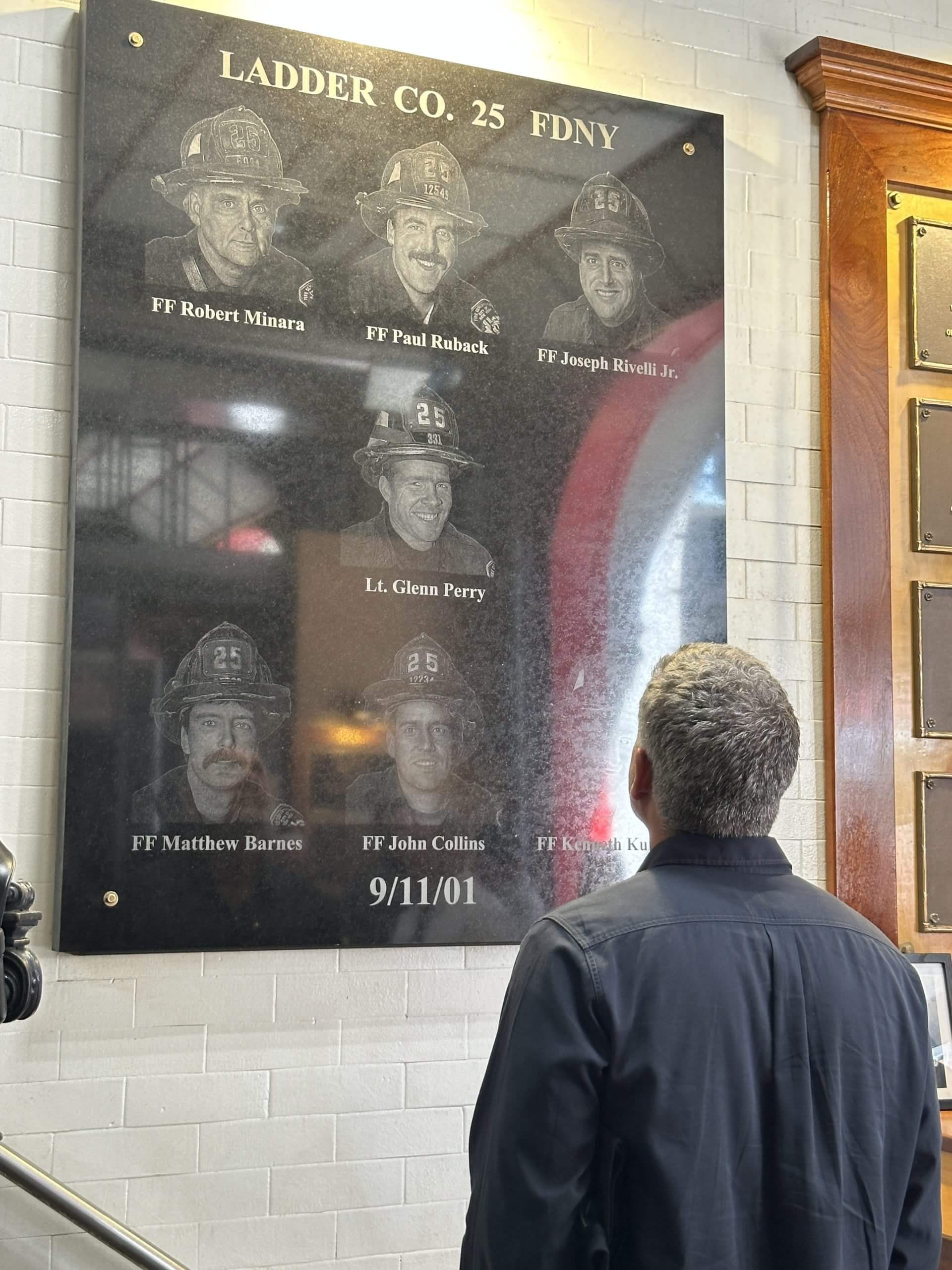
Robin Ventura reflects upon the mural of the seven firefighters from FDNY’s Ladder Co. 25 who were killed on Sept. 11, 2001. (Tyler Kepner / The Athletic)
“We have vowed as a fire department to never forget — never forget our folks, never forget what they did that day and the impact they had and the lives that they saved,” said John Esposito, the Chief of Department for the FDNY. “And 25 years later, the Mets have not forgotten. They’re still out supporting us and doing the right thing. They could have done something simple for a couple of years and then just moved on. But they’re with us.”
The Mets, of course, are not alone in their ongoing outreach to the New York Fire Department, which lost 343 members on Sept. 11 and more than 600 members since then due to 9/11-related causes. The Yankees, who host the Mets this weekend in the Bronx, made four firehouse visits last month and have extensive, ongoing community involvement.
The Yankees reached the World Series in 2001, losing Game 7 on a ninth-inning comeback by the Arizona Diamondbacks. It was an inspiring run with an ending that somehow fit the time: imperfect, and a stark reminder that baseball can only do so much.
The Mets’ connection was always bound to be different. Shea Stadium served as a staging area for relief supplies in the days after the attacks on the World Trade Center. The team hosted the first New York sporting event on Sept. 21, punctuated by Mike Piazza’s cathartic home run to beat the Atlanta Braves.
Franco was a son of Staten Island, Leiter of New Jersey, Valentine of Connecticut. Rusty Staub, a Mets Hall of Famer, founded a charity in 1985 for families of fallen police officers and firefighters. Staub died in 2018, but the program lives on as “Answer the Call,” which distributed more than $7.75 million to more than 500 families last year.
The culture of the Mets, then, was deeply entwined with the city. And from the moment they saw the ghostly smoke of Ground Zero through the bus windows on their ride home from Pittsburgh, the players understood the mission. Instinctively, they grasped how to navigate a heartbreaking landscape.
“They’ve continued all along,” said Carol Gies, whose husband, Lt. Ronnie E. Gies, died at the World Trade Center. “I’ve done many, many things with them over the years, and they always embrace it, and they want that story to be told, not just on behalf of them, but on behalf of everybody else involved.
“It’s a wonderful organization, it really is, and there’s no words to put it for how much love and respect I have for Jay Horwitz. He’s a true friend.”
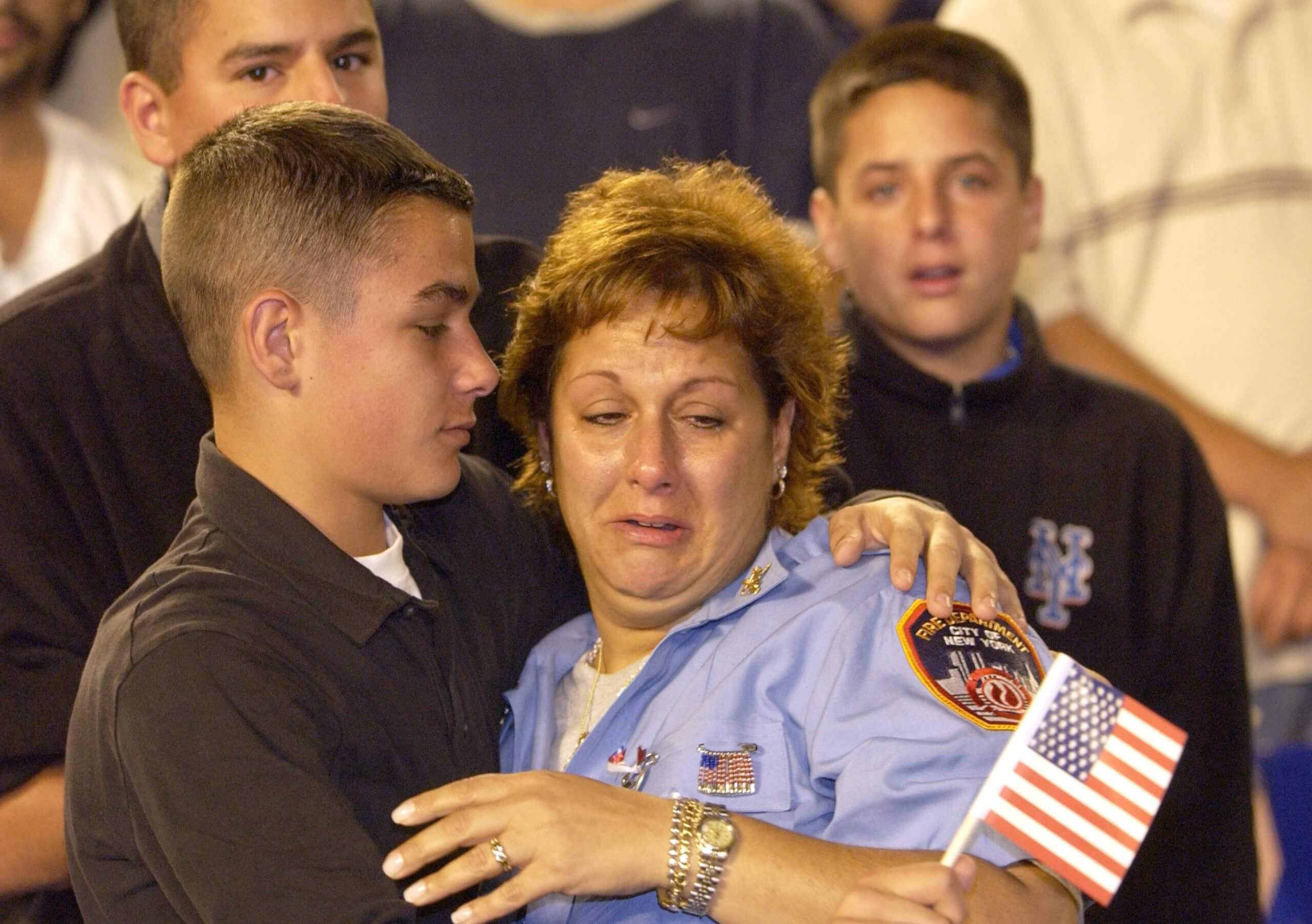
Carol Gies (right) and her son, Ronnie Jr. (left), were in attendance when the Mets returned to Shea Stadium on Sept. 21, 2001, 10 days after FDNY Lt. Ronnie E. Gies died at the World Trade Center. (Ezra Shaw / ALLSPORT)
Horwitz was into his third decade as the Mets’ public relations director in 2001. The team has been his family for nearly 50 years. He called his memoir “Mr. Met,” but Horwitz is less a mascot and more, you might say, a Met’s best friend: unwaveringly loyal, completely guileless. To know him is to trust him.
“The glue, then and now, is Jay Horwitz,” Valentine said. “Jay could say, ‘Okay, you could go to Brooklyn and knock on the door of the Smith house and the people that answer are big baseball fans.’ Or, ‘You could go to this picnic because a lot of the firemen’s families will be there.’ He’s the event planner. He felt that this was his calling.”
Horwitz, 81, is now the vice president for alumni relations, indefatigable in that role but no longer embedded daily with the current roster. His institutional knowledge has helped sustain the Mets’ efforts with the FDNY.
“I hope that continues now that Jay’s not kind of there on a daily basis,” Wright said. “I hope it continues to the younger players. Because a lot of the younger guys now aren’t even alive during 9/11. But I hope they get talked to by somebody that, hey, let’s thank these men and women.”
Robert Cashman, a special assistant to the FDNY commissioner, has decades of Mets memories to share: Tom Seaver getting laughs by teasing a Yankees fan; a sheepish Zack Wheeler asking to stay for lunch; R.A. Dickey teaching the knuckleball with a game of catch on the street. The tradition has continued.
“We did a thing with Juan Soto last year,” Cashman said. “What a gentleman. And I was talking to him before and I said, ‘OK, the commissioner’s going to introduce you and you can say a few words.’ I didn’t think he would really say anything — ‘hey, hello’ — but he gave a little talk about 9/11 and the firefighters. I was so impressed. You could see he was really into being there in the firehouse. It meant a lot to him.”
Firefighters are often a child’s first heroes; before they even know about professional athletes, toddlers can recognize the valor in saving lives. When you grow up to do it, said Esposito, you feel privileged. A sign in the call center at Ladder 25 shows the Statue of Liberty beside the words: “FDNY: Still The Greatest Job On Earth.”
But if firefighters had a second career choice, Esposito said, many would want to be ballplayers. There is a natural kinship: camaraderie in close quarters, the physical and mental effort, the stories of overcoming challenges. At times, Esposito said, ballplayers and firefighters look at each other in awe.
“I like to pay my respects, and I like to say thank you,” Wright said. “More importantly, I just like to kind of hang out and hear their stories.”
The stories of 9/11, and the heroes who never came home, are embedded in the soul of the city. The Mets do what they can. They listen.
“In the fire department, once you get to the end of August and the beginning of September, everybody, especially those of us that were here 25 years ago, you get a little on edge and a little anxiety goes up,” Esposito said.
“And you walk into the firehouse and you’ve got Al Leiter or David Wright or any of these guys standing there, and they’re just, ‘Hey, how are you doing?’ and you have a nice conversation. They’re not acting like big shots. They’re just normal folks.”
Correction: An earlier version of this story used the incorrect acronym NYFD to refer to the Fire Department of New York.