
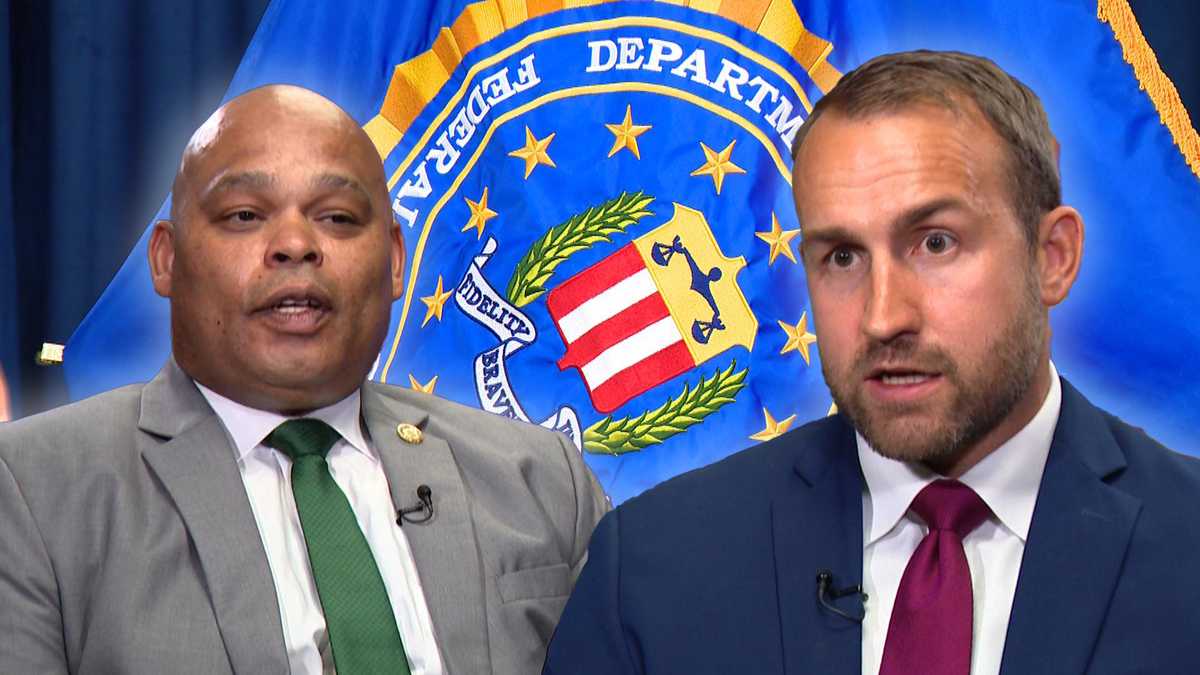
Baltimore FBI agents say 9/11 changed their lives and the agency’s counterterrorism mission
 WINDSOR MILL, Md. —
The impact of the Sept. 11, 2001, terror attacks led at least two people who are now in Baltimore to join the FBI.
9/11 expedited agents’ careers
Marcus Perry was in college when the planes hit the World Trade Center towers in New York City.
“Once the towers collapsed, we could see the smoke all the way in New York City from New Jersey,” said Perry, who is the assistant special agent in charge of the FBI-Baltimore Office.
While Thomas Szymanski was a bit younger, he clearly remembers the impact.
“One of the reasons I decided to get into the FBI was because I did grow up in New York. I was in middle school when the towers were hit. I know family members of close friends who died in those attacks,” said Szymanski, an FBI special agent.
Perry initially planned on becoming a police officer after finishing college.
“That just kind of expedited it, if you will. I thought I was going to be a local law enforcement officer, but as a result of 9/11, and the push by Congress at that time to hire a number of federal air marshals, that presented an opportunity for me to enter into the federal government as a law enforcement officer,” Perry told WBAL-TV 11 News.
How 9/11 changed the FBI
Now, Perry focuses on crisis response and counterterrorism, saying the tragedy, deaths and destruction in New York and at the Pentagon had a tremendous impact on the agency.
“We went from a reactive organization to a proactive organization to identify and mitigate threats because it’s a zero-fail mission,” Perry told WBAL-TV 11 News.
Perry said the lessons he learned include the need to share intelligence and other information with local, state, federal and international law enforcement partners.
“We went from a reactive organization to a proactive organization to identify and mitigate threats.”
“We had to strengthen relationships with our partners. We had to identify new techniques and deploy new methods to meet the threat and rely heavily on actually the community as well,” Perry told WBAL-TV 11 News.
The agents spoke to what is now considered the biggest threat: Lone-wolf actors.
“Folks who are self-radicalized and they are online at home, and they have the ability to act without a whole lot of direction from necessarily a foreign terrorist organization or any other individual that is directing them to act,” Perry told WBAL-TV 11 News.
Perry said tips from the public have been a significant role in helping to fight against terrorism.