
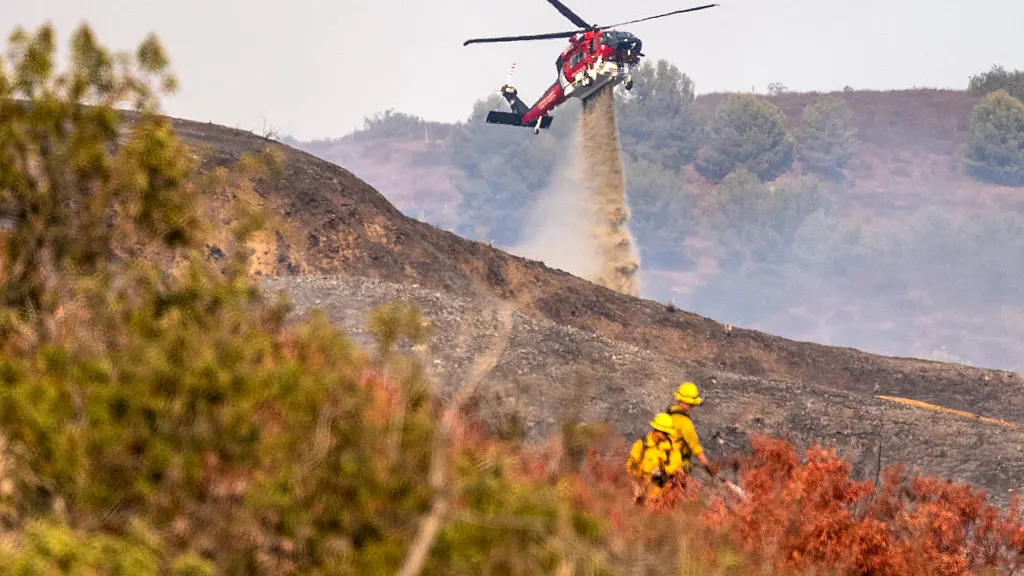
Some experts argue, however, that full suppression is part of the issue that makes wildfires so large and expensive in the first place.
“These Western ecosystems are adapted to fire; they need fire, and they’ve burned for thousands of years. Roughly 150 years ago, we started suppressing fires, and in large swaths of the Western forests, that led to an accumulation of fuels,” Winslow Hansen, ecologist with the Cary Institute of Ecosystem Studies, tells TIME. Fuel can refer to any vegetation, twigs, branches, or organic soils that may be prone to catching fire—especially in the hot, dry conditions that are more prevalent nationwide due to climate change, he explains.
The combination leads to more fuel and drier fuel for fires, Hansen says, and “that leads to more intense fires, larger fires, and even faster fires.”
Federal suppression spending captures only one portion of wildfires’ broader economic toll. A Department of the Interior review estimated that wildfires impose between $87 billion and $424 billion in annual costs, measured in 2022 dollars, including property and health damages and other economic losses. The department cautioned, however, that significant gaps in the available data make the total difficult to calculate.