
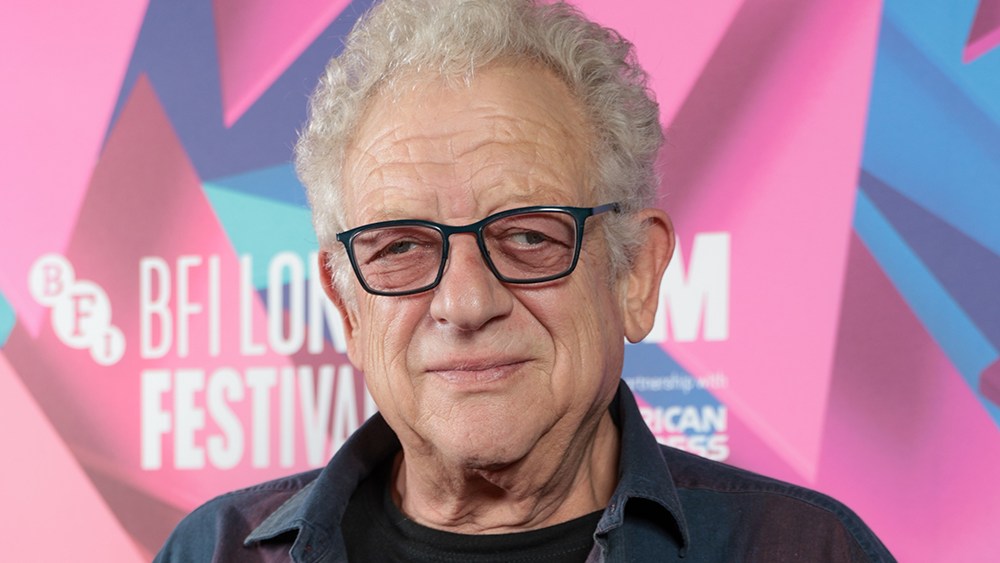
Tributes have begun flowing from across the film world for Jeremy Thomas, the legendary British producer who passed away on Friday at the age of 77.
Terry Gilliam, who worked with Thomas on “Tideland” and “The Man Who Killed Don Quixote,” told Variety, “Jeremy Thomas loved making movies. He loved every aspect of the business, but most of all he loved directors. The list of those he worked with is almost endless and I was one of the lucky ones. His taste in filmmaking spanned the globe. He was fearless in getting some very unlikely films financed and released, often to worldwide success. The list is remarkable in range and absolutely unforgettable in quality.”
Added Gilliam: “Most of all, he was a joy to work with. As your producer you always felt protected and encouraged, rare qualities to experience, especially when lack of time and money are swirling around you, raging at your head. Filmmaking is not cheap and the pressures are intense but Jeremy always remained calm and supportive. He was a rare and very unique gem in the world of producers.”
Luca Guadagnino, who recently put Thomas on camera for his Venice-bowing documentary “Joie De Vivre” to talk about Italian director Bernardo Bertolucci (with whom he made five films), offered Variety a heartfelt statement about the producer.
“Jeremy Thomas’ death leaves a gigantic void. The space he was fulfilling was a space of pure cinema. Someone who knew how to collaborate with filmmakers and make them better, and how to be himself — a great filmmaker,” he said. “The canon of his work is unmatched, and some of the greatest movies of the past 50 years have been produced by him. And the level of the partnerships that he established in his career is incredible, from Nagisa Oshima to Bernardo Bertolucci. He was a generous man. He was a kind man. He was a man full of stories to tell, but at the same time, very curious to hear others people’s stories. I regret not having been able, in my life, to be produced by the great Jeremy Thomas, and I say a very moved goodbye to him.”
Takashi Miike, the Japanese filmmaker who collaborated with Thomas across numerous features, including “Bad Lieutenant: Tokyo,” premiering in Toronto on Monday, sent Variety a message to his dear friend.
“We promised to celebrate the world premiere here in Toronto and have a good drink together,” he said. “This sudden news came out of nowhere, leaving me completely in shock and deeply saddened. Jeremy gave me my wings — he was a great mentor and an irreplaceable friend. Rest in peace for now. Until we meet again.”
Mark Cousins, who directed the 2021 documentary “The Storms of Jeremy Thomas,” in which the director travelled by car with Thomas to Cannes, said: “Jeremy conducted an evening, a trip, a holiday like it was an orchestra. Everything flowed. The hotel had the best balcony views. The producer of ‘The Last Emperor’ ordered at a Chinese restaurant and exquisite food arrived. He played music in the car for five days as we drove to Cannes. I felt safe and exalted in Jeremy’s world. Life will never be the same.”
Thomas was greatly admired and loved by fellow British producers, such as Danny Boyle’s producing partner Andrew Macdonald. Macdonald told Variety that “Jeremy and I bonded over his father [director Ralph Thomas] and my grandfather both producing films for Rank in the 1950s. He was a hero for me. A rebel with taste.” Macdonald’s grandfather was Emeric Pressburger, the co-writer, co-director and producer of “The Red Shoes” and “Black Narcissus,” among other classics.
Producer Stephen Woolley, whose credits include Oscar-nominated films like “The Crying Game” and “Carol,” told Variety that Thomas was a “colossus.”
“I first met the maverick and international producer in Tokyo at a buyers’ screening of his movie ‘Merry Christmas Mr. Lawrence.’ Jeremy Thomas was the person in 1981 in Japan who didn’t suggest but insisted that I be a film producer!,” he said. “He was a huge inspiration and a massively undervalued genius and necessary rebel in our industry… he sided with the subversives and movie anarchists and we loved him dearly… and I have to thank him for my career following in similar footsteps avoiding nationalistic stereotypes and embracing the world of cinema.”
Woolley added that “without Jeremy (and a little help from John Boorman)” he would “never had had the nerve at 27” to make “The Company of Wolves” with Neil Jordan.
“Jeremy showed with his first movie success ‘The Shout’ (with Polish friend and collaborator Skolimowski) that boundaries were there to be ignored or broken. And that movies are an international and all-embracing experience,” he said.
“Myself and my producing partner Elizabeth Karlsen look up to his guiding star still moving across the galaxy and inspiring filmmakers from all nations and genders with his extraordinary body of stellar work. Hoping to take guidance from a groundbreaking guru whose love of world cinema defied any easy categorization.”
Sony Pictures Classics’ Tom Bernard described Thomas as a “very good friend” and also one of the “first people” he met when he started in film distribution.
“We released ‘The Shout’ together, which was the beginning of a very long friendship and professional relationship. Over the years, we saw each other every year in Cannes and whenever I was in New York, sharing lunches, dinners and, of course, plenty of stories about the movies we loved,” he said. “His accomplishments in cinema were extraordinary, and one of my great regrets is that he was never properly honored by one of the major festivals for his extraordinary contribution to our industry. I’ll always remember being with him at the Oscars when he won Best Picture — he was absolutely thrilled. He was a great friend to Sony Pictures Classics, but, above all, he was a great friend to me. I will miss him tremendously.”
Producer and publisher Charles Finch said, “He made great movies and was a loyal, dear friend. His father, Ralph, made a film with my father, Peter, called ‘No Love for Johnnie.’ We spent plenty of time talking movies, cars and praising the devilled kidneys as Wilton’s.”
On social media, Edinburgh Film Festival CEO and director Paul Ridd said that the “loss of Jeremy Thomas is enormous, to film culture and to the world,” adding that he was “such a beautiful man and a extraordinarily generous supporter” of the festival.
Adrian Wootton, chief executive of Film London and the British Film Commission, said that Thomas’ passing was, “Such terribly sad news for Jeremy’s loved ones, family, friends, colleagues, the filmmakers and for the British Film Industry he did so much for.”
Across a career spanning more than half a century, Thomas produced 80 features, championing the work of both international cinema and daring auteur filmmakers in the process. In 1988 he won the best picture Oscar for Bertolucci’s “The Last Emperor.”