
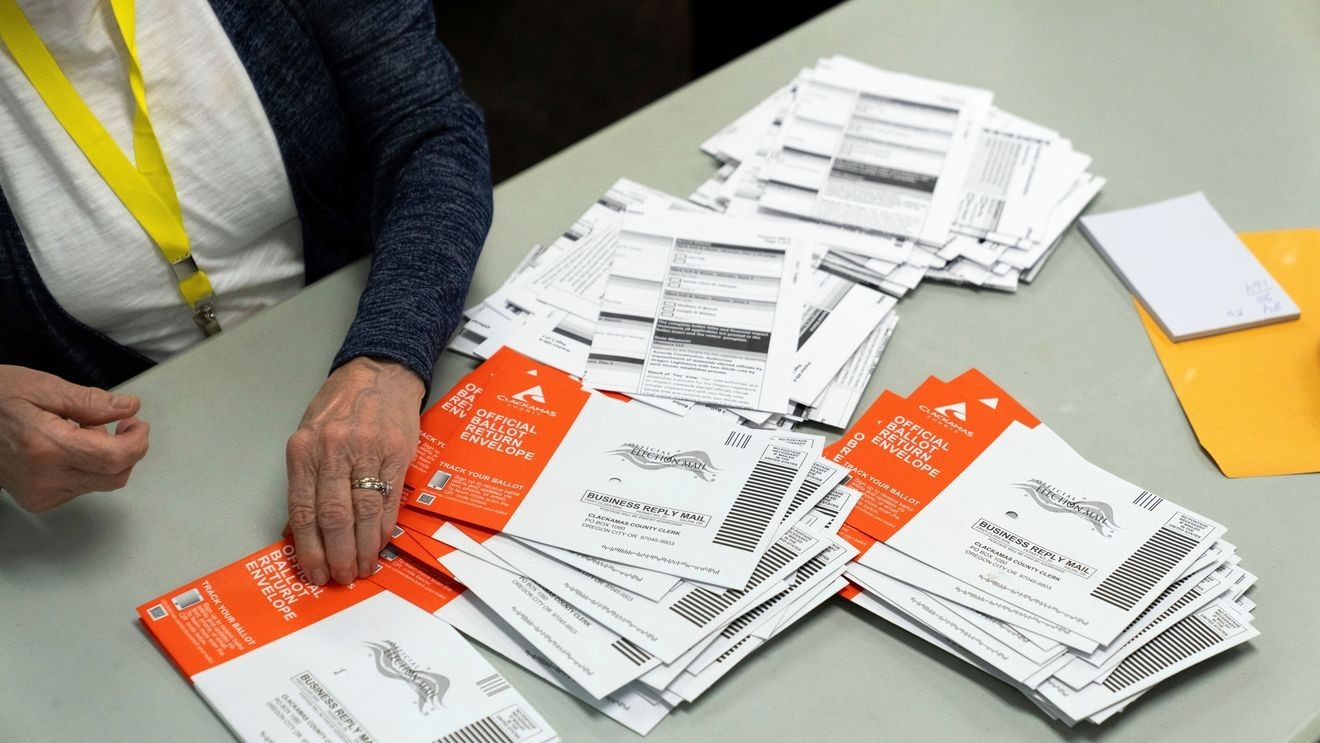
WASHINGTON (TNND) — The U.S. Supreme Court rejected a request by the Trump administration to lift a judicial block on a U.S. Postal Service rule that established new standards for ballot envelopes and required each state to create a list of voters who were eligible to obtain mail ballots on Monday night.
In an unsigned order by the Court, the justices ruled that the administration “is unlikely to succeed on the merits of its challenge to the” preliminary injunction that was issued by a federal court judge in Boston. The federal court judge’s block prevented the USPS rule from being used in November’s elections nationwide.
The court’s decision comes less than two months before a crucial Election Day in the U.S. that will determine whether the Republicans will still stay in control of Congress or not. Currently, the GOP holds a slim majority in both the House of Representatives and the Senate.
Justice Brett Kavanaugh, a Trump appointee, concurred with the ruling in a statement that said, “there is at least a fair prospect that the final rule falls within the Postal Service’s statutory authority.”
“But applying the rule in the 2026 elections would be arbitrary and capricious in violation of the Administrative Procedure Act because state and local election officials do not have sufficient time to reasonably implement the rule before the elections,” Kavanaugh added. “For that reason, I concur in the denial of the application for stay.”
Two of Kavanaugh’s fellow conservatives on the court, Justices Samuel Alito and Clarence Thomas, dissented from the decision to reject a stay of the injunction against the Postal Service rule.
Alito, in his written dissent, said that some of the plaintiffs who had sued to challenge the Postal Service’s rule lacked legal standing to do so, “while the remainder are pursuing a claim that this Court has recently called a ‘Hail Mary pass’ that ‘rarely succeeds.’”
“The Government has a strong interest in enforcing the rule, and implementing it will also ‘enhance the visibility of Federal Ballot Mail’ in order to better detect election fraud,” Alito wrote.
“On the other side of the balance, the plaintiff States invoke the practical effects of implementing the rule close to the midterm elections. I take that problem very seriously, but it is not enough to convince me to deny the application.”