
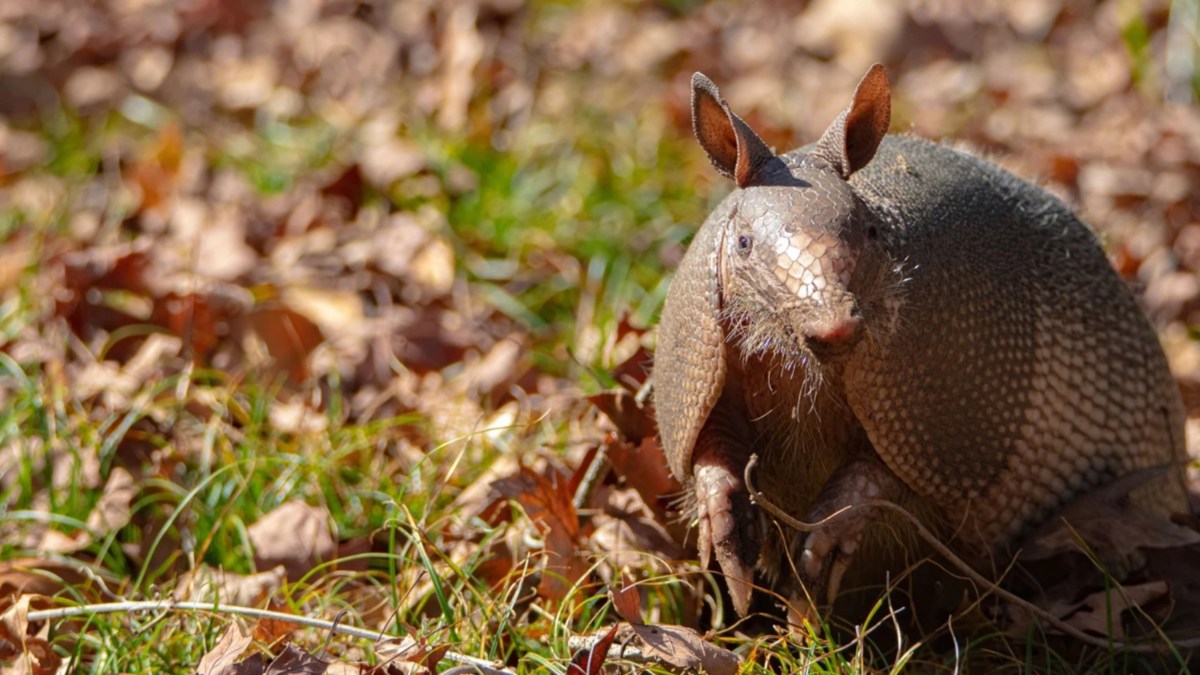
An armadillo has been found dead on the side of a road in Ohio, marking the first instance in which experts believe the species has naturally migrated to the state.
The small mammal was found near Oxford, Ohio, in early September, and it was likely the victim of roadkill. Wildlife researchers brought the animal to Miami University, according to a post on Facebook. Prior to the animal’s discovery, there had been four other armadillo sightings in Ohio, but researchers believed these animals were “stowaways” that hitched a ride on vehicles that drove through their habitats further south. The September discovery marks what researchers believe is the first natural migration of the animal in the state.
The discovery in Ohio comes as experts and laypeople alike have noted a northward expansion of the armadillo, a mammal native to South America and more typically found in the Southern U.S. A 2025 study from the U.S. Geological Survey (USGS) said that since the nine-banded armadillo was first seen in the U.S. in Texas in 1849, it has been gradually expanding northward and eastward.
Read More on U.S.
Newsweek reached out to the study’s author, Brett DeGregorio, by email on Tuesday for comment.
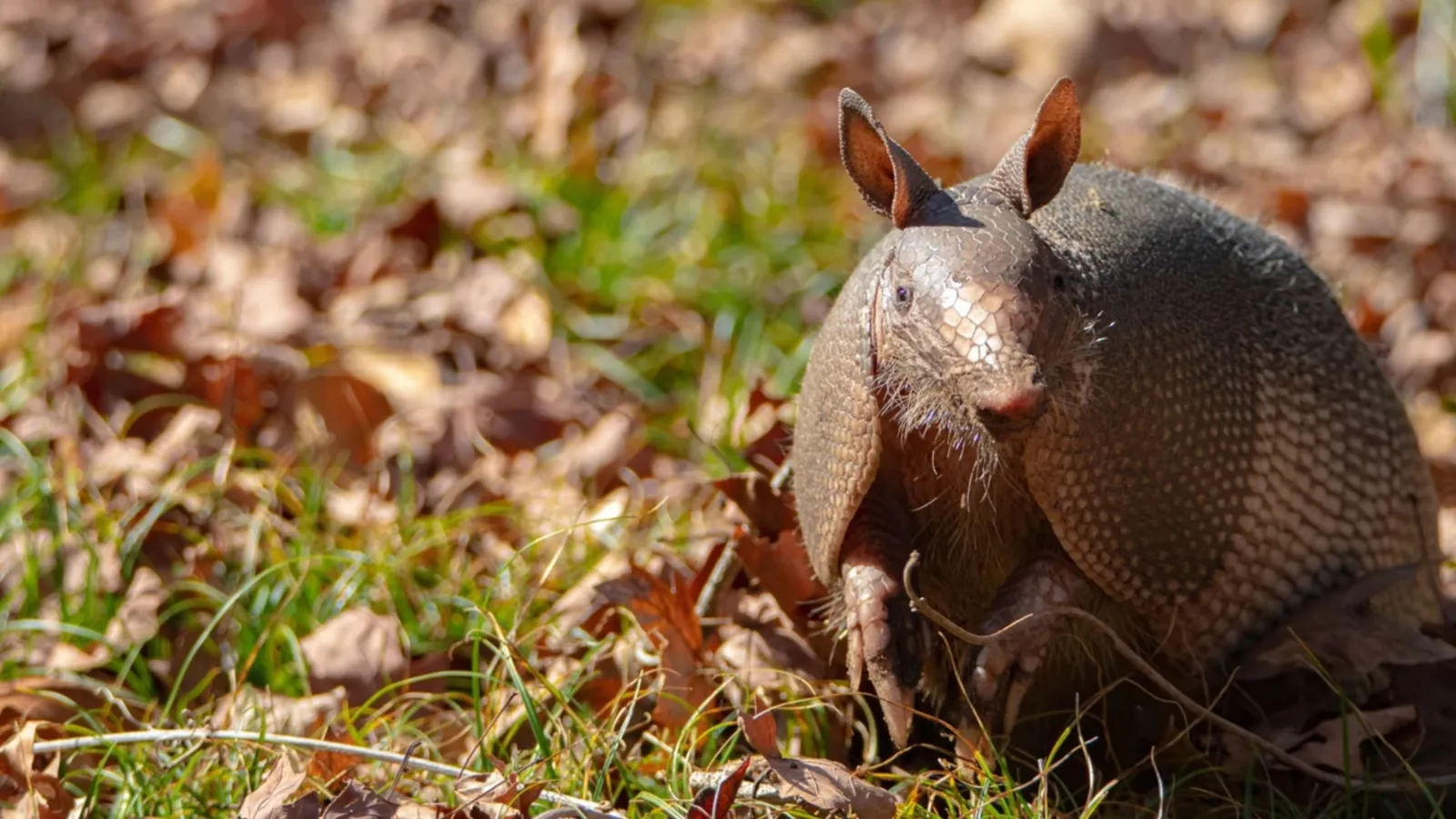 What Is an Armadillo?
The armadillo is unique armored mammal known for its hard shell and exceptional digging abilities. According to the Indiana Department of Natural Resources (DNR), armadillos are typically the size of a house cat, have little fur, and have a tough shell.
Since they have little fur, armadillos are highly susceptible to hypothermia and typically are not found in colder states. However, they are also exceptional swimmers and can hold their breath for six minutes when underwater, according to the National Park Service. They often give birth to identical quadruplets.
Why Are Armadillos Moving Northward?
Many experts believe climate change is influencing the armadillo’s northward and eastward creep.
“This rapid range expansion has been a result of land use change, climate change, and at least one human-facilitated release in Florida,” the USGS study said.
According to experts, climate change is influencing the armadillo’s habitat because as temperatures rise, it can create a more suitable environment for the mammal, which thrives in warmer temperatures.
“We just don’t have those really cold winters any more, and I’m sure that’s helped them,” Colleen Olfenbuttel, a biologist at the North Carolina Wildlife Resources Commission, told The Guardian in a 2021 report. “It’s only a matter of time before we see range expansions into other states.”
Armadillo Map Shows States Where They’ve Been Found
Armadillos are already established in the following states, per the USGS study:
TexasLouisianaMississippiAlabamaGeorgiaFloridaSouth CarolinaNorth CarolinaTennesseeKentuckyIndianaIllinoisMissouriIowaKansasOklahomaArkansas
There have also been occasional reports of armadillos in Nebraska, Michigan, Ohio, and Virginia.
“It will be interesting to monitor when armadillos begin to regularly reach and establish in new states such as Michigan, Wisconsin, and Virginia,” the study said. “Mapping the spread of armadillos over time, it appears that Ohio will likely be reached from armadillos spread from west to east in Indiana, Michigan could be reached by armadillos coming north through Indiana or northeast from Illinois, and Virginia has already begun to document armadillos likely coming from North Carolina.”
Are Armadillos Dangerous?
Although they can bite or scratch if threatened, armadillos are not typically aggressive. However, people should not interact with them, as armadillos can carry leprosy and, in rare cases, transmit the disease to people. However, the National Park Service stressed that this usually only happens after prolonged contact with an infected animal.
Armadillos can also be a nuisance, as since they are prone to digging, they can damage golf courses and their burrows in fields can be a risk to livestock. One armadillo can excavate as many as 10 burrows, the USGS study said.
“Additionally, the arrival of armadillos presents unique management challenges because of their potential (real or perceived) impact on human health and safety (they can carry and transmit the bacteria that causes leprosy), damage to agriculture and residential lawns and gardens via their digging and burrowing behavior, and potential for human-wildlife conflict due to their ability to live in and around humans,” the study said. “Thus, it is essential for land managers in newly occupied or soon-to-be colonized areas to understand the spread of armadillos to proactively manage this important new arrival.”
What Happens Next
Armadillos could continue to migrate across the U.S. However, they are not considered an invasive species.
In Ohio, researchers will continue monitoring the situation to see if the sighting is part of a broader trend. The armadillo’s expansion into colder states may also offer a glimpse of a broader trend, as warming temperatures could allow some warm-climate mammals and other wildlife species to gradually shift their ranges farther north.
For now, residents in the Midwest might catch a glimpse of the animal as it makes itself known in states further north than ever before.
Contact Newsweek editors on this story: Jason Lemon and Geoffrey Rowland.