
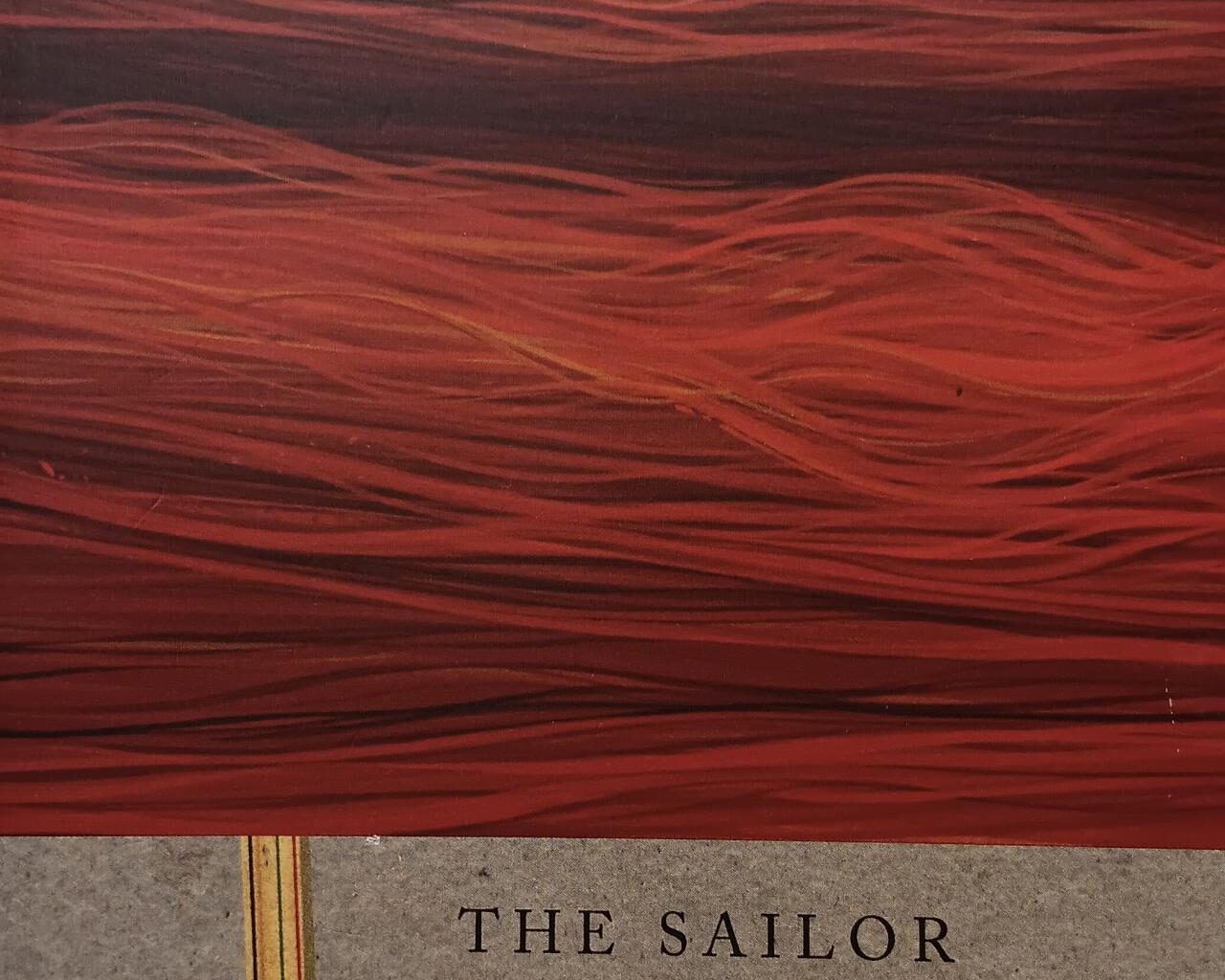
“The Sailor Who Fell from Grace with the Sea” by Yukio Mishima is a weird, occasionally erotic, and beautiful little book about the failures of poor fathering.
The book takes place in the city of Yokohama, Japan, and follows a school-aged boy named Noboru Kuroda, a member of a group of seemingly innocuous but secretly dangerous boys who are led by a child who calls himself “the chief.” The chief teaches the group a nihilistic philosophy that shuns any sense of order and authority, especially fathers. This includes Noboru’s deceased father and the chief’s neglectful father.
Noboru’s widowed mother, Fusako Kuroda, strikes up a passionate romance with a sailor named Ryuji Tsukazaki. Ryuji is admired by Noboru for his independence but soon disappoints him by making the decision to give up his freedom in exchange for marrying his mother.
The book is structured into two parts. The first part covers both Ryuji’s initial visit to and departure from Yokohama. Additionally, the first part details the way Noboru and other characters react to Ryuji’spresence. The second part details Ryuji’s next visit, when, this time, he decides to stay for good to marry Fusako. The section also examines all of the unintended but disastrous consequences of that decision.
Thematically, the book is in part about fatherhood and how bad or absent fathers negatively shape young boys into believing antisocial ideas, leading them to violence. Noboru’s father is dead before the book has even started, and he has found a replacement in the chief, even as the chief espouses toxic and violent ideas. The guidance and authority the chief gives Noboru leads him to believe that giving up freedom for responsibilities like marriage or raising children is the ultimate sin.
Eventually, Noboru attempts to seek out a healthier father in Ryuji, but the antisocial ideas of the chief have already infected his mind, and he ultimately rejects Ryuji leading to a decision which plays out in the final chapters of the book.
Ryuji’s attempts to be a good father figure to Noboru, while better than nothing, are ineffective for a boy as secretly rebellious as Noboru. Noboru does not respect Ryuji’s attempts to be overly kind and forgiving to Noboru even when Noboru does something wrong. Noboru views it as a weakness, and it shatters his vision of him as different from the rest of the adults in his life.
Though his ability to become a good father figure to Noboru is questionable, as a man, he is more stable and moral than Noboru or the chief. In contrast with them, Ryuji had a present and hardworking father who eventually died shortly after the end of World War II. Unlike any of the young boys in the novel, his relationship with his father is much healthier, and he eventually grows up to be a productive member of society despite his hardships.
Even if the book does not thematically interest you, the way Mishima writes is worth the price of admission alone. This book should be read for Mishima’s sensuous descriptions, particularly of the sea, that set the mood for the heightened and melodramatic narrative.
For the first part of the novel, many of the events that detail the backstories of the characters are told as moments of reminiscence, which gives off a moody feeling. In particular, the passages in chapter two that detail Ryuji remembering events of his voyages abroad and how they reflect on his current situation are melancholic and nostalgic.
One notable passage sticks out as my favorite of the novel. Near the end of chapter five, the gang of boys decide to find and ritualistically dissect a stray kitten. The group of boys view the killing as a riteof passage from boyhood to manhood. At first, Noboru hesitates, but then he quickly gives in to his violent urges and sees beauty in the mangled carcass.
Both disgusting and strangely beautiful, the passage encapsulates what I love most about the novel. Mishima makes the reader feel deep discomfort with detailed descriptions of gore while also writing sentences that give the reader Noboru’s perspective on why he believes the dissected kitten is perfect in its new form. He also ends the passage with a joke from the chief to emphasize the dark comedy of the situation: “I think we can say this has finally made a real man of you—and isn’t all this blood a sight for sore eyes!” (p. 61).
“The Sailor Who Fell from Grace with the Sea” is a short but powerful read.