
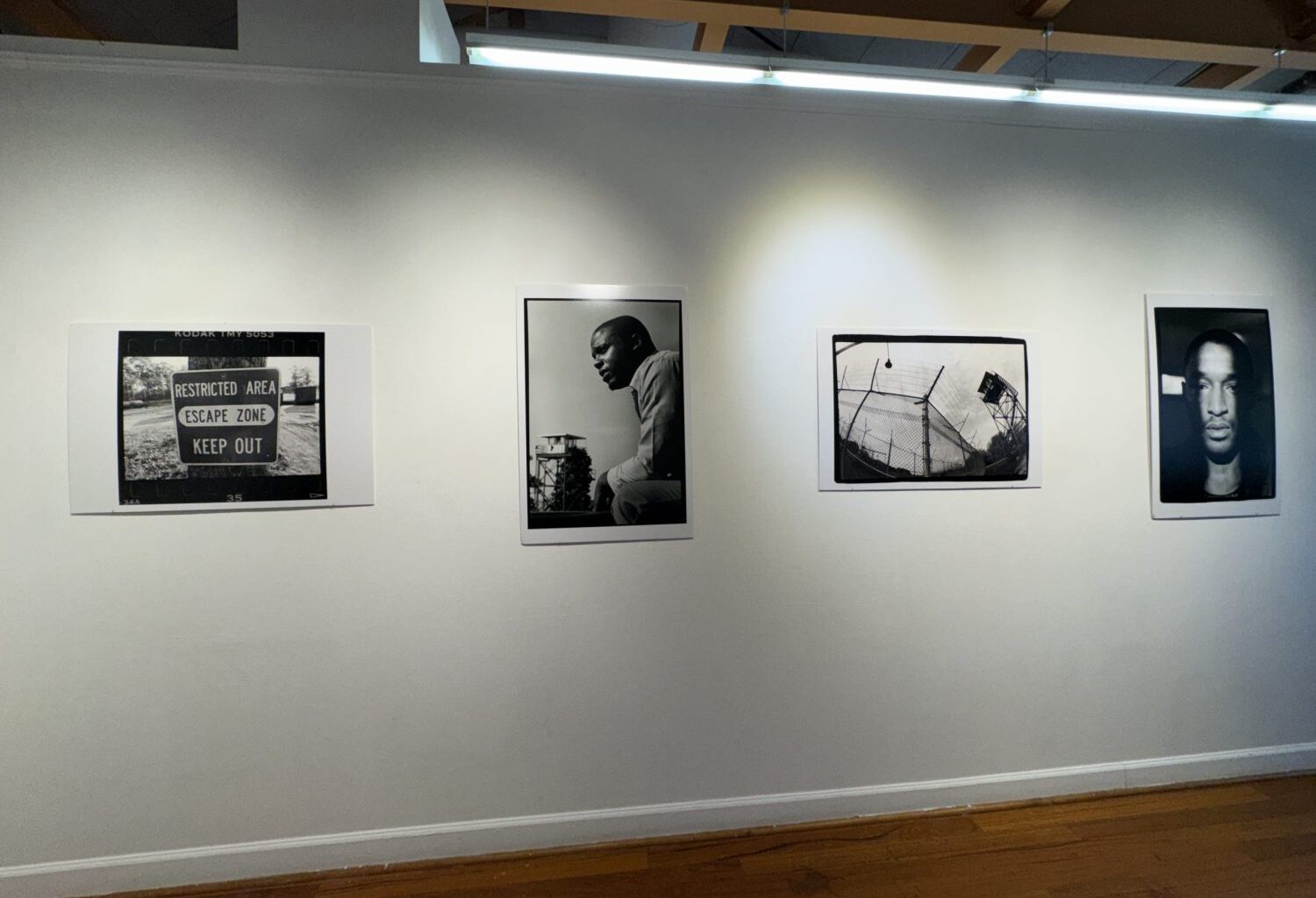
0:47Former prison, now an art gallery, showing photographs of rehabilitated inmates
Twenty five years ago, what was once the Lorton Reformatory, then the Lorton Correctional Complex, closed its doors. Now the same complex in Fairfax County, Virginia, that once housed D.C. inmates is home to the Workhouse Arts Center where a new exhibit documents the power of change that comes with second chances.
Related stories
The black and white photographs that are at the heart of the show “Transformations” were taken by photographer Lloyd Wolf, who 35 years ago teamed up with The City Paper’s John Cohen to document the Pilot Substance Abuse Program at Lorton.
Wolf and Workhouse Arts Center curator Sarah Berry spoke to WTOP to highlight some of what visitors will see in the show that runs through early November.
“As a curator, I want to make sure that I’m able to bridge the story of what this site was and the story of what this site is,” Berry said.
“Lorton was the main prison for the District for many, many, many years,” Wolf said.
Wolf explained that he and Cohen wanted to document the program, and visited the prison frequently from 1989 to 1991 as men went from starting in the substance abuse treatment program to graduating to eventual release.
At first, they encountered skepticism from the men in the program. But when Cohen proposed taking the time to work with the participants to write their own narratives, they got the buy-in they were looking for.
Berry said it showed in Wolf’s work. She explained that long before the show was assembled for the Workhouse Arts Center, she knew of Wolf’s technical expertise.
“What I learned in working with these images, was what a heart he has,” Berry said of Wolf.
Wolf walked among the photos in the show, pointing out some of his favorites along the way. The one that became the centerpiece was a profile of Lonnie Blue Bey with a pencil tucked behind his ear.
“It just really showed his thoughtfulness, and graphically I think it works,” Wolf said.
Another shows an older, bearded man looking upward in a tight shot.
“Esau Prentiss, he just has this angelic look, he went on afterward, when they got out, to work in D.C. schools as a storyteller,” Wolf described.
Another photo that Wolf said moved him deeply at the time was taken after a visitor at the prison approached Wolf to ask that her picture be taken as she sat with the man she came to visit. In the photo, her hands clasp the man,’s whose back is to the camera.
“She is in the act of proposing to him in that picture. He said yes. So that has great meaning to me,” Wolf said.
Wolf said the program, known as the Pilot Substance Abuse Program, “Really helped these men. They had a very low rate of recidivism. I watched them grow, I watched them change the kind of outlook and attitudes they had.”
His goal in any of the photos he takes, but especially in those on display at the Workhouse Arts Center, is that it generates a reaction, “and then maybe reflect.”
The show, “Transformations: Documenting the Substance Abuse Program at Lorton Reformatory, 1989-1991” is on view through Nov. 7.
Get breaking news and daily headlines delivered to your email inbox by signing up here.
© 2026 WTOP. All Rights Reserved. This website is not intended for users located within the European Economic Area.