
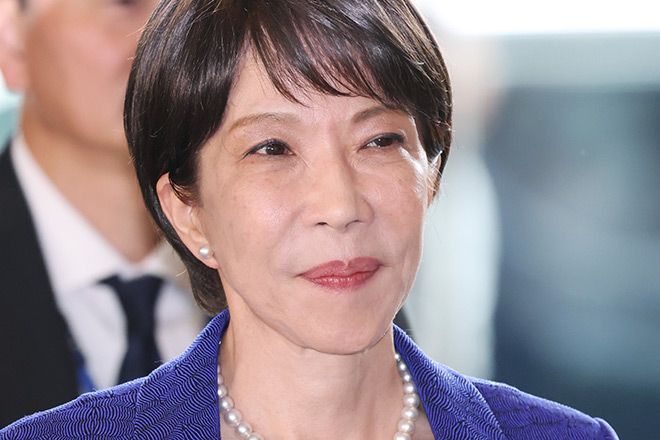
Prime Minister Sanae Takaichi announced her second reshuffled Cabinet on Sept. 17 after personally reviewing questionnaires filled by Liberal Democratic Party lawmakers on what posts they desired in her administration.
Most of her key ministers were retained, but several new appointees said they landed exactly the jobs they had requested in the questionnaires.
Takaichi used the reshuffle to bring a lawmaker from the LDP’s junior coalition partner, Nippon Ishin (Japan Innovation Party), into the Cabinet for the first time.
Two politicians tainted by the LDP’s slush-fund scandal were also included in the new lineup.
The questionnaire approach allowed Takaichi to break from the LDP faction-driven personnel decisions that have long dominated the ruling party, her supporters said.
After the Aug. 25 deadline for the questionnaires, Takaichi reportedly spent three consecutive weekends at her official residence reviewing the responses.
“I’ve read every one of them. It’s all about putting the right person in the right place,” she was quoted as telling those around her.
‘I POURED MY HEART INTO IT’
Hisayuki Fujii, the new internal affairs minister, said he came away convinced that Takaichi had carefully studied the lawmakers’ submissions.
“The prime minister seemed to remember every single word,” Fujii told reporters after meeting Takaichi on Sept. 17. “I poured my heart into that questionnaire.”
According to Fujii, Takaichi told him: “I read your questionnaire carefully. We share the same goals, so I want you to tackle this job wholeheartedly.”
Goshi Hosono, who was named reconstruction minister, offered a similar account.
Hosono said Takaichi instructed him to carry out the role he had specifically requested.
“What I asked for was responsibility for the Disaster Management Agency,” he told reporters.
Hosono will also oversee preparations for the government’s planned Disaster Management Agency, which is expected to be launched as early as November as a national command center for disaster prevention and emergency response.
Referring to his experience after the 2011 Great East Japan Earthquake under the Democratic Party of Japan administration, Hosono said: “I was deeply involved as minister in charge of the nuclear accident and also served as environment minister. This is a role I asked for, so I have to see it through.”
CUTTING OUT THE BROKERS
Instead of the traditional wheeling and dealing among LDP factions, the lawmakers seeking Cabinet posts focused their attention on the prime minister, who held the final say.
“The era when factions could interfere in personnel decisions is over,” a lawmaker close to Takaichi said.
Still, the process was never simply a matter of granting requests.
FRIENDS CLOSE, RIVALS CLOSER
Takaichi preserved the core of her administration by retaining Chief Cabinet Secretary Minoru Kihara, Finance Minister Satsuki Katayama, Defense Minister Shinjiro Koizumi and Foreign Minister Toshimitsu Motegi.
People familiar with the process said Takaichi moved quickly to keep potential political rivals, such as Koizumi and Motegi, in influential positions, reducing the likelihood of anti-Takaichi forces coalescing ahead of the LDP presidential election in autumn 2027.
“The most important thing for the prime minister is securing re-election in next year’s LDP presidential election,” a veteran LDP lawmaker close to Takaichi said. “These personnel appointments are meant to lay the groundwork for that.”
One notable exception was Yoshimasa Hayashi.
A three-time LDP presidential candidate who outpolled Takaichi among Diet members in the first round of last year’s party leadership race, Hayashi was dropped as internal affairs minister in the reshuffle.
Another significant change was her selection of Nippon Ishin member Hiroshi Nakatsuka as minister in charge of administrative reform.
Nakatsuka, a former Nippon Ishin secretary-general, is the party’s first Cabinet member.
CONTROVERSIAL PROMOTIONS
The reshuffle also marked the first time lawmakers implicated in the slush-fund scandal by the LDP’s own investigation have received Cabinet positions.
Kazuo Yana became agriculture minister while Yoshihiro Seki was appointed education minister.
Asked by reporters whether he believed he had fulfilled his accountability obligations for the scandal, Yana said he had already explained the matter to voters.
“I have gone through two elections since then, and I believe I have fully explained the matter to my constituents,” he said. “I intend to carry out the responsibilities I have been given.”
SCRUTINY BEGINS
Opposition parties quickly criticized the appointments of Yana and Seki.
Shunichi Mizuoka, leader of the Constitutional Democratic Party of Japan, said the selections appeared to prioritize Takaichi’s own preferences over organizational harmony, adding that her political responsibility had therefore become greater.
He also tried to revive the slush-fund scandal, saying Yana and Seki would need to explain themselves in the Diet and that Takaichi’s views on political funding issues should be scrutinized.
Komeito leader Toshiko Takeya said the reshuffle leaves the impression that there is “nothing particularly new,” but she noted that Nippon Ishin would now have to share responsibility for government decisions after joining the Cabinet.
The government plans to convene an extraordinary Diet session in early October to submit legislation on temporarily cutting the consumption tax on food and debate a bill to reduce the number of seats in the Lower House.