
Not too long ago, Major League Baseball was looked upon as the last bastion of no-frauds-allowed postseason competition. In other words, you had to be really, really good, or at least really good, or, OK, merely good, to make it to the playoffs.
MLB was content with small, incremental steps with its playoff format, tinkering and tweaking here and there, but leaving no side doors for teams with sloppy, misshapen rosters to crash the October party. But now look where we are: Three divisions per league, three wild-card berths per league, and this year we have a season in which a handful of clubs are struggling to get to the playoffs while also trying to get to .500.
As a concept, I’ve made my peace with it. The television people want more postseason baseball, and, as it happens, so do I. It’s just that in practical application — as applies to what’s happening in the American League this season — it bothers me that we don’t have a late-summer reboot of the 1973 New York Mets. And, yes, I’ll explain that for you: The ’73 Mets remain my favorite example of a dead-and-buried team that righted itself in the final weeks of the season and roared into the playoffs. They were 62-71 on Aug. 31 but went 20-8 in Sept/Oct to finish 82-79.
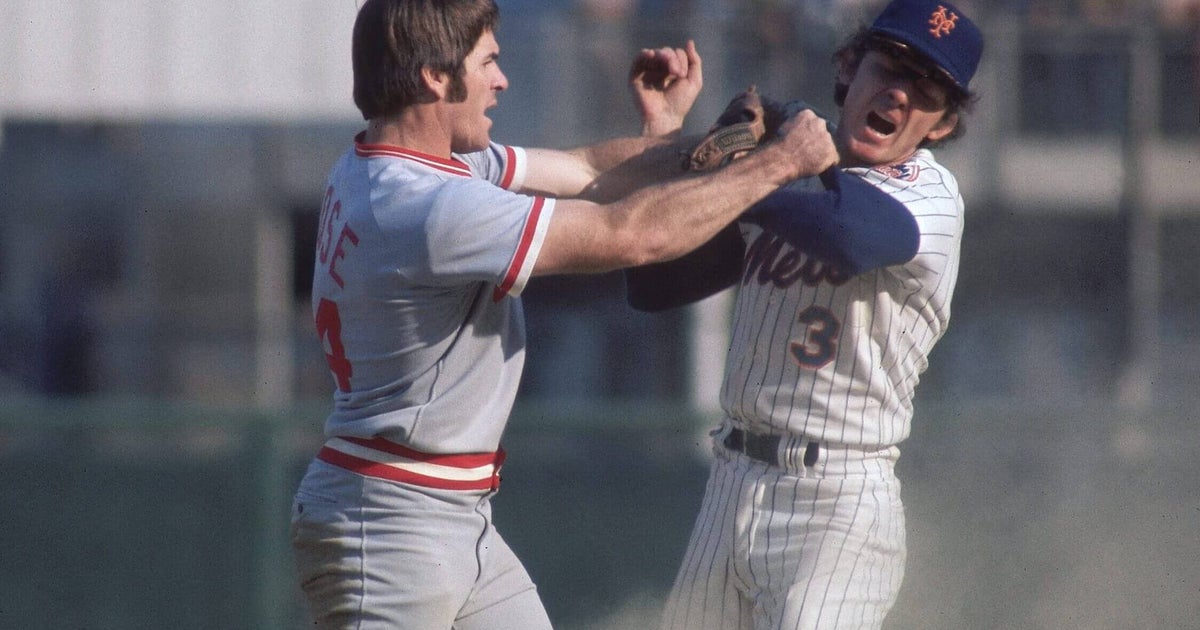
That’s just three games over .500, no great shakes, but it was good enough to overtake the St. Louis Cardinals for first place in the NL East. The Mets defeated the Cincinnati Reds in the NLCS — the series in which shortstop Bud Harrelson memorably brawled with Pete Rose — and then took the Oakland A’s to seven games in the World Series before bowing out.
Yes, there were only those two playoff rounds in 1973, with the winners of the ALCS and NLCS meeting in the World Series. Now it’s the Wild Card Series, Division Series, LCS and World Series. By the time the next expansion cities have been lined up, we’ll likely have even more playoff rounds, with a kind of hardball East-West Shrine Bowl as a setup for the Wild Card Series.
For now? With six teams each from the remnants of the American League and National League qualifying for the postseason, fraud teams are bound to be looking to sneak into the tourney.
What we’re seeing in the AL, however, is something akin to a potato-sack race being held in the middle of a Demolition Derby competition. In the AL West, the Texas Rangers and Houston Astros are both at 76-76, with the ‘Stros technically in first place because of the tiebreaker. In the AL Central, the Cleveland Guardians (78-75) have finally moved into first place ahead of the young Chicago White Sox (77-75), who have lost eight of their last 11 games.
As for the AL wild-card race, the New York Yankees (88-64) have already clinched a playoff spot. The Boston Red Sox (82-70) have a firm grip on the second wild-card. That leaves the White Sox (77-75) leading the Rangers (76-76) by one game, the Blue Jays (76-77) by a game-and-a-half and the Baltimore Orioles (75-78) by 2 1/2 games. Nobody here is the ’73 Mets, but, hey, the Rangers have won four in a row, the Orioles have won three straight and the Guardians have won two straight.
I’d be OK with a barely .500 team making the playoffs if it got there by virtue of a crazy, late-September run. The suddenly rather ordinary Red Sox (5-5 in their last 10 games) muscled their way into contention by finishing 21-4 in July and 17-12 in August, so we did have a summertime resurrection. However the postseason plays out for the Red Sox, what they’ve done is history-making. What MLB needs now is for an AL team to use September to make that kind of history, as the San Diego Padres are doing in the NL.
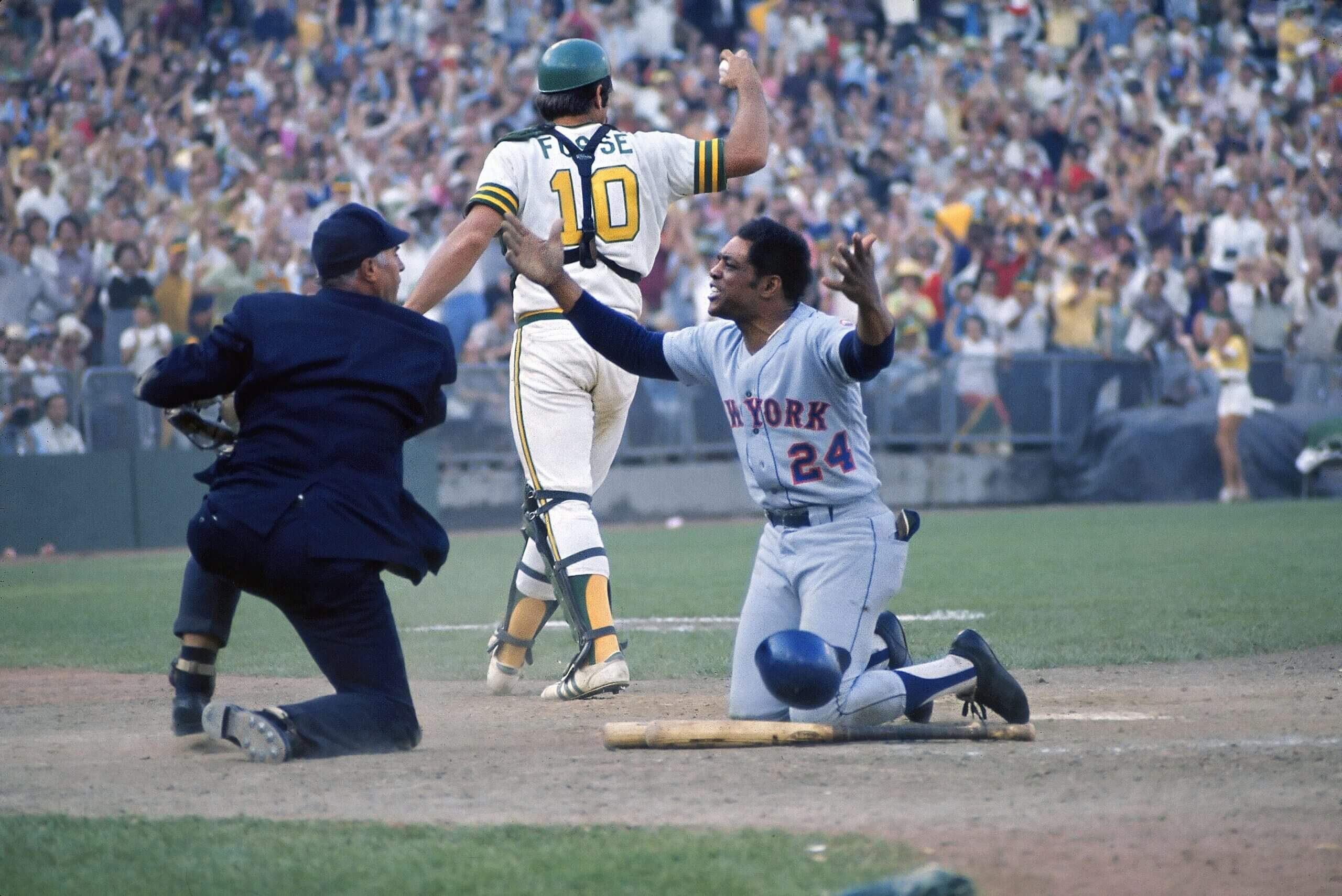
Willie Mays argues with umpire Augie Donatelli after Mets teammate Bud Harrelson was called out at home plate during Game 2 of the 1973 World Series. (Jerry Cooke / Sports Illustrated via Getty Images)
If the ’73 Mets are an unfair comp, perhaps that’s because they were a very good team that just needed to get back some injured players and get reliever Tug McGraw to pitch like his old self. That’s the opinion of the legendary Howie Rose, who grew up a Mets fan and has called the team’s games on the radio for decades.
“They were a better team than 82-79,” Rose said on Wednesday. “They had a lot of key guys out for extended periods, and when they got healthy they turned the corner and played the way we expected they could for the last three-and-a-half weeks of the regular season.”
Before that, Rose said, “The fans were disgruntled. There was talk about who should be fired — the manager, the general manager, the board chairman. It was not a good year going into September.”
But, man, what a September. Harrelson, who missed long stretches of the season due to wrist and sternum injuries, played every game in September/October and hit .276 with a .366 on-base percentage. Catcher Jerry Grote was fully healthy after missing much of the season after being hit by a pitch from the Pittsburgh Pirates’ Ramon Hernandez. McGraw went 3-0 with 10 saves in 14 relief appearances in Sept/Oct. And the Mets already had a deep starting rotation in Tom Seaver, Jerry Koosman, Jon Matlack and George Stone.
“One guy who they needed desperately to turn it around, and did, was McGraw,” Rose said. “And when Buddy (Harrelson) came back, that infield really came together. It’s amazing how he was a catalytic agent.”
So maybe it’s too much to expect a reboot of the ’73 Mets to walk through that door. And, anyway, Rose makes the point that the schedule makes it difficult for neutral fans to get wrapped up in wild-card races.
How a 90-mile stretch could decide the World Series
Ken Rosenthal
“The thing I despise about the schedule now,” he said, and, well, he was off to the races after that opener: “OK, there are a lot of things I despise about the schedule. If you’re going to expand the playoffs to where you have six teams in each league that are going to get in, then why the hell are the Mets — and let’s assume the Mets were in the mix, which they’re not — but for the sake of this discussion here they are in the final two weeks of the regular season playing Baltimore? And Texas next week? That’s insane. If you’re going to have all these teams in the postseason, then wouldn’t it be great if they were playing each other more often in September?”
Rose was quick to point out that “… with an uneven number of teams in each league, you have to have an interleague game at least once a day. I despise interleague play for a lot of reasons, and this is one of the big ones.”
Taking all that into consideration, it’s still not asking much for a team to be like the ’73 Mets and make a September/October run. Even if said team is not, to use Rose’s words, “a better team than 82-79.” The 2002 Blue Jays were 58-76 on Aug. 30 and 26 1/2 games out of first place. Beginning with a 5-1 victory over the Yankees on Aug. 31, the Jays went 20-8 the rest of the way. They didn’t make the playoffs, but they sure made plenty of noise.
That’s all I’m asking of one of these clubs: If you can’t make it like the ’73 Mets, at least make some noise.