
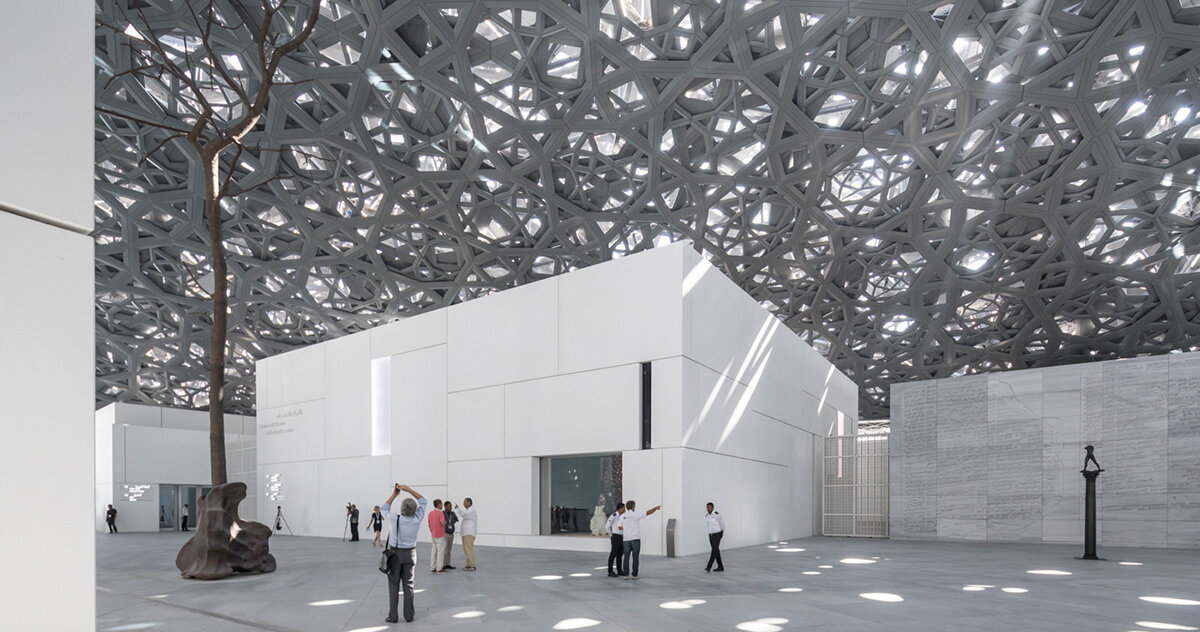
before the building, the image
Before the Crystal Palace existed in Hyde Park, it appeared in the newspaper. Joseph Paxton sketched his proposal in June 1850 and sent a view to the Illustrated London News while the scheme was still awaiting approval. It appeared on July 6th. The Royal Commission accepted his design nine days later. Thousands of panes of glass and miles of iron structure still had to follow, but the public had already seen the building in the form of that image.
This sequence still happens now. We regularly meet architecture first as an image, often long before visiting it, and sometimes without ever visiting at all. But this second existence developed over centuries. Buildings occupy sites, and they occupy pictures. Sometimes the picture begins doing so much of the architectural work that it’s hard to separate the two.
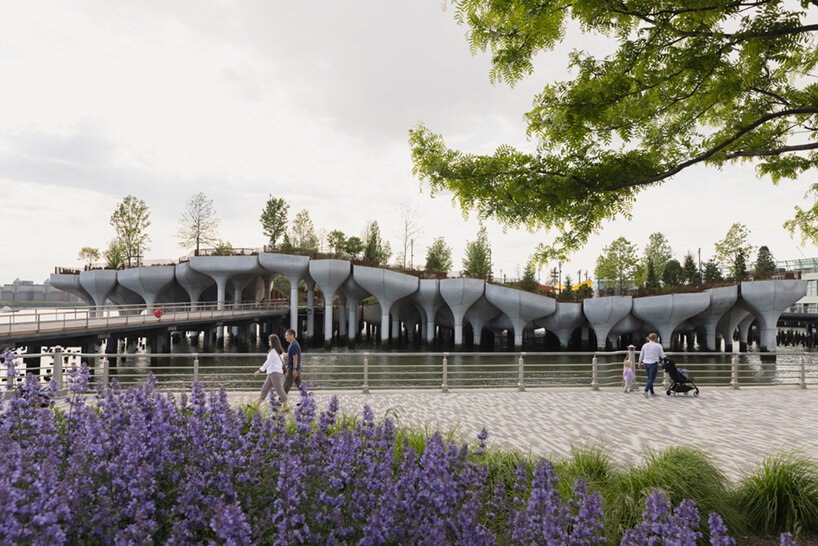
Little Island, Heatherwick Studio, New York, 2021 | image by Michael Grimm
before the camera
At Stourhead in Wiltshire, a walk around the English estate frames ever-changing scenes. A Pantheon sits across the water between trees, and an arcaded bridge stretches beyond. Henry Hoare II began to design and build the garden in the 1740s with architect Henry Flitcroft, and drew on classical landscapes and paintings by Baroque-era artists like Claude Lorrain and Nicolas Poussin. Buildings were strategically sited to emerge into view, disappear into nature, and then return beautifully from another angle.
The picturesque had already made the ‘view’ into something that was to be curated by architects and landscape designers. John Macarthur’s writing on the subject follows the way this ‘pictorial’ thinking entered landscape and architectural design, as special importance was given to the viewer in motion. Space could be walked through while certain moments within it behaved almost like finished pictures. Even while the technology of photography would arrive later, architecture already understood the joys of situating someone in exactly the right place to look.
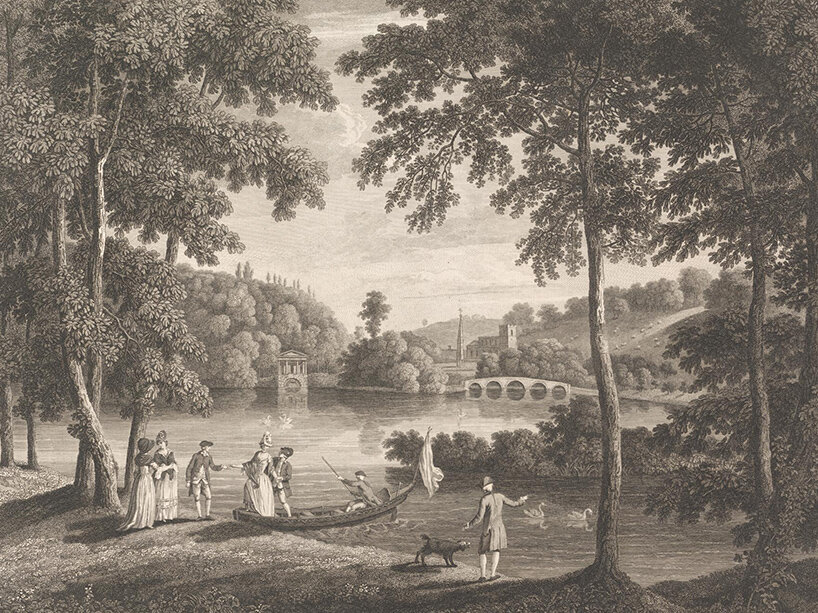
a view of Stour Head in the County of Wiltshire, the Seat of Henry Hoare Esq. (The Temple of Flora) | image courtesy Yale Center for British Art
architecture learns to travel
Of course the picturesque estate was reserved for only a select few. London’s Great Exhibition of 1851, the world’s first international world’s fair, brought this type of experience to mass culture. Millions eventually entered Joseph Paxton’s Crystal Palace, though illustrated newspapers had already given the building another audience.
Paxton understood the usefulness of that audience early. His newspaper image helped build excitement for a proposal still competing for approval. This way, representation became part of the project’s public understanding before it was even built.
World’s fairs were filled with these split existences. Their pavilions were temporary by design, but photographs and printed images gave them an eternal life. The Eiffel Tower remained in Paris, while many structures surrounding it at the 1889 Exposition survive only through their representations. Architecture could vanish from a site and remain alive as a still image.
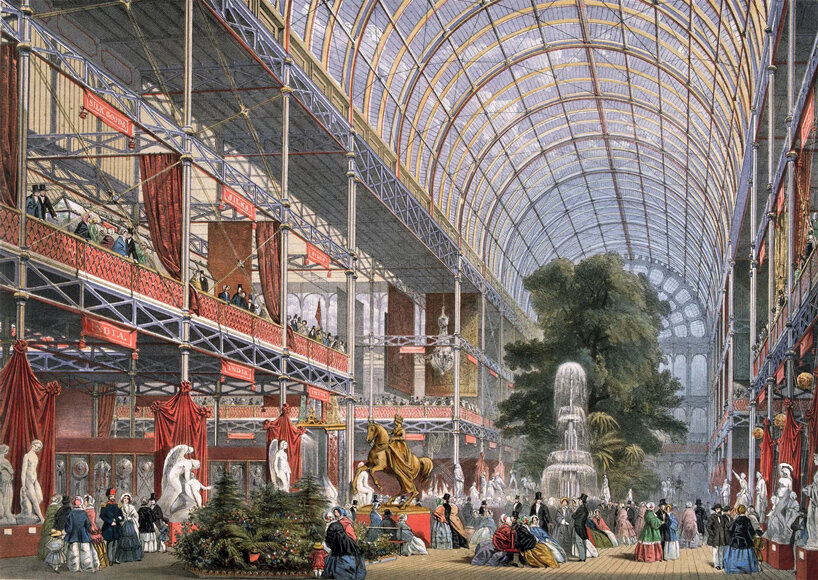
Crystal Palace, illustration of the transept of the Crystal Palace, designed by Sir Joseph Paxton, at the Great Exhibition of 1851, Hyde Park, London | image courtesy Britannica
modernism finds the page
By the early twentieth century, architecture and mass media were growing together. Le Corbusier selected photographs, edited them and arranged them across books with an understanding that the page could construct its own architectural experience. A house became a sequence in itself as the reader entered through one photograph, turned a page and found another. At this time, experiencing built space in this way was relatively novel.
Historian Beatriz Colomina highlighted this relationship as part of her reading of modernism in Privacy and Publicity. She wrote: ‘modern architecture only becomes modern with its engagement with the media.‘
Her argument places publications and other systems of representation inside architectural production itself. Le Corbusier’s buildings existed on their sites, while another version was being assembled through photographs and printed pages for a much larger public.
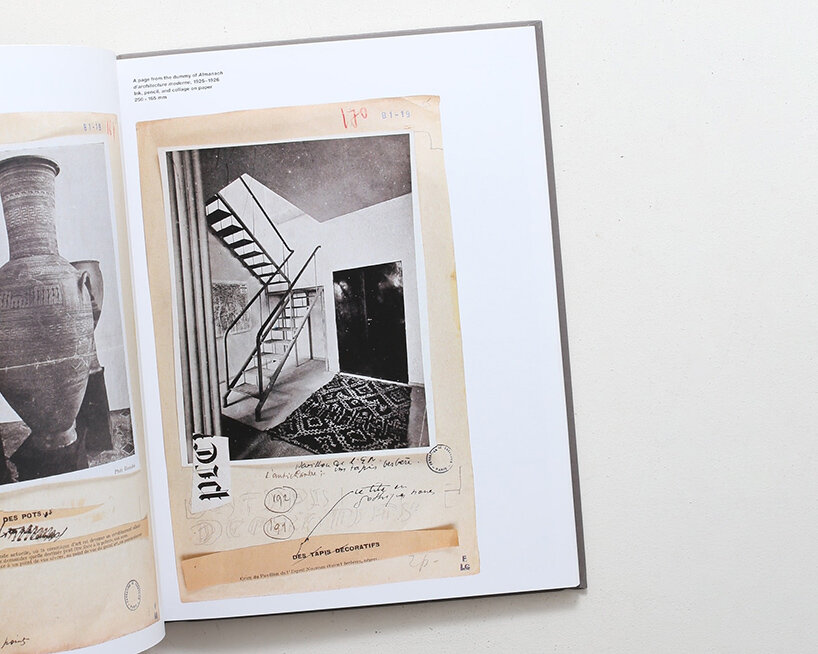
‘Le Corbusier: Architect of Books’, Catherine de Smet, archival interior photograph of the L’Esprit Nouveau Pavilion, 1925 | image courtesy Nostos
photography begins changing the building
Claire Zimmerman, Professor of Architecture at the University of Toronto, describes an even more consequential exchange in Photographic Architecture in the Twentieth Century. Architects first turned to photography because it reproduced lines and planes so effectively and helped their work circulate. That relationship soon moved in both directions.
‘Photography altered the material that it represented,‘ Zimmerman writes. Her study follows the overlap between how modern buildings looked and how photographic images made them look.
Once architects spent years seeing architecture flattened onto magazine pages, those pages inevitably entered the visual imagination of architecture itself. Glass became reflection, and white walls became fields of light and shadow. A corner could take up an entire spread. Even though buildings were still rooms and structures, they were being designed inside a culture that was beginning to understand what a camera could extract from them.
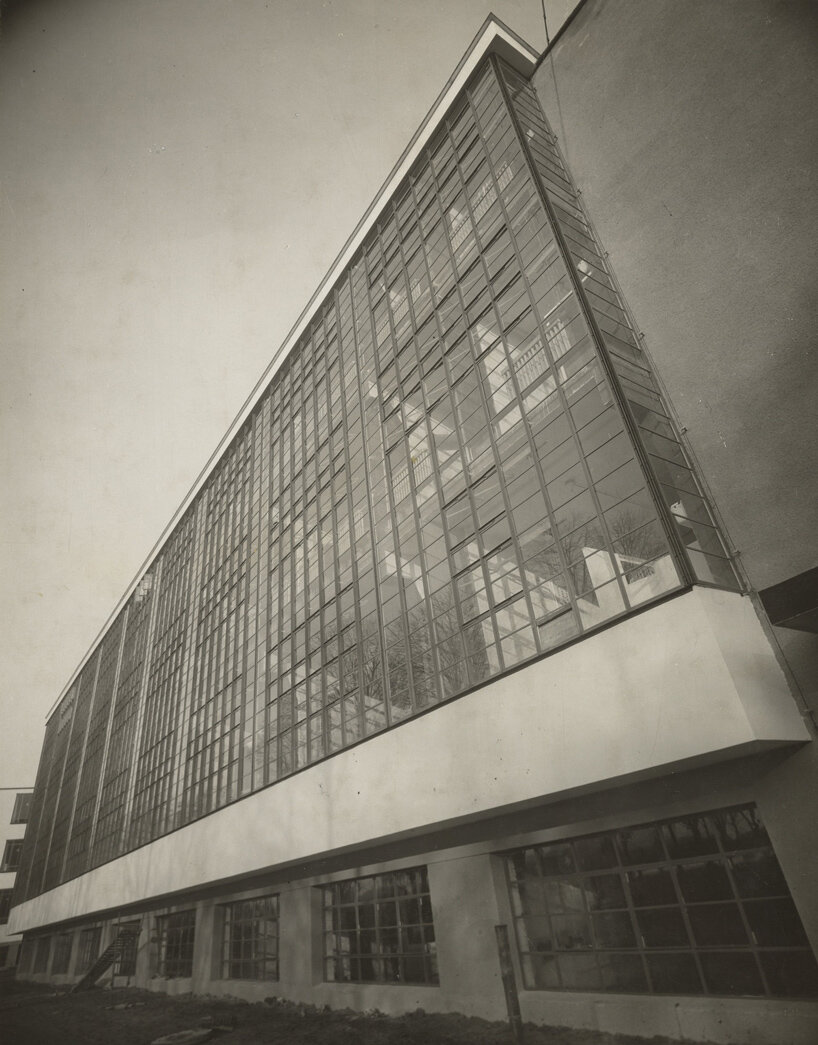
Lucia Moholy. Bauhaus Workshop Building from Below. Oblique View. September 1926 | image courtesy MoMA
the pavilion that survived as photographs
Mies van der Rohe and Lilly Reich’s Barcelona Pavilion makes this exchange especially strange. The original structure stood for only a short time before it was dismantled in 1930. For the decades that followed, architects encountered its marble planes and chrome columns through a limited body of black-and-white photographs. The building became foundational to modern architectural culture while remaining physically absent.
When the pavilion was finally rebuilt in 1986, generations had already spent more than half a century looking at it. Through photography, the project was at once preserved and reinvented. Those images determined the pavilion’s most familiar views, flattened its colors into tones, and established an object that existed outside of built space. The reconstruction eventually gave visitors a building they could walk into, but those photographs had reached them first.