

Download the FREE FOX19 NOW news app for iPhone
Download the FREE FOX19 NOW news app for Android
WILMINGTON, Ohio (WXIX) – Wilmington residents opposing the construction of a proposed $4 billion Amazon Web Services data center in the city were dealt a blow Thursday after the Ohio Supreme Court struck down an ordinance that would allow citizens to sue data centers over zoning violations.
The Ohio Supreme Court voted down a citizen-led plan to regulate data centers, arguing that only the state legislature can authorize such a lawsuit.
The ruling was 20-18 and allows the Clinton County Board of Elections to reject the initiative.
“What concerns a lot of people is that you had a deal that was done behind non-disclosure agreements, that was negotiated through organizations in Columbus, like Jobs Ohio and the port authority, that aren’t elected by the voters, and they make these deals behind closed doors without getting the input of the people,” attorney Joshua Engal said.
Had the Supreme Court sided with Wilmington residents, an initiative would have been on the Nov. 3 ballot that would give private citizens the right to sue data centers for zoning violations.
It would have also set standards around noise and light pollution, water use, discharge and heat generation.
Engal said the fight is not over, and he is pursuing a separate lawsuit over an emergency rezoning that was approved by the Wilmington City Council at a Sept. 3 meeting.
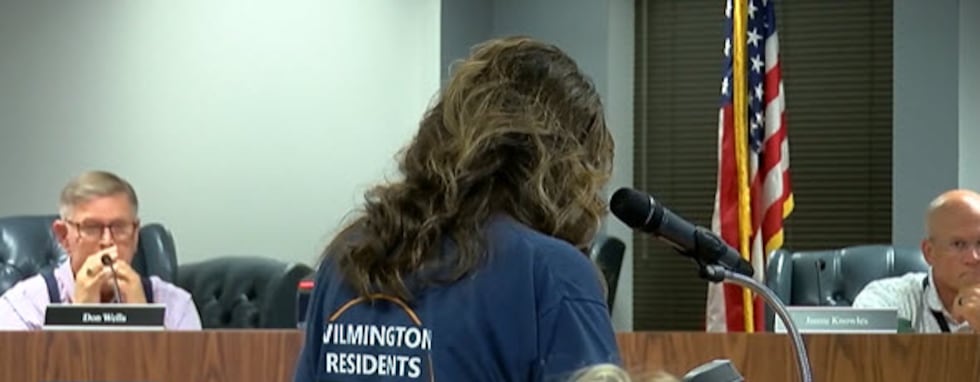 Residents repeatedly asked Wilmington City Council members at their meeting Thursday night to explain why they had to pass the rezoning ordinances under an “emergency” vote.(FOX19 NOW)
At the Sept. 3 meeting, residents stood before the council for hours, raising concerns and asking questions about the proposed $4 billion data center, to which several council members did not respond.
People came out in droves to the meeting because city officials had to redo several ordinances after a federal judge forced them to follow Ohio’s open-meetings laws and give adequate notice to residents.
The city tried to bypass delays with emergency ordinances addressing the data center’s rezoning, use rules and generator-noise regulations.
The noise ordinance passed as written, with emergency language, in August, and the rezoning ordinance from Rural Residential to Light Industrial passed in early September.
Emergency legislation takes effect immediately and skips the normal waiting period that would otherwise give residents time to challenge it.
The Ohio Supreme Court ruled in State ex rel. McNamara-Smith v. Grube that municipalities can no longer use boilerplate “emergency” language or cite “avoiding project delays” to block a referendum.
See a spelling or grammatical error in our story? Please click here to report it.
Do you have a photo or video of a breaking news story? Send it to us here with a brief description.
Copyright 2026 WXIX. All rights reserved.