
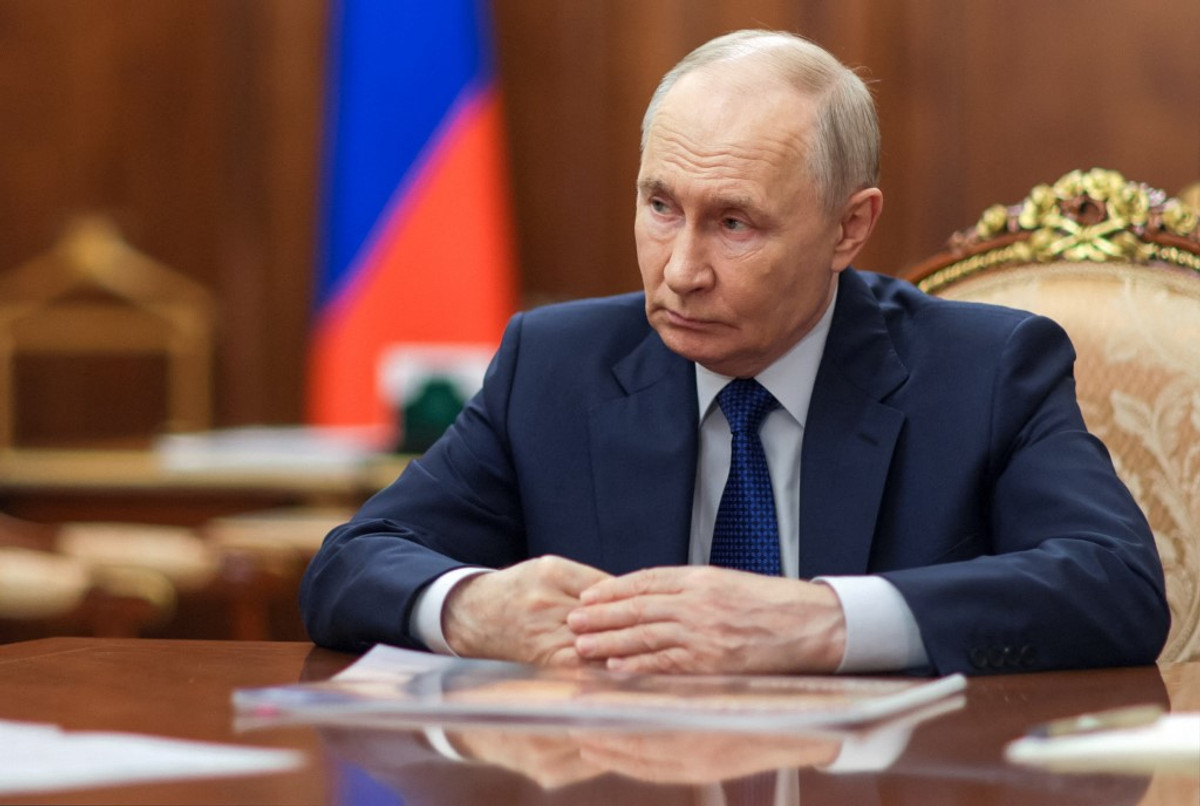
Russian President Vladimir Putin has expanded Moscow’s seizure campaign against Western companies, taking control of the Russian operations of Nestlé, Auchan, Lemana Pro and FM Logistic.
The seized businesses were transferred to L.E.V. Management, a little-known Russian company that Novaya Gazeta Europe reported was created only in late 2025 and is headed by a Russian Interior Ministry general.
JOIN US ON TELEGRAM
Follow our coverage of the war on the @Kyivpost_official.
In a short statement, Nestle said it was “committed to taking all necessary steps to protect its rights and ensure continuity of business operations in the interests of all stakeholders, particularly its employees”, AFP reported.
“The company is assessing the situation and its options,” it added.
Nestle has six factories and Russia and employs around 7,000 people, mainly for coffee, pet care, infant nutrition and confectionary products, a spokesperson said.
The Kremlin made clear why they were targeted.
Kremlin spokesman Dmitry Peskov described them as companies from “unfriendly countries,” linking the move to European sanctions and support for Ukraine.
Moscow calls the arrangement “temporary administration.” Previous cases suggest it can be the first step toward Western owners permanently losing control of their businesses.
From Danone and Carlsberg to Nestlé
Russia introduced the mechanism in 2023, after Western countries imposed sweeping sanctions over its full-scale invasion of Ukraine.
Other Topics of Interest
‘We Won’t Let Putin Wait Us Out’: Senator Shaheen Outlines Sweeping New US Sanctions Package
The bill targets Russian energy revenues and major buyers including China, as Shaheen also urges more interceptors and Starlink support for Ukraine.
Danone, Carlsberg and Finnish energy company Fortum were among its earlier targets.
Danone’s Russian business was placed under the management of Yakub Zakriev, a nephew of Chechen leader Ramzan Kadyrov, before the French company eventually exited.
The pattern has given Russian authorities enormous leverage over Western companies: stay and risk seizure, or leave under Kremlin-imposed conditions.
Foreign firms have been forced to sell assets at deep discounts, while Russian authorities have repeatedly tightened exit requirements. Western companies had already accumulated more than $107 billion in write-downs and lost revenue by March 2024, according to a Reuters analysis.
Nestlé may now face a write-off of around 1 billion Swiss francs, or $1.2 billion, analysts cited by AFP estimated.
A wartime asset grab
The seizures are part of a much broader expansion of state control since Russia invaded Ukraine.
Around $50 billion in assets were confiscated between 2022 and 2025 as Moscow shifted toward what researchers described as a “fortress Russia” economic model. The campaign has affected foreign and Russian-owned businesses alike.
For the Kremlin, the immediate gain is control over valuable assets. But the seizures also warn investors that ownership in Russia can be overridden by presidential decree – a risk that could outlast sanctions.
Why it could backfire
More than 1,000 foreign companies have already left Russia since the full-scale invasion, selling, abandoning or transferring their businesses.
Even before the latest seizures, Moscow’s “temporary management” system was complicating prospects for Western companies ever returning.
Foreign investment brings more than money. Western companies supplied Russia with technology, industrial equipment, management expertise and access to global supply chains – areas increasingly constrained by sanctions imposed because of the war against Ukraine.
Each new seizure therefore deepens a problem Moscow may struggle to reverse: investor confidence.
Russia can replace some Western brands with domestic or Chinese alternatives. Rebuilding trust in property rights is harder.
The legal fight can last decades
Taking an asset inside Russia also does not guarantee that the dispute ends there.
Companies can pursue compensation through international arbitration and foreign courts where jurisdiction allows.
Russia already knows how long such cases can last.
The lesson for companies watching Nestlé, Danone, Carlsberg and Fortum is difficult to ignore: an investment in Russia can become hostage to the Kremlin’s confrontation with the West.
Moscow may gain factories and stores today.
By weaponizing Western assets against Ukraine’s allies, Russia has poisoned its business climate for long after the war ends.