
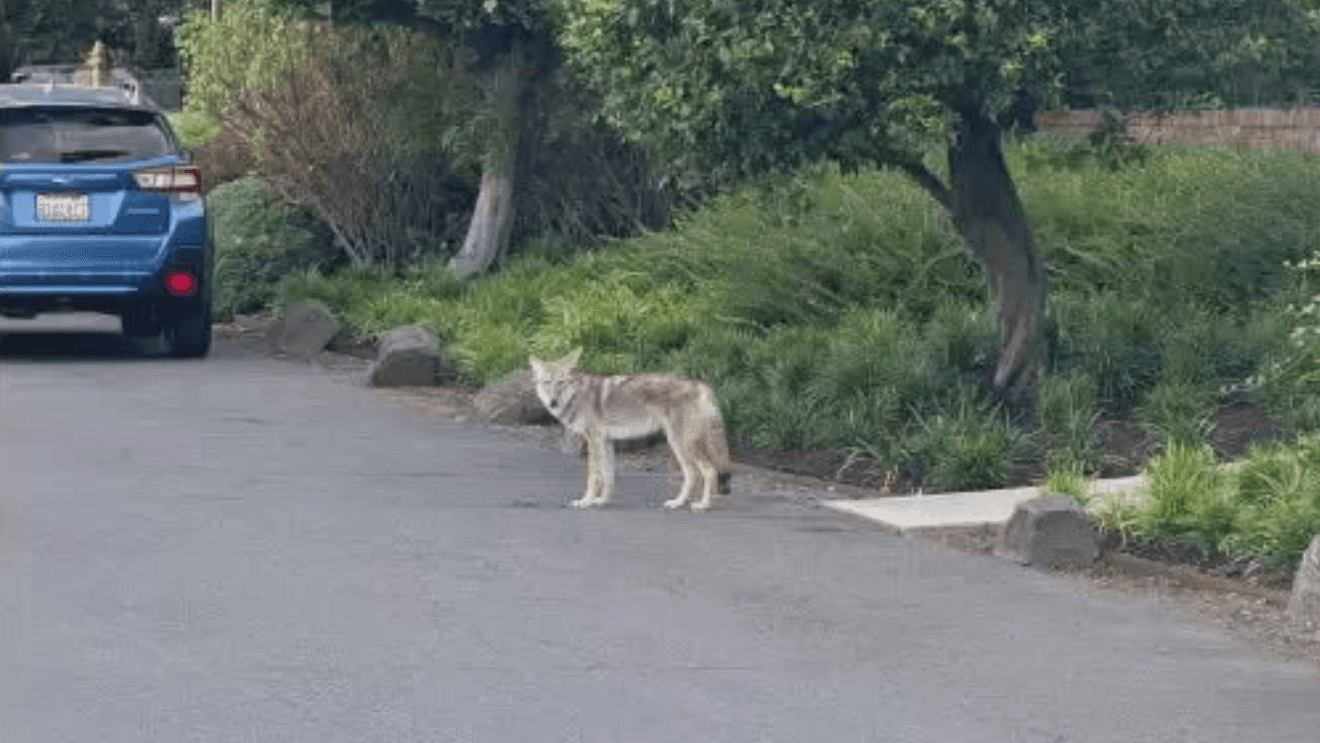
SEATTLE — Coyotes are thriving in Seattle, drawn by abundant food and fewer threats than they face in the wild, according to new University of Washington research that found the animals living at far higher densities in the city than in nearby natural areas.
“We observed a ninefold increase in coyote density in Seattle compared to more natural and wild areas of the state,” said lead author Laura Prugh, a UW professor of environmental and forest sciences. “That might surprise people who think of coyotes as afraid of humans, but I think it just shows how ideal the urban setting is for coyotes.”
The results were published Sept. 10 in Environmental Research: Ecology.
Over the past century, coyotes have colonized every major metropolitan area in North America, the researchers said. Chicago is home to an estimated 4,000 coyotes, and in Los Angeles, urban coyote density is at least seven times higher than in wild areas.
Coyotes are often spotted in parks and neighborhoods throughout Seattle, but the lack of formal data has made it difficult for researchers to track trends. In the new study, researchers analyzed coyote scats collected throughout Seattle and from wild study areas near Winthrop in north-central Washington and Chewelah in the northeastern part of the state. They estimated density based on how often they picked up a scat from the same animal, identifying 261 total coyotes from 842 scats.
Researchers also examined what might influence coyote density within Seattle, including the “luxury effect,” where wealthier neighborhoods have more plant and animal diversity. They compared coyote density maps to pollution levels, tree cover, buildings and roads, human population density, and income level. Of those factors, only human density appeared to influence coyotes.
“In Seattle, human population density had a negative effect on coyote density. But when you compare coyote abundance in Seattle to areas with far fewer people, the coyote population was much higher in the city,” Prugh said.
The study points to several reasons coyotes may do well in urban environments. While coyotes are wary of people, the conditions created by dense human populations can favor their survival, and urban coyotes are less likely to be killed or go hungry than their wild counterparts, researchers said.
In the wild, larger carnivores such as wolves and mountain lions hunt coyotes. In rural settings, farmers and landowners may also kill coyotes to protect livestock. In cities, researchers said, the only things that regularly kill urban coyotes are cars and disease.
Food options are also broader in urban areas. Scat analyses showed that urban coyotes’ diets were more than twice as diverse as those of wild coyotes, although berries and rabbits topped the list for both.
Seattle’s “bunny boom” over the past few decades has changed urban ecology and may have helped draw coyotes to the region, the researchers said.
“Coyotes and rabbits have a natural relationship, even in a highly altered environment like Seattle,” Prugh said. She added that rabbit density could be an even stronger predictor of coyotes than humans, but said there is not enough data to test the theory.
Long-term coyote population data remains limited, but there is “overwhelming anecdotal evidence” that coyote abundance has increased in the past few decades, Prugh said. Sightings are more common at dusk and dawn, but coyotes are now appearing in broad daylight as well. They tend to avoid people, but residents have raised concerns about coyotes preying on pets and displaying territorial or aggressive behavior.
The researchers also warned that coyotes can become aggressive toward humans when conditioned to expect food, and said educating people about how to interact with coyotes is key to coexisting safely.
Because coyotes are territorial, they will fight each other over turf, a behavior that can help control their population in the absence of other predators. Cities can only support so many coyotes, but Prugh said she is not sure whether Seattle has met that limit yet.
Either way, she said, coyotes are unlikely to disappear from urban areas.
“One thing that coyotes have shown over and over is that they are incredibly resistant to control efforts,” Prugh said. “With enough food, they will just have more pups.”
The study also highlighted potential ecosystem benefits, including coyotes preying on rabbits that can damage gardens.