
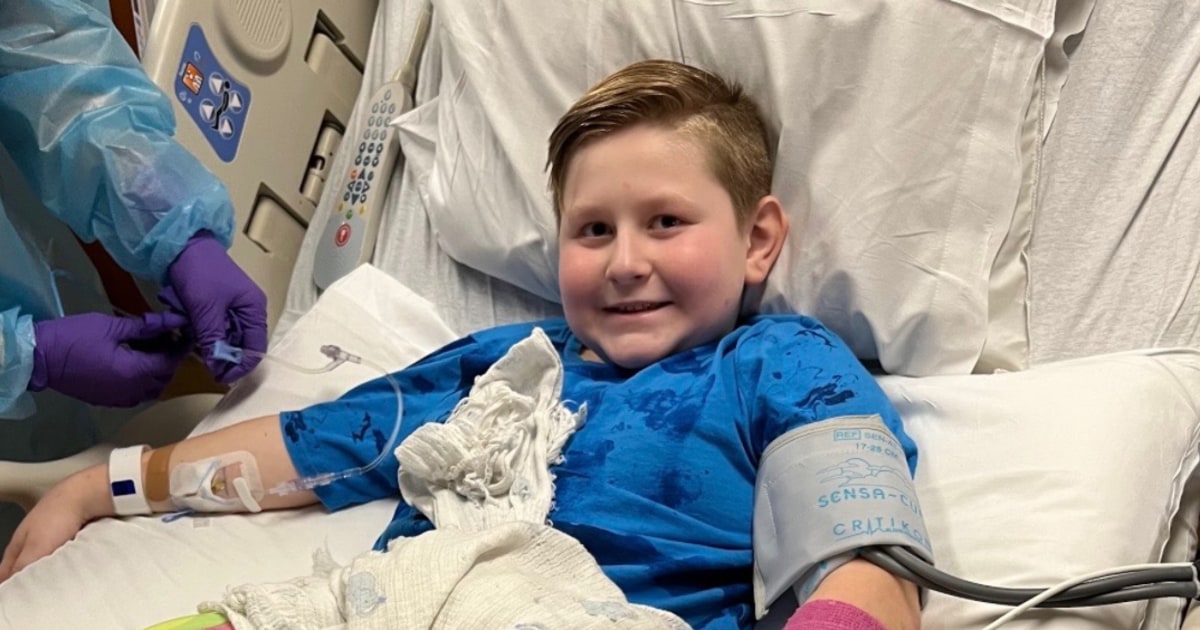
Like many 13-year-olds, Trey McGowan is busy with school, sports and friends. But his day and night also revolves around precisely timed meals that must include raw cornstarch. His life depends on it.
The teen was born with a rare inherited disorder that causes his blood sugar to drop dangerously low if he goes too long without eating. But he can’t eat table sugar or the sugars found in milk or fruit. He’s never had a banana because it would be too risky.
Raw cornstarch — a complex carbohydrate that’s digested particularly slowly and keeps blood sugar stable — has been a cornerstone of Trey’s diet since he was diagnosed with glycogen storage disease as a baby.
His mom, Jen McGowan, still remembers the moment doctors told her he would need cornstarch every three hours — day and night.
“Many parents are just devastated. I was just like, ‘OK, we’re going to keep him alive.’ That was the main thing,” McGowan, 45, who lives in Dayton, Ohio, tells TODAY.com, her voice breaking with emotion.
“In the ‘80s, they didn’t live past 2 years of age, and I think that’s what got to me. Like, we’ll do whatever it takes. If he needs cornstarch, we’re going to figure it out.”
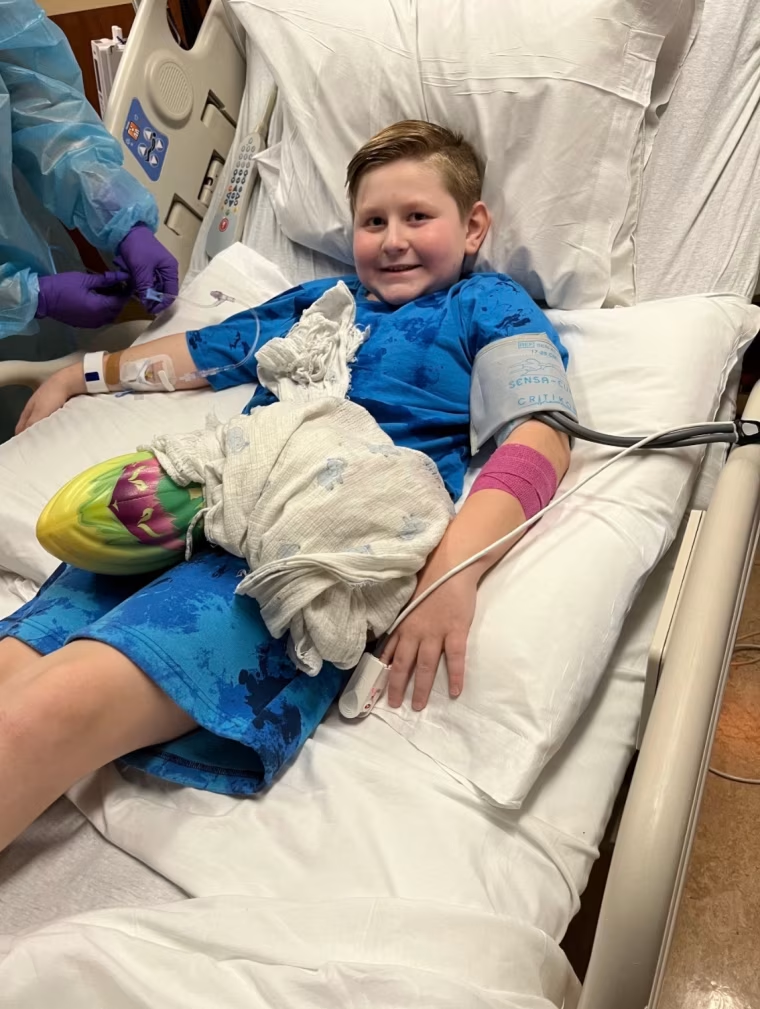 Trey McGowan in the hospital.Courtesy McGowan family
The family now lived by the clock, measuring precise amounts of uncooked cornstarch, mixing it with special formula and feeding Trey with it through his gastrostomy tube at midnight, 3 a.m., 6 a.m., 9 a.m., noon, 3 p.m., 6 p.m. and 9 p.m.
Sleeping through an alarm or missing a feed meant Trey’s blood sugar would drop to dangerous levels and he’d go into a seizure. He required specialized care from doctors at Cleveland Clinic Children’s.
The boy had to be fed eight times a day until he was 4, then seven times a day when he was older. Now, the family is celebrating that he can survive with six feeds a day thanks to a newly-approved gene therapy for his disorder.
‘Our Life Just Changed’
Trey was diagnosed with glycogen storage disease Type 1a, also known as von Gierke disease, a few months after he was born with extremely low blood sugar.
Both of his parents carry a gene related to this inherited genetic disorder, though they had no idea. No one else in the family — including Trey’s twin sisters — have the condition, which affects 1 in 100,000 people.
GSD Type 1a means the boy lacks an enzyme that normally allows the body to break down glycogen — a form of sugar stored in the liver and muscles — into glucose, the body’s main source of energy, according to the National Library of Medicine.
A person with GSD Type 1a can’t maintain blood glucose levels and will have low blood sugar within a few hours after eating, the American Liver Foundation notes.
Treatment requires regular meals, including overnight, with a precise amount of complex carbohydrates that are digested slowly such as uncooked cornstarch or Glycosade, an extended-release cornstarch that can be used to keep blood sugar stable while a person is sleeping.
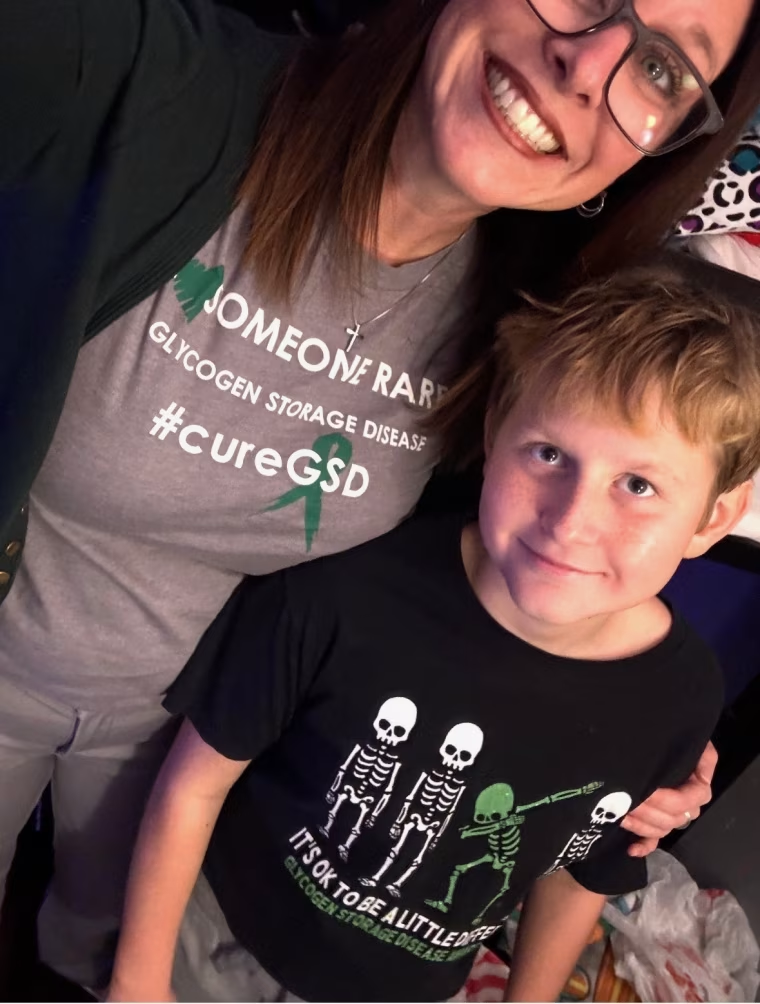 Trey and his mom.Courtesy McGowan family
“I always say, I have a forever newborn,” his mom notes about the mandatory regular feeds.
The cornstarch dose, precisely weighed and mixed with water, goes into his G-tube. It’s also possible to drink it but after tasting it herself, McGowan describes the taste as “very chalky.”
The enzyme deficiency requires a diet low in fructose, the sugar found in fruit, and sucrose or table sugar. Galactose and lactose, the sugars found in milk, must also be limited, the National Library of Medicine notes. Trey is not supposed to exceed 5 grams of sugar at any meal, his mom says. For perspective, a banana has about 15 grams of sugar.
Infants require soy-based, sugar-free formula; children and adults must eat frequent, high-complex carb meals and protein on top of the cornstarch.
“I was naive in saying, ‘OK, well, he just won’t be having a birthday cake at his first birthday.’ There’s a lot more that goes into it,” McGowan says. “Our life just changed.”
GSD Type 1a is a “severe disease” that requires lifelong therapy with “meticulous adherence and planning,” but many patients now reach adulthood without major complications, researchers note.
Still, the sleep disturbances and loss of spontaneity have a deep impact on the quality of life, for the child and their family, they add.
Gene Therapy Reduces Family’s Anxiety
Trey has regular feeds via his G-tube, but also eats two to three meals a day by mouth.
The eighth grader likes steak, chicken, hibachi and ramen noodles. McGowan makes sugar-free cakes for his birthday using non-sucrose sweeteners. He sometimes enjoys a zero-sugar candy bar and sugar-free ice cream.
“Luckily, we live in such a keto-friendly world now, and zero-sugar this and zero-sugar that, that he hasn’t had to make so many sacrifices,” she says.
Trey’s G-tube feeds are down to six a day after he took part in a gene therapy trial. The one-time infusion, known as Genglycos, has now been approved by the U.S. Food and Drug Administration.
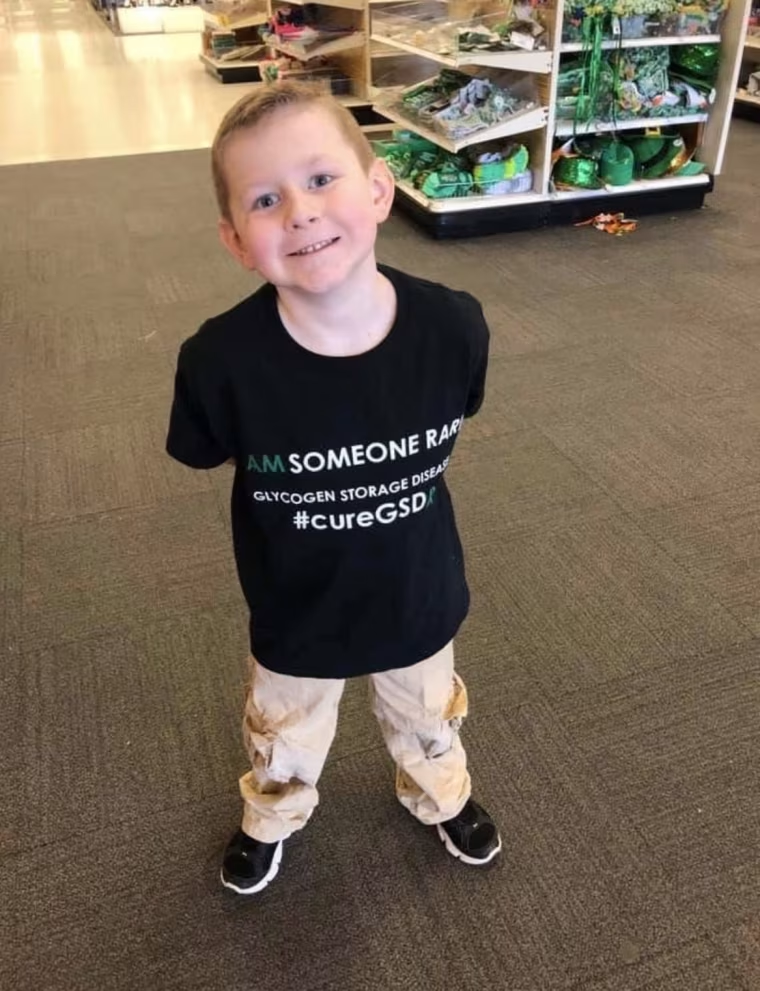 Trey as a little boy.Courtesy McGowan family
It’s the first treatment greenlit for the condition, and aims to “restore the deficient enzyme required to release stored glucose,” the FDA noted.
Patients were able to reduce their daily cornstarch intake by 31% compared to placebo, a study found.
Cornstarch will remain part of Trey’s life forever, but after the treatment, he was able to reduce the amount of it he must consume daily by the equivalent of 1,000 calories, which his mom calls “amazing.”
“It’s shaving off a little bit of the top of the anxiety that swarms around in our family. It’s just been great. I feel like there’s just some promise in the whole thing for him,” McGowan says.
“I am very grateful that we did the gene therapy to see the difference.”