
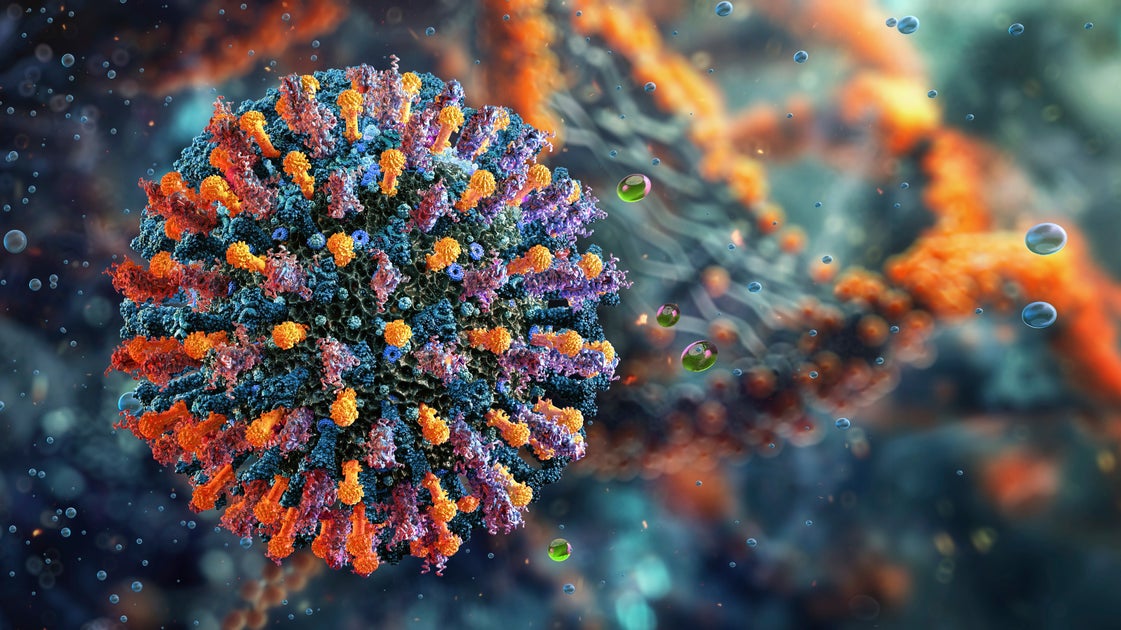
It’s hard to turn on the news right now and not see coverage of measles infections.
Measles cases in the United States are at a 30-year high. There are currently 3,471 cases throughout the country, and there have been four measles-related deaths in the U.S. this year. That’s up from a total of 2,289 cases in all of 2025 (which was also 30-year high for the U.S.) and up from 285 cases in 2024. By comparison, there were 85 cases in 2000.
“Measles was eliminated from the U.S. in the 2000s,” said Dr. Geeta Sood, an infectious diseases physician and epidemiologist at Johns Hopkins Medicine in Baltimore. “It’s not like we didn’t see measles at all, but they were imported cases … it was really U.S. travelers who have gone overseas and brought it back.”
Now, however, outbreaks are happening domestically.
“You need just a small amount of the virus to get infected,” noted Dr. Gavin Harris, an infectious diseases physician with Emory Healthcare in Georgia and the associate medical director of the Serious Communicable Diseases Unit. “It’s incredibly contagious. It’s one of the most contagious illnesses known to mankind, and it can have some really drastic complications, especially for those who are unvaccinated.”
Measles can lead to death, pneumonia and brain swelling known as encephalitis. The disease is often associated with babies and kids, but the infection can occur in adults, too; one of the measles-related deaths this year was in a 40-year-old unvaccinated woman.
“We often forget about adults getting measles … 38% to 40% of cases this year of measles have been in adults,” Harris said. “Adults become infected at the same, if not higher, rates than children themselves … in 2025, just over half of the measles hospitalizations were actually … adults.”
As measles cases continue to soar throughout the country, many adults are wondering if they need a measles booster shot for added protections. Here’s what experts say:
First, the measles vaccine offers significant protection against the illness. Measles largely infects unvaccinated people.
“The majority of cases that we’re seeing occur in unvaccinated individuals. When you are not vaccinated against measles, it is so highly contagious,” said Samantha Picking, the senior director of immunizations at Walgreens.
The measles vaccine is a two-dose shot known as the measles, mumps and rubella vaccine (MMR), and is highly effective in preventing the illness. The first dose is given to babies when they’re 12- to 15-months-old, and the second dose is administered when kids are between 4- and 6-years-old.
“We do know from the almost 50 years of data that two doses are about 97% effective, and one dose is about 93% effective for reducing infection,” Harris said.
“If somebody has had vaccination at all in their lives, they are very, very likely to be protected,” Sood stressed.
Luis Alvarez via Getty Images
If you cannot confirm your vaccination status, it’s worth getting a dose of the MMR vaccine.
If you aren’t sure if you got the two-dose measles vaccine, there are a few things you can do.
Coverage from the two-dose vaccine is lifelong.
“In reality, if you got both doses of this vaccine, you should not need a booster dose,” Picking said.
Sood added that “most people who have gone through public schools … probably will have been vaccinated.”
If you have a record of two doses of the MMR vaccine after your first birthday, you are considered protected and don’t need another dose, Harris said.
“If someone has no records, no idea, the recommendations from public health agencies is to check with the state immunization registry,” Harris added. You can search online for your state’s registry.
“Talk to your provider, talk to your pharmacist if you have any questions or concerns about your vaccination history,” Picking said. “They may be able to look it up in their statewide registry and help.”
If your data is not available, you can check with your parents (if they are still living) or your childhood doctor’s office (if it’s still operational).
If you can’t find your medical records, or if you got the vaccine between 1963 and 1967, you may want to get another MMR dose.
If there are no records available, “the recommendation is to get an MMR dose,” Harris said.
It’s safe to get another shot even if you did actually get two doses decades ago but have no records or recollection. “You can get a booster. It’s absolutely safe to do so,” Picking said.
You can also consider getting a blood test, known as a titer test, that looks for antibodies from past vaccines or diseases, according to Harris.
“But really, for most adults, an extra dose just makes more sense. The titer test adds another step, and it can also add things like lab fees, copays, travel to and from a laboratory or a doctor’s office, and it also may give an incomplete picture,” Harris added.
Additionally, adults born before 1957 are considered immune, but adults who got the vaccine between 1963 and 1967 may need another dose.
Before the vaccine, nearly every child got measles, which is why people born before 1957 are considered immune from measles, Picking said.
Adults who received the measles vaccine between 1963 and 1967 should consider getting a booster if they haven’t already, Picking added. “That version of the vaccine was not considered fully effective, so those people may not be protected,” she noted.
If you are unvaccinated and exposed to measles, there are medical interventions that can protect you from the illness.
“The vaccine is the absolute best way to prevent disease,” according to Sood, but if you are unvaccinated and exposed, you should quickly seek medical attention.
“Measles vaccine within three days will protect you, and IVIG immunoglobulin within six days will protect you,” Sood said.
“If you are in the category where you don’t know if you’ve had your vaccination, because we are seeing so much of [measles] around, it would be really helpful to either get those records or to talk to your doctor,” Sood added. “In the setting where you might be exposed, just thinking that you’re vaccinated is not going to be enough.”