
There are telltale media signs that indicate things aren’t going well for a college football program.
One is when the coach no-shows for their weekly radio show.
Another is when the athletic department starts pulling credentials for suspect reasons.
And yet another is when the school’s PR staff starts arbitrarily changing media policies to limit access or questions.
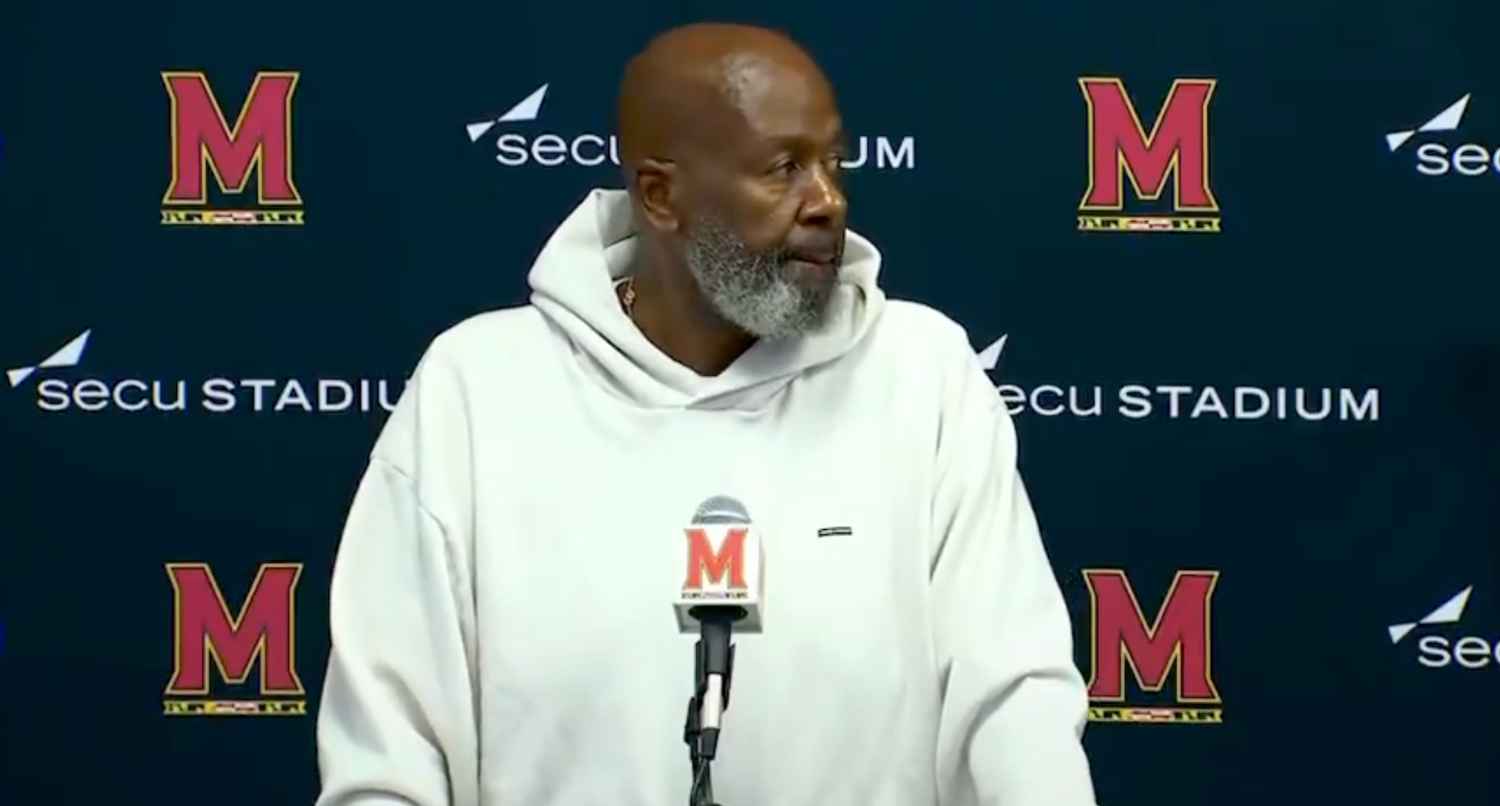
That appears to be the case with the Maryland Terrapins football program, where embattled head coach Mike Locksley apparently no longer has to deal with the scourge of the dreaded follow-up question.
In his eighth season at the helm and coming off consecutive 4-8 finishes, Locksley came into this year on the proverbial hot seat. The high hopes from a 2-0 start were dashed over the weekend with a 35-26 home loss to James Franklin’s Virginia Tech, dropping his overall record at Maryland to 39–50. That brought tough questions at Tuesday’s press conference as his team prepares to take on UCLA.
Asked Michael Locksley if he believes he deserves more chances to keep *saying* he’s going to learn from losses while rarely actually doing so.
Here’s the back and forth. Tried following up but a Maryland PR staffer took the mic out of my hand and Locksley did not look at me. pic.twitter.com/WEJ2x4T0KQ
— Taylor Lyons (@taylorjlyons) September 22, 2026
“Hey, Mike, you said it after the game Saturday. You said it several times after losses over the years that you’re going to learn from it. You’re going to get things fixed, corrected,” said Taylor Lyons of the Baltimore Sun. “Yet losses like Saturday continue to happen, where you get outcoached, you get outplayed, and then you come out afterward, and you make those same promises. Do you feel like you deserve more chances to keep saying you’re going to learn from losses, and I think everybody at this point expects more from you.”
“Go back and break down your question now, because you seem like you went on. What are you asking me? Let’s get to that,” Locksley responded.
“After losses like Saturday, you keep saying that you’re going to learn from them,” started Lyons, before Locksley cut him off, saying, “Got it, I understand.”
“I understand why you ask the question, why you say those things,” the coach continued. “I understand why the fans are frustrated. They’ve earned the right for us to play better than we have. It won’t get fixed here at the podium. It gets fixed across the street with the work we do. We continue to do the work. We continue to improve. We’ll continue to do the things we have to do to earn their trust back.”
With that, Locksley quickly looked away from Lyons, who could be heard coming back to his original question and the secondary aspects of it, but he was no longer speaking into a microphone. Then, another reporter could be heard asking a question into a microphone, and Locksley started listening to that person, ignoring Lyons’ follow-up.
According to Lyons, the athletic department had taken the microphone away because it no longer allowed follow-up questions at press conferences.
Maryland PR apparently has a new policy this year to not allow reporters to ask follow-up questions in Locksley’s pressers. Was never a thing before this season. I’ve had staffers come up and actually grab the microphone out of my hand multiple times in the past few weeks. https://t.co/IR4Vqf7Pvq
— Taylor Lyons (@taylorjlyons) September 22, 2026
“Maryland PR apparently has a new policy this year to not allow reporters to ask follow-up questions in Locksley’s pressers,” Lyons wrote on X. “Was never a thing before this season. I’ve had staffers come up and actually grab the microphone out of my hand multiple times in the past few weeks.”
That prompted reactions from fellow reporters, who called out the situation.
“Moderated press conferences are the worst,” said On3 Oklahoma reporter George Stoia III.
“So many media restrictions in CFB would never fly in the NFL,” added ESPN Bengals reporter Ben Baby.
“Always a sign things are going well when you’re putting policies in place to prevent reporters from getting actual answers to the question they asked,” wrote Atlanta radio host Heath Cline.
It can be a difficult and uncomfortable situation when you’re a head coach of a program heading in the wrong direction, and you’re tired of answering questions about what’s going wrong and whether or not you can fix it. But in the words of Don Draper, that’s what the money is for. Locksley makes $6.1 million a year; we’re pretty sure he can handle a follow-up question about whether he feels like he’s earning it.