
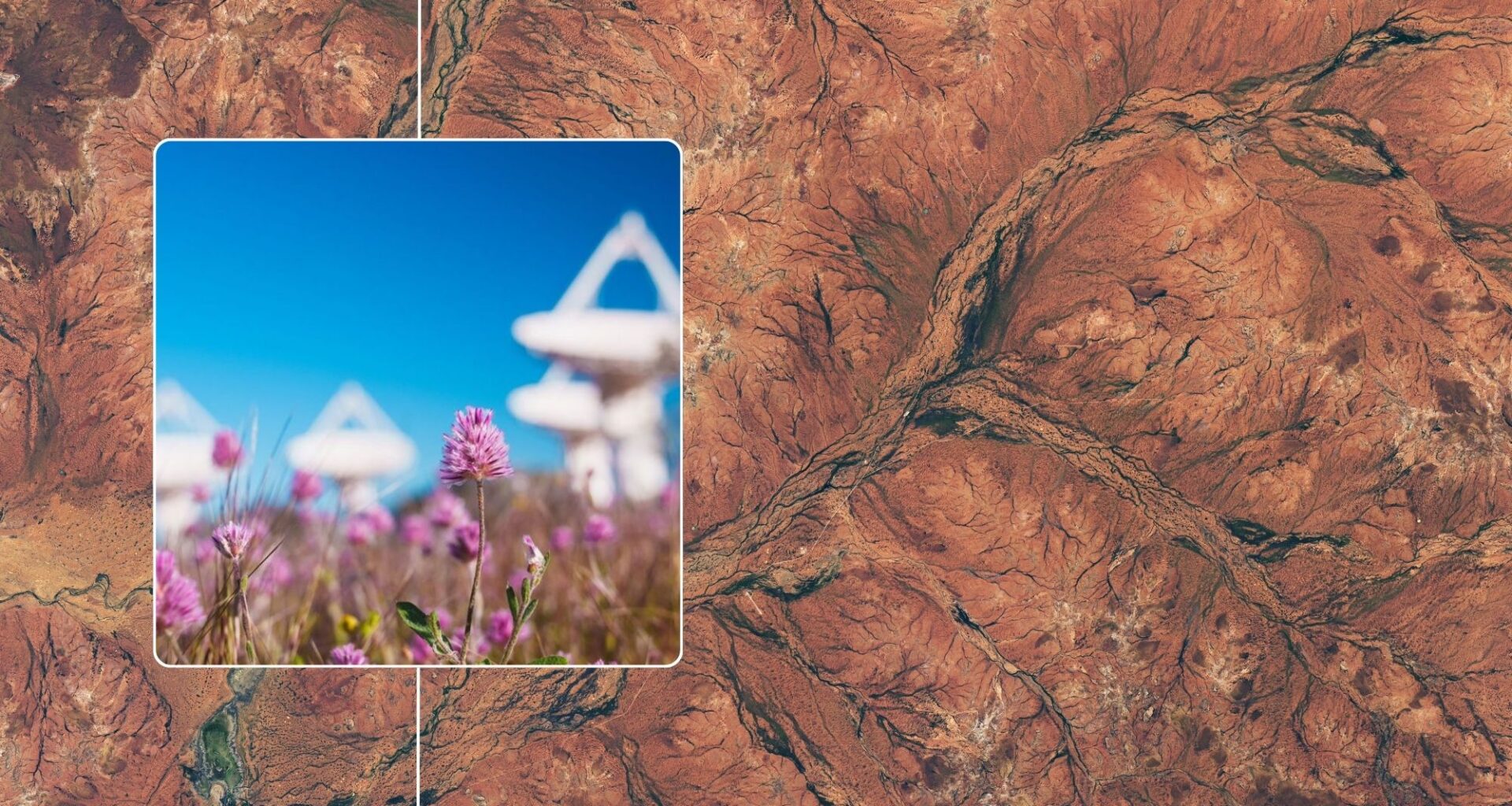
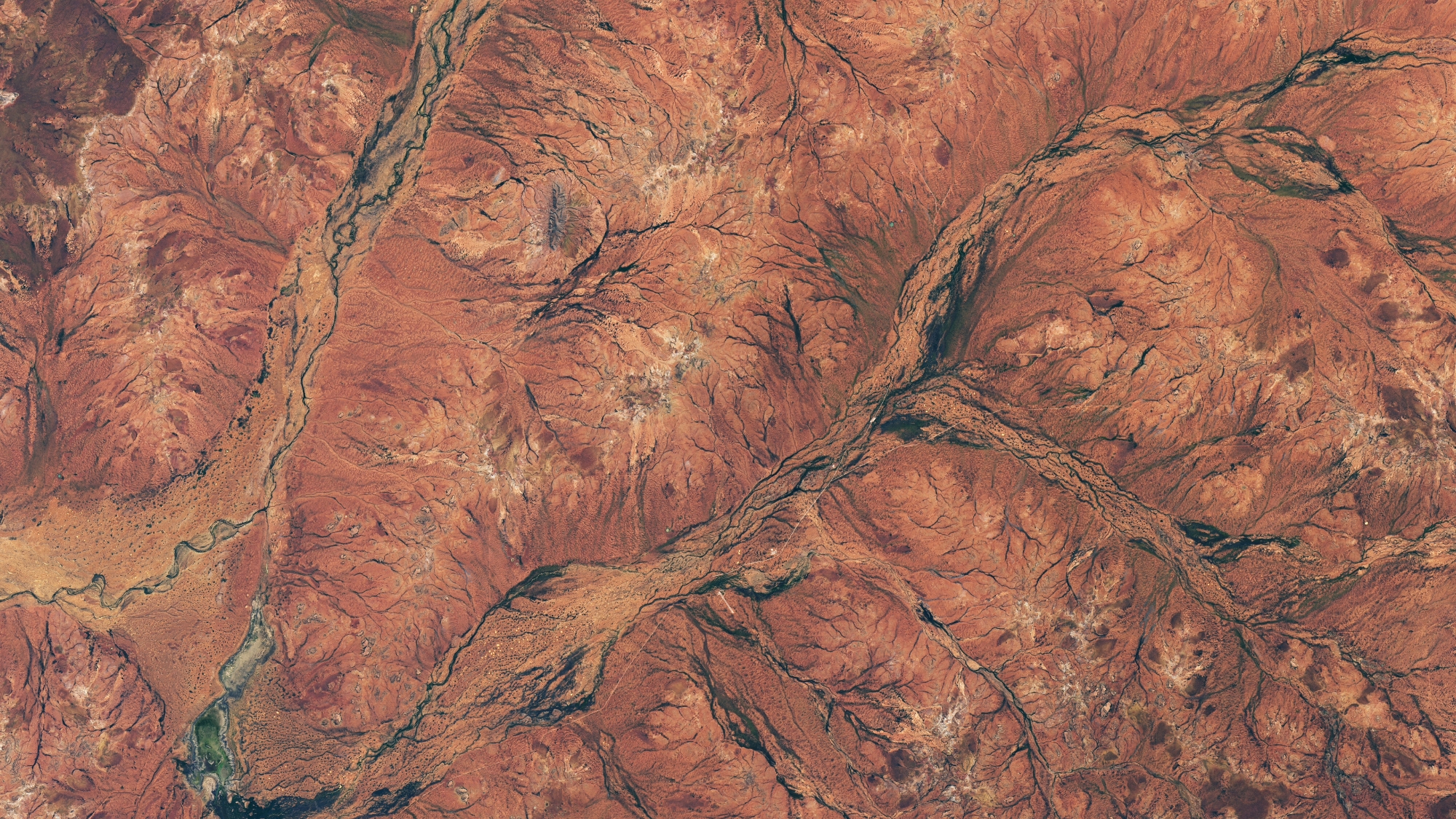
Landsat-8 imagery captured on Aug. 30, 2026, shows vast swathes of Western Australia’s Murchison region covered in wildflower blooms. (Image credit: NASA)
A normally arid corner of Western Australia has burst into life, in a transformation so dramatic it can be seen from space.
The spectacular wildflower display has rapidly spread across the rusty red landscape of Western Australia’s Murchison region following several wetter-than-usual months, according to the NASA Earth Observatory.
Local experts think this year’s bloom could be the best the area has experienced in nearly 20 years.
The image was captured by the Operational Land Imager (OLI) aboard the Landsat 8 spacecraft, a joint mission between NASA and the U.S. Geological Survey.
The Murchison region is usually dominated by arid shrubland, including grasses, saltbush and slow-growing evergreen mulga trees. But dormant wildflower seeds can spring into action when conditions are just right, carpeting the landscape with delightful blooms.
You may like
That’s exactly what happened this year. Above-average rainfall in June and August, along with several cold fronts sweeping across the region, woke the seeds from a lengthy slumber to transform the landscape.
Landsat 8 captured this view on Aug. 30, 2026. A comparison image taken on Aug. 19, 2025 shows just how much greener the region is this year.

Besides potentially being the area’s best wildflower display in almost two decades and some threatened plant species having also appeared among this year’s blooms, the flowers have sprung up in a place normally better known for looking much farther into the cosmos.
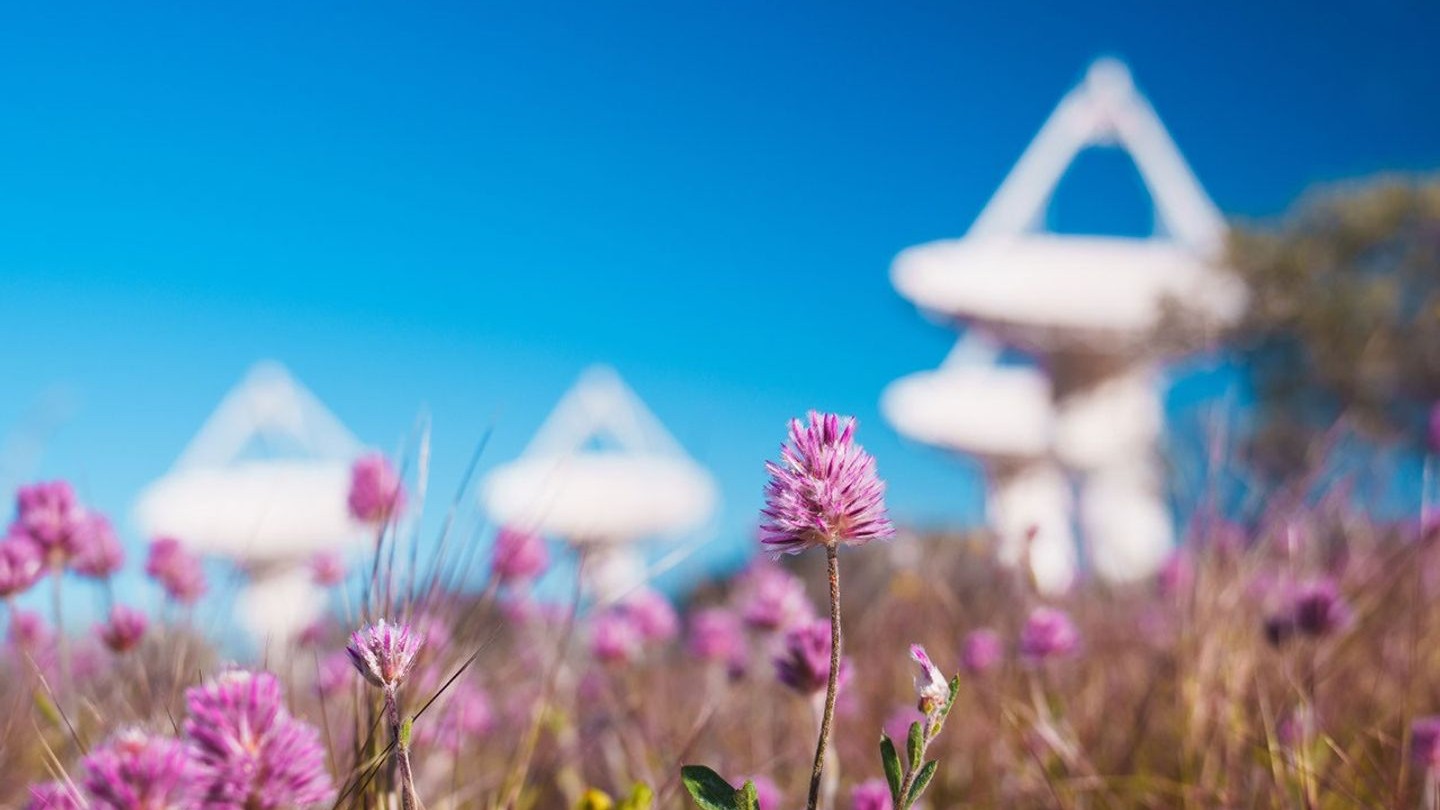
Mulla mulla flowers blanket the landscape in front of CSIRO’s Australian Square Kilometre Array Pathfinder (ASKAP) radio telescope. (Image credit: © CSIRO Australia, September 16, 2026)
Wildflowers carpeted parts of Inyarrimanha Ilgari Bundara, the CSIRO Murchison Radio-astronomy Observatory, where powerful arrays of radio antennas meticulously study objects in the southern sky.
So while the observatory’s telescopes usually have their sights set on the universe, this year there’s quite a show happening beneath them too.