
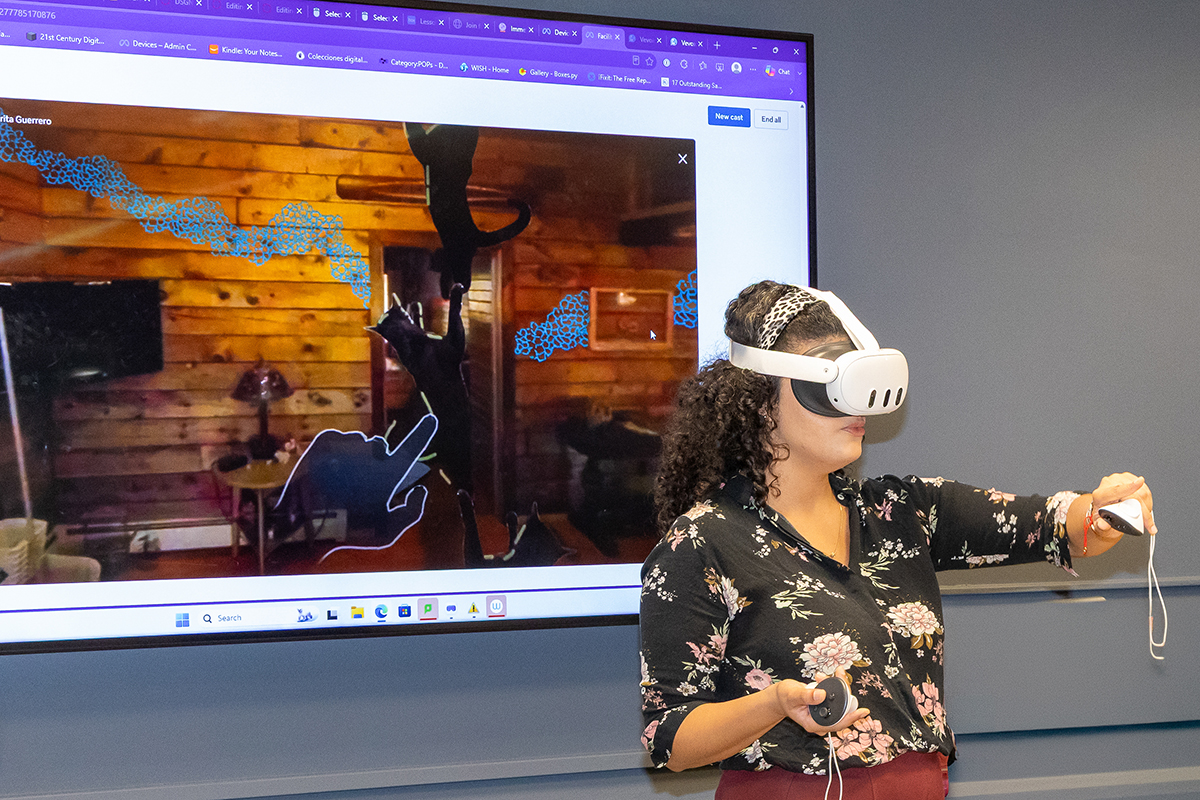
Since its founding in the late 1990s, Penn Engineering’s Bachelor of Science in Engineering in Digital Media Design (DMD) has prepared generations of students to work at the intersection of computing, design and creativity. As technology has evolved, so too have the fields in which DMD graduates lead, including computer graphics, animation and gaming, augmented and virtual reality, artificial intelligence, human-computer interaction and interactive systems.
To reflect this expanding landscape, Penn Engineering is introducing the Bachelor of Science in Engineering in Visual and Interactive Computing (VIC) beginning in Fall 2026.
The program’s evolution to VIC builds on the foundation established by DMD and the vision of its founder, the late professor Norman Badler, while broadening the degree’s scope to prepare students for the next generation of creative computing. The program’s curriculum also expands opportunities for students to deeply explore emerging technologies, including AI and immersive media. Students will continue to master fundamentals in computer graphics, interface design and interactive media, while having opportunities to specialize through coursework in areas including animation and visualization, human-centered interface design, AI-generated media and experiences, interactive and virtual environments, and health imaging and informatics.
“DMD has long been one of Penn Engineering’s signature interdisciplinary programs, combining rigorous computer science with creativity and design,” says Vijay Kumar, Nemirovsky Family Dean of Penn Engineering. “Visual and Interactive Computing builds on that legacy, ensuring that our students will continue to be leaders in one of technology’s most dynamic and rapidly changing fields.”
While the core curriculum remains largely unchanged, VIC introduces greater flexibility for students to pursue coursework in AI and other emerging areas of visual computing that align with their interests. The expanded curriculum connects the program’s longstanding strengths in software engineering, computer graphics and interactive media with technologies reshaping the field today, including generative AI, computer vision, GPU-accelerated graphics, immersive and virtual environments, and health imaging and informatics.
Like DMD, VIC brings together the strengths of Penn Engineering and the Stuart Weitzman School of Design, providing students with both a rigorous computational foundation and opportunities to develop creative and human-centered approaches to technology. Students continue to gain deep expertise in computer science while exploring how people experience, interact with and shape digital technologies. Through joint coursework across Computer and Information Science (CIS) and Weitzman, students learn to approach visual and interactive technologies from both technical and design perspectives, preparing them to create everything from sophisticated digital interfaces and immersive environments to technologies that support applications in fields such as health.
Graduates of the program will be prepared for careers across software engineering, graphics and interactive technologies, and AI and related fields, as well as for graduate study and research.
“The creativity, technical excellence and interdisciplinary thinking that have defined DMD remain at the heart of this program,” says Zack Ives, Adani President’s Distinguished Professor and Chair of CIS. “Visual and Interactive Computing allows us to expand on that foundation and prepare students for the technologies and creative challenges that will define the future.”
Additional details about the Bachelor of Science in Engineering in Visual and Interactive Computing, including curriculum information and frequently asked questions about the transition from DMD, are available on the program website.