
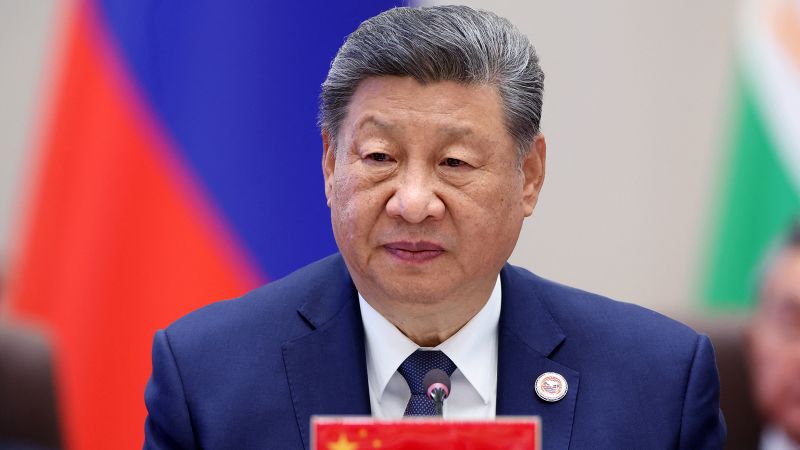
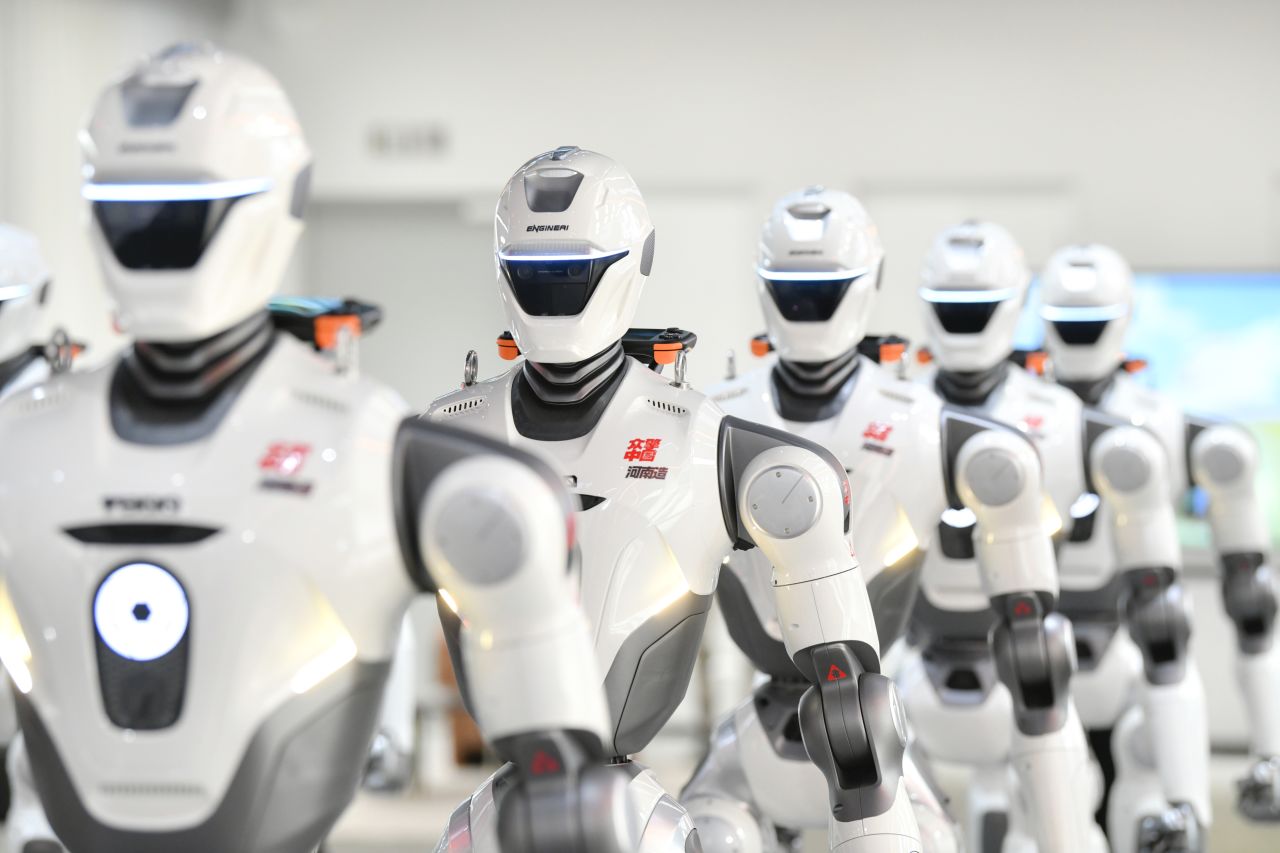
As the world worries about the possibility of unconstrained artificial intelligence wiping out humanity, the leaders of the United States and China have articulated visions for the era-defining technology that come from almost opposite sides of the spectrum.
Brushing aside the calls from AI scientists and executives from Anthropic, OpenAI and Google to slow the development, US President Donald Trump said earlier this month that what was most important was keeping the US in the lead against China in the intensifying AI superpower race.
“We’re leading China in AI…and frankly, I want to keep it that way, because whoever wins AI wins,” he said on September 12.
Anthropic CEO Dario Amodei calls for AI slowdown
Anthropic CEO Dario Amodei calls for AI slowdown
2:21
China’s leader Xi Jinping later made his own call for more international cooperation. Countries should “encourage open source, openness, collaboration and sharing,” he said in a speech in India to Global South leaders, in which he reiterated a proposal for a global AI governance pact – although he did not give details on what that framework would look like.
The juxtaposition of Trump and Xi’s messages underscores the lack of consensus and a deep trust deficit between the two superpowers in the high-stakes race to dominate AI.
The US appears to be increasingly weaponizing its dominance in the sector, seeing it as a strategic asset to be protected, and exported to friendly countries, while China, lagging in the race, is proposing a more open model.
AI will loom large at the Trump-Xi summit in Washington. At their May meeting in Beijing, the two discussed AI guardrails but produced limited results, and last week the Chinese Ministry of Commerce said the two leaders had agreed to set up an intergovernmental dialogue on AI. But with their broader geopolitical rivalry, experts have low expectations for any meaningful breakthrough.