
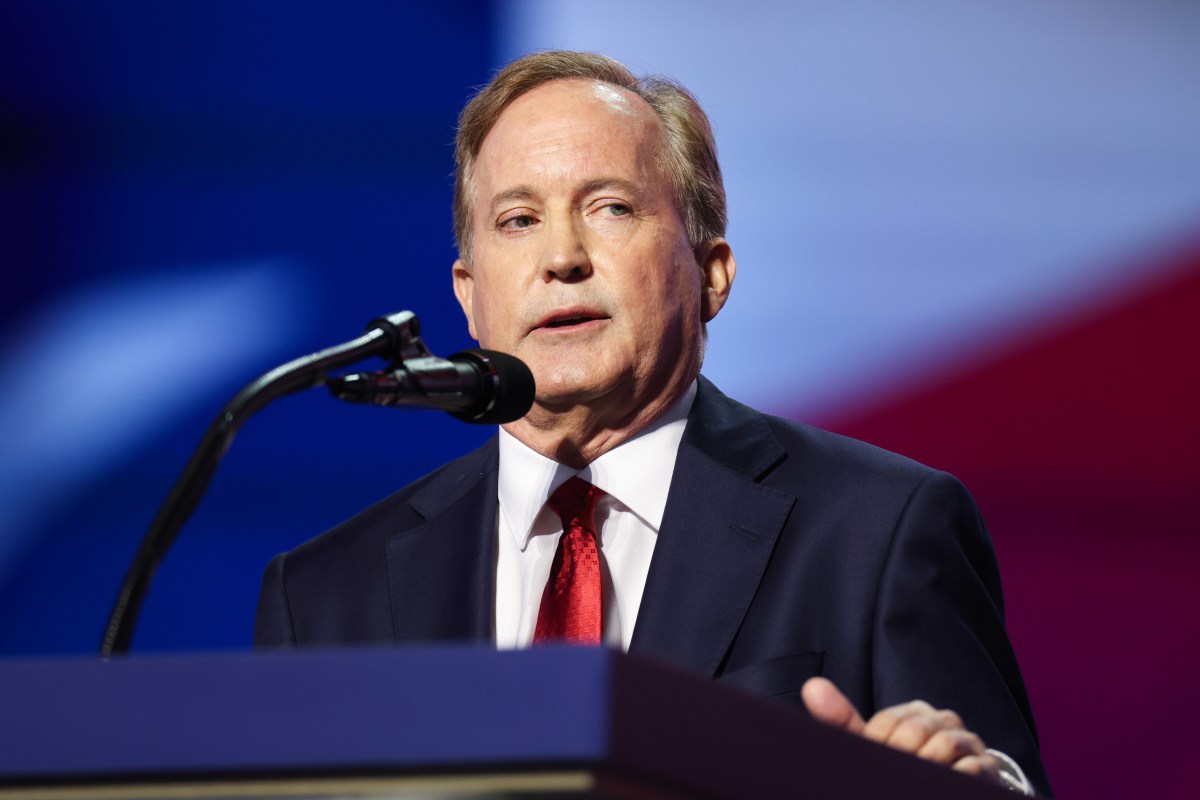
Texas Attorney General Ken Paxton announced an investigation into the water use of hundreds of data centers in the Lone Star State, as wrangling over data centers becomes an increasingly salient issue there.
Paxton’s announcement comes as his race against Democratic state Representative James Talarico in the U.S. Senate race has become one of the most competitive battlegrounds of the 2026 midterms. Data centers, a crucial piece of infrastructure for the development of artificial intelligence (AI), have become a major issue that has cut through traditional partisan divides.
Polls suggest the development of data centers is broadly unpopular with both Democrats and Republicans. Only 20 percent of Americans believe that the construction of data centers is good for the country, according to a poll from YouGov and The Economist of 1,592 adults from August 28-31.
Read More on Politics
While President Donald Trump has dismissed the data center revolt, some Texas Republicans have struck a different tone. Paxton as well as Governor Greg Abbott, facing more competitive races than expected in a traditionally conservative state, have become increasingly critical of data center developers.
Paxton Investigating Texas Data Centers: What We Know
Paxton announced on Thursday that he is investigating data center developments that have not responded to the Texas Water Development Board’s water use survey, which surveys entities using groundwater and surface water “for municipal, industrial, power generation, or mining purposes,” his office wrote in a statement.
Paxton is demanding that the data center developers fill out a survey response “in full compliance with the law.”
“My office is currently investigating hundreds of data center developments to ensure that they are transparent about their water usage and fully compliant with the law,” Paxton said in a statement.
He spoke out against companies that are allegedly “blatantly disregarding their legal obligations to Texas and to our citizens.”
“We cannot sacrifice our resources, water, or energy supply, and I will continue to fight for our communities across this state,” he said.
He listed a total of 18 counties where data centers are under initial investigation.
James Talarico Reacts
Talarico responded to the investigation in a statement posted online by his spokesperson JT Ennis. He hit out at what he viewed as a “reversal” on data centers from Paxton.
“Ken Paxton gave data center companies billions in tax handouts that created the problem we have today. He has taken nearly half a million dollars from data center interests. He was gifted 100,000 shares from a data center server company,” he wrote.
He said Paxton is now “changing his tune” with an “empty claim he’ll ‘regulate’ the same data centers that he allowed to proliferate and jack up our bills for over a decade.”
Data Center Revolt Hits Texas
Nationwide, frustration with the rapid development of data centers has become a political flashpoint. Critics have raised concerns about the environmental impact of data centers, and it’s become a sticking point in statewide campaigns in Texas this year. Abbott has implemented a moratorium on data center construction, joining a handful of other states supporting similar policies.
Talarico has pushed for stronger regulations governing data center development.
Paxton in August also rolled out a proposal on their development, pledging to introduce legislation prohibiting the use of Chinese technology to power data centers and to make data center companies criminally liable if they empower AI chatbots that undermine the safety of children. He also voiced support for policies backed by Abbott that would implement some regulations like requiring them to fund their electricity.
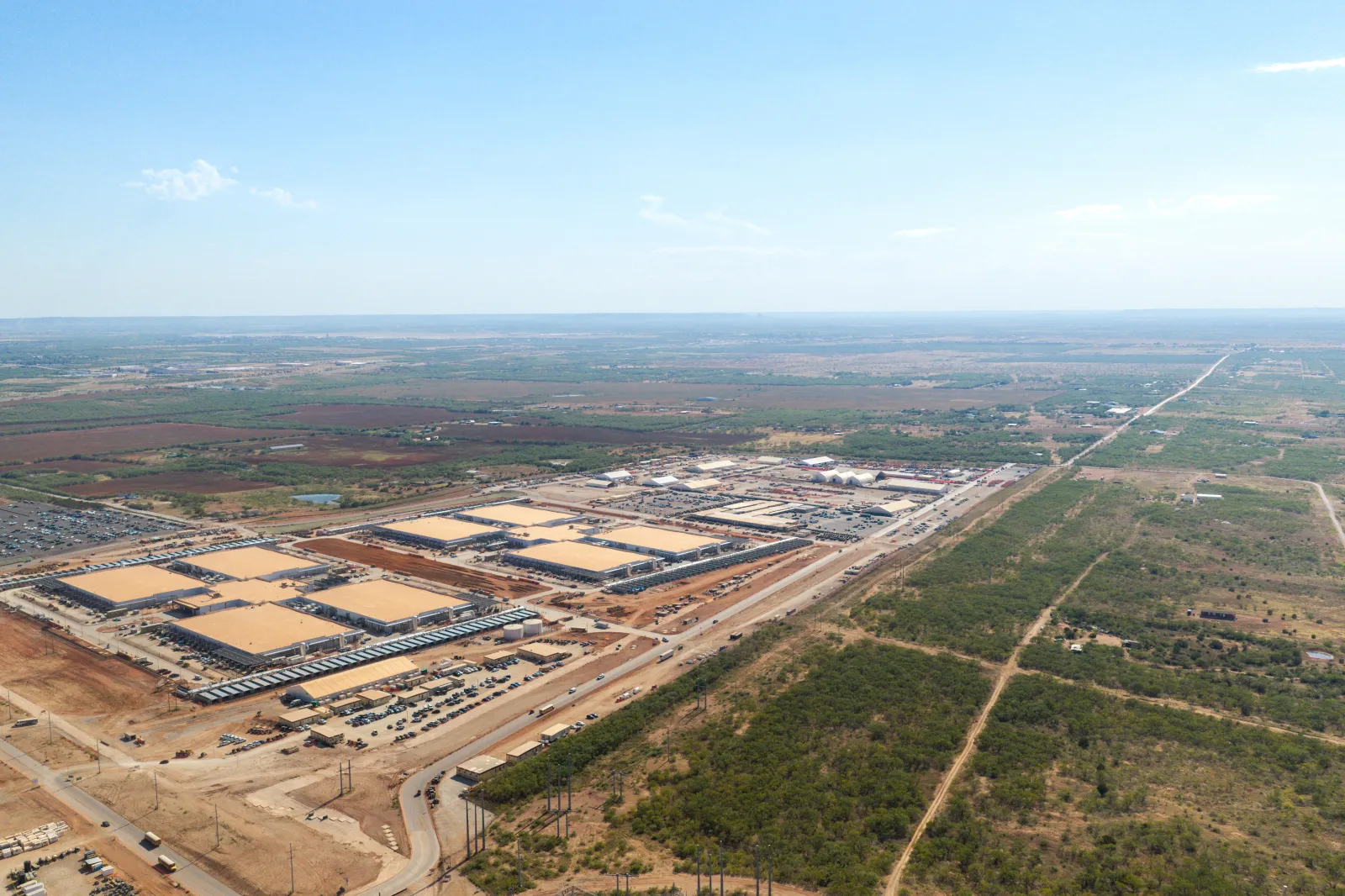
Data centers have been such a major issue because they “connect several voter anxieties at once,” Brandon Rottinghaus, professor of political science at the University of Houston, told Newsweek on Thursday.
It plays into issues including electricity bills, grid reliability, water scarcity, neighborhood growth as well as the belief that corporations “may be getting preferential treatment,” he said.
“Democrats can use data centers to appeal to independents worried about costs while potentially reaching some traditionally Republican suburban and rural voters concerned about water, property rights and rapid development,” Rottinghaus added.
The investigations by Paxton reveals that Republicans recognize the vulnerability and are shifting their positions accordingly, he said. “Politically, it also makes it harder for Talarico to frame data centers simply as an example of Republican state government siding with powerful corporations over ordinary Texans. The question will be whether voters view Paxton’s action as substantive enforcement or as a late response to an issue that became politically damaging.”
What Polling Shows
One recent poll found that a plurality of Texans would back a data center moratorium for the state.
Forty-four percent of respondents said they believe that would be the “right decision,” while only 27 percent said it would be the “wrong decision,” in the ReconMR/Siena Research Institute poll. It was conducted among 614 likely voters from September 8 to 11, 2026, and had a margin of error of plus or minus 4.3 percentage points.
Another poll from YouGov and Univision underscored the political vulnerability for Republicans. It found that 32 percent of Texans trust Democrats more on the issue, while 31 percent trust Republicans more. Twenty-four percent trust neither party, while 14 percent said they trusted both parties equally.
Only 24 percent said they would support data centers in their communities.
It surveyed 1,000 Texas voters from August 27 to September 4, with a margin of error of plus or minus 3.6 percentage points.
Sid Miller, the state’s outgoing agriculture commissioner, told The Washington Post that data centers could become an issue for the GOP.
“I’ve been leading the charge against these data centers for a year or more, and it’s all falling on deaf ears. It’s going to hurt us in the midterms. I think we could lose some statewide races,” he told the newspaper.
What Are Other States Doing?
Texas leaders aren’t the only ones taking action on data centers.
On Wednesday, Maryland Governor Wes Moore, a Democrat, signed an executive order establishing a statewide framework for large data centers, requiring projects of 25 megawatts or more seeking state action to undergo a standardized review of their effects on the electric grid, water supplies, communities and the state’s economy.
Earlier this year, New York became the first state to impose a one-year statewide moratorium on new hyperscale data centers, with the pause applying to facilities whose peak electric demand exceeds 50 megawatts while the state develops a broader regulatory framework.
Several other states like Delaware, Georgia, Michigan, New Jersey, Pennsylvania, South Carolina and Vermont have all introduced legislation that would temporarily halt data-center approvals or construction.
Nevada Governor Joe Lombardo, a Republican, signed an executive order that would require data centers to pay local school support taxes in full, cover their own energy costs and protect water resources.
Ken Paxton vs. James Talarico: What Latest Polls Show
Texas is generally a Republican-leaning state that backed Trump by nearly 14 points in the 2024 election, but recent polls have shown that Paxton is trailing Talarico in the Senate race this year.
Democrats are hopeful about their prospects in the Lone Star State because of Trump’s dwindling approval rating, voter frustration over the economy amid his second term in office, and the series of scandals Paxton has faced over his political career.
Talarico led by 6 points, 50 percent to 44 percent, in a new Marist University poll, which surveyed 1,139 registered voters from September 17 to 20, with a margin of error of plus or minus 4.4 percentage points.
A poll from the Barbara Jordan Public Policy Research and Survey Center at Texas Southern University showed a closer race, giving Talarico only a single-point lead, 47 percent to 46 percent. It surveyed 1,800 likely voters from September 15 to 19 and had a margin of error of plus or minus 2.31 percentage points.
Talarico also led by one point, 47 percent to 46 percent, in an Emerson College poll, which surveyed 1,000 likely voters from September 12 to 14. It had a margin of error of plus or minus 3 percentage points.
Pros and Cons of Data Centers Explained
Critics have raised numerous concerns about the centers—including their impact on the environment, the amount of water they use, their potential to drive up electricity bills and the noise pollution they generate in communities.
More than 500 jurisdictions across the U.S. have banned data center construction, according to an analysis by The Information, a sign of how the grassroots anti-data center movement has spread across the country.
The case of Jake Fortes, who lives in Lowell, Massachusetts, is one of the most viral examples that has fueled data center skepticism. He has pointed to ongoing noise pollution due to the cooling systems and infrastructure at the center run all day and night.
But many proponents of AI data centers view embracing them as important for the economic growth of their state and community. They view data centers as having the potential to bring good jobs, including union jobs, to their communities, and believe opposing data centers could result in their communities being left behind.
Trump, for instance, has warned about the economic impact of communities opposing data centers.
“The only reason that communities throughout the U.S.A. should not want Data Centers is if they want to end up being backwards and poor. If they want to be successful and rich, with far lower taxes and jobs all over the place, let Data Reign,” Trump wrote in an August 31 post on Truth Social.
Contact Newsweek editors on this story: Edward T. Cummins