
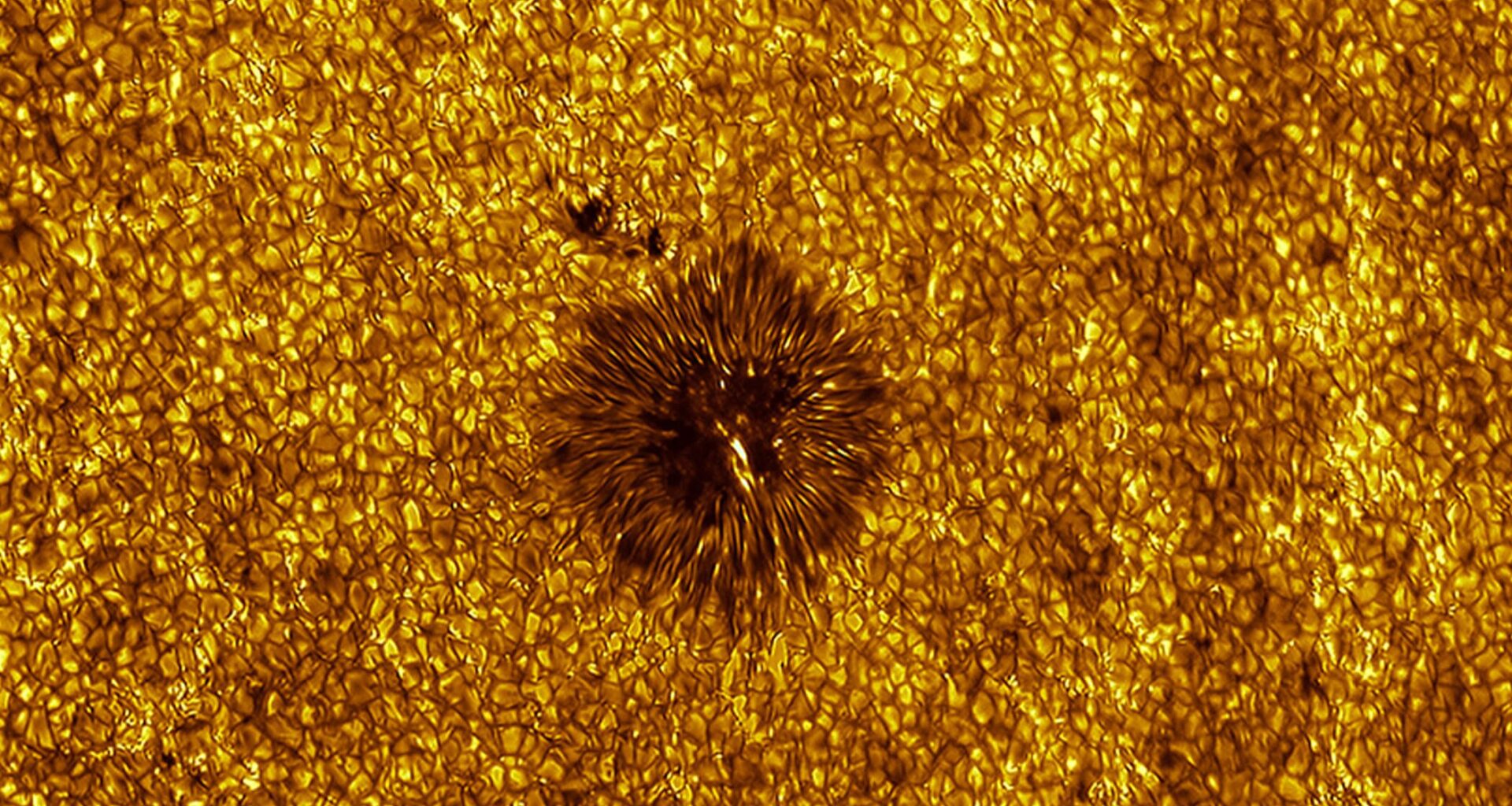
After previously failing to get the shot, a Portuguese astrophotographer has finally captured a highly detailed close-up of the Sun’s surface – winning a major astrophotography award.
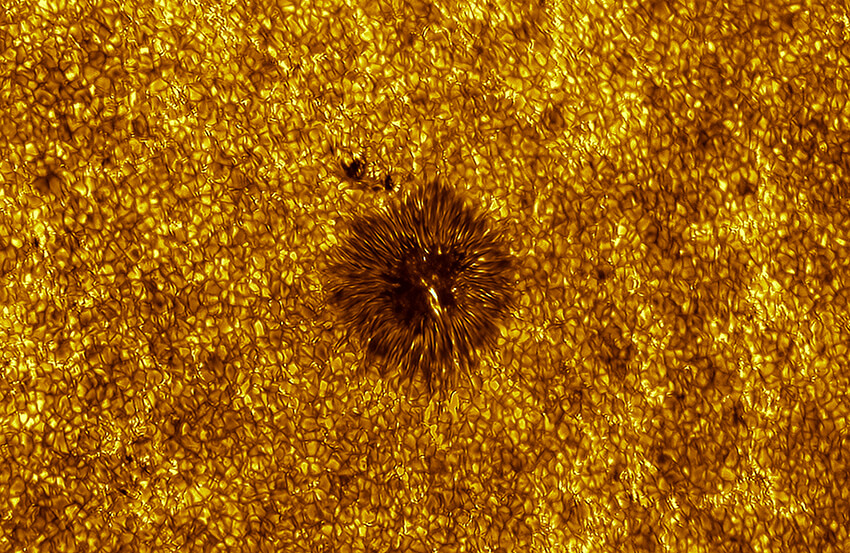
Miguel Claro was recently named winner of the “Our Sun” category of the ZWO Astronomy Photographer of the Year 2026 for the frame, which shows an intricate abstract pattern created by writhing plasma within the Sun’s photosphere – the outermost layer of the star’s surface.
“After several attempts, a perfect opportunity eventually arose. The excitement that morning was palpable,” he told the competition organizers.
Latest Videos FromDigital Camera World
Claro had good reason to be excited. Not only did the astrophotographer and science communicator have a new high-powered, dual-band telescope, but he described the conditions that morning as “perfect” for capturing convection cells (areas of rising and falling plasma on the Sun’s surface), along with filigree, or bright spots, found between them.
(Image credit: Miguel Claro (Portugal))
Miguel Claro’s gear and settings
You may like
Soleye 300 Dual-Band telescopeAltair 2-nm G-Band filterBaader SunDancer II TZ-4S telecentric systemSky-Watcher EQ6 Pro mountPlayer One Astronomy Apollo 428M Max Pro Solar Camera1,200 mm | f/4 | 67 milliseconds from a 22-second videoLocation: Reguengos de Monsaraz, Évora District, Portugal, July 02 2025
To get the shot, he recorded several short videos at a high frame rate to freeze what he called “fleeting moments” of atmospheric stability. “Watching the first results of the pre-processed image appear on screen was a pure thrill,” he said.
Claro pipped retired airline pilot and multi-award-winning Australian astrophotographer, Peter Ward, to first place.
For his “compelling” runner-up scene, Ward used a spectroheliograph – a device that captures specific wavelengths of light – to depict calcium filaments and plumes of gas expelled from the Sun’s outer layers in the UV spectrum.
![Layers of the Sun’s chromosphere [the section of the Sun’s atmosphere above its visible surface] captured in UV light.](https://www.newsbeep.com/us/wp-content/uploads/2026/09/d7N3vUurUBrJs4BoBXHxCV.jpg)
(Image credit: Peter Ward (Australia))
Peter Ward’s gear and settings
Astro-Physics 130GTX and 92-mm Stowaway telescopesCoronado SolarMax double stacking 90-mm etalonMLAstro SHG 700 spectroheliographParamount MEII mount, QHYCCD QHY533M and 678M cameras910 mm | f/7 | multiple 1/250 to 1/500-second exposuresLocation: Barden Ridge, New South Wales, Australia, October 11 2025
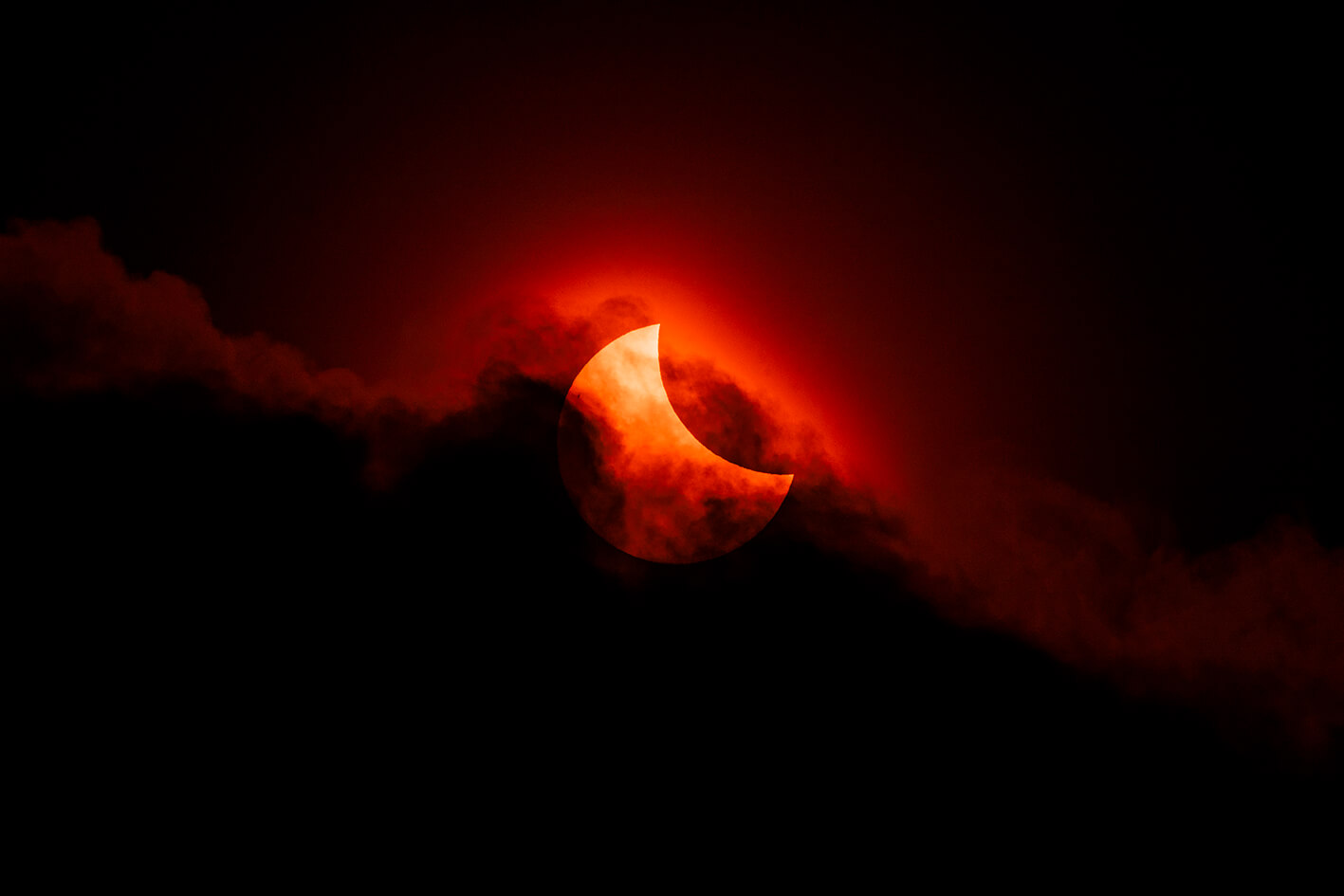
British astrophotographer James McBeath was also commended for his frame of the 2025 partial solar eclipse. The photographer told the event organizers that he spent “several hours” tracking the eclipse in a local park with his camera, stopping to chat with curious passersby.
What to read next
(Image credit: James McBeath (UK))
James McBeath’s gear and settings
The ZWO Astronomy Photographer of the Year is the world’s largest astrophotography competition, hosted by the Royal Observatory Greenwich, London. This year’s overall winner was Ali Alobaidly (Kuwait) for his depiction of the rarely photographed Shark Nebula, snagging him £10,000 (approximately $13,000 / AU$19,000) along with the competition accolade.
Category winners took home £1,500 (approximately $2,000 / AU$2,800), with Miguel Claro saying that seeing the “impressive level of detail” in his image made “every bit of effort worth it.”
Here’s our expert’s pick of the best telescopes for astrophotography and stargazing.