
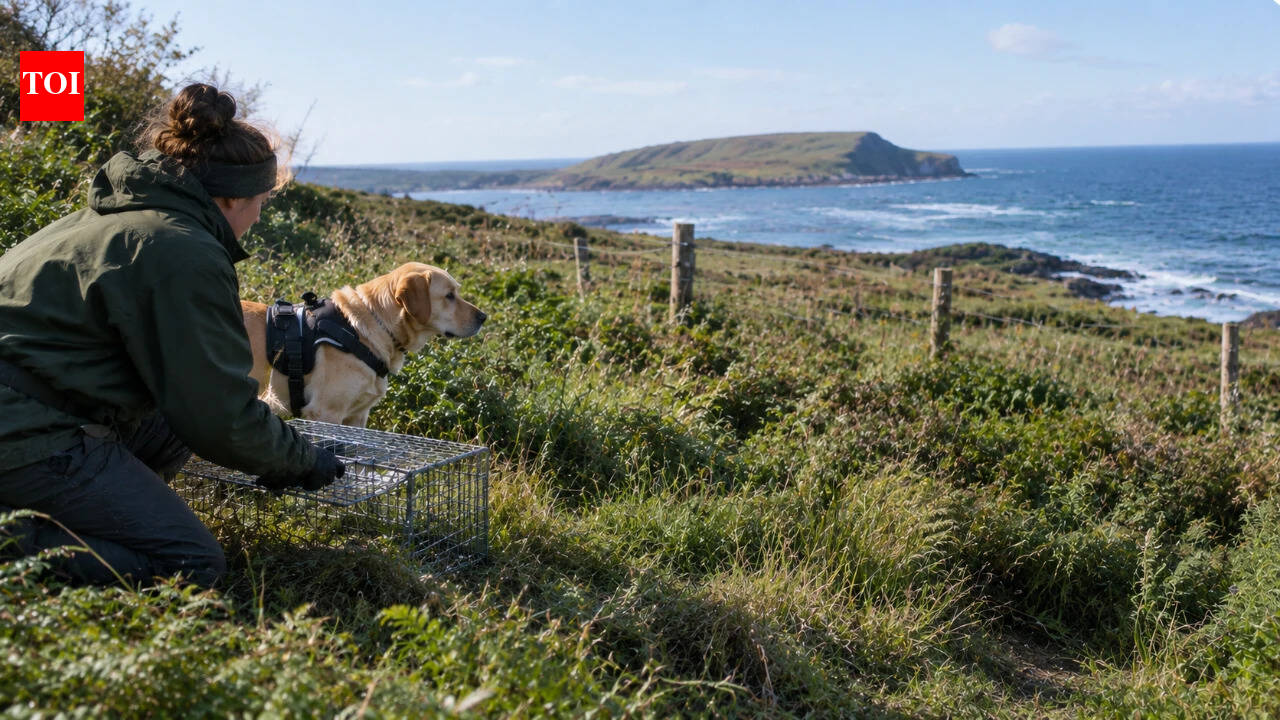
 Representative image of conservation teams using trained dogs and ground monitoring to help remove invasive predators and restore native wildlife habitats. Image Credits: ChatGPT. On Rathlin Island off Northern Ireland’s north coast, a conservation operation using thermal drones, 110 cameras and a trained Labrador has reached an unusual milestone. Rathlin Island has been declared free of feral ferrets after a five-year effort to remove the invasive predators, offering threatened birds a safer place to breed. The £4.5 million LIFE Raft project, launched in 2021 and led by RSPB Northern Ireland with local and government partners, is described by conservationists as one of the first successful eradications of ferrets from an inhabited island.According to The Guardian, Rathlin is Northern Ireland’s largest seabird colony, supporting more than 250,000 birds, including puffins, razorbills, guillemots and Manx shearwaters. It is also the only place in Northern Ireland where corncrakes still breed. But ferrets, introduced to the island in the 1980s in an attempt to control rabbits, became predators themselves. Their numbers eventually grew to more than 100, threatening birds, Irish hares and even domestic chickens.A predator brought in to control another pestFerrets became a serious problem on an island where many birds nest on or near the ground. They were capable of hunting not only eggs and chicks but even adults, and in 2017, a single ferret got into a puffin colony and killed almost thirty birds in just two days. This showed how quickly an invasive predator can affect a dense seabird colony.According to research published in Animal Conservation, eradication of invasive mammals from islands has been associated with positive population growth in many seabird populations. Researchers examining 181 seabird populations across 69 species found that populations generally grew after successful invasive-mammal eradication, although the speed and scale of recovery differed between species and locations. For Rathlin, removing ferrets was therefore aimed at reducing a direct source of predation while giving vulnerable species a chance to recover. The task, however, was complicated by the island’s rugged terrain, cliffs and the difficulty of proving that the last elusive animal had disappeared.110 cameras, thermal drones and WoodyAs The Irish Times reported, the LIFE Raft team used a combination of traditional trapping and modern surveillance to locate the ferrets. A network of 110 cameras was established across the island, while thermal drones helped search areas that were difficult or dangerous for people to cover. The team also relied on an unexpected helper: Woody, a red Labrador trained to detect ferret scent and latrines.Live traps were set across the island and designed to alert trained staff when an animal was caught. The conservationists mainly worked outside the breeding season to minimise disruption. More than 100 ferrets were removed, and the island was later declared ferret-free after an extended period without detections. However, working on a populated island added logistical challenges. Rathlin Island has about 150 residents and regular ferry traffic, which increases the risk of reinvasion. That is why LIFE Raft has built biosecurity into the programme.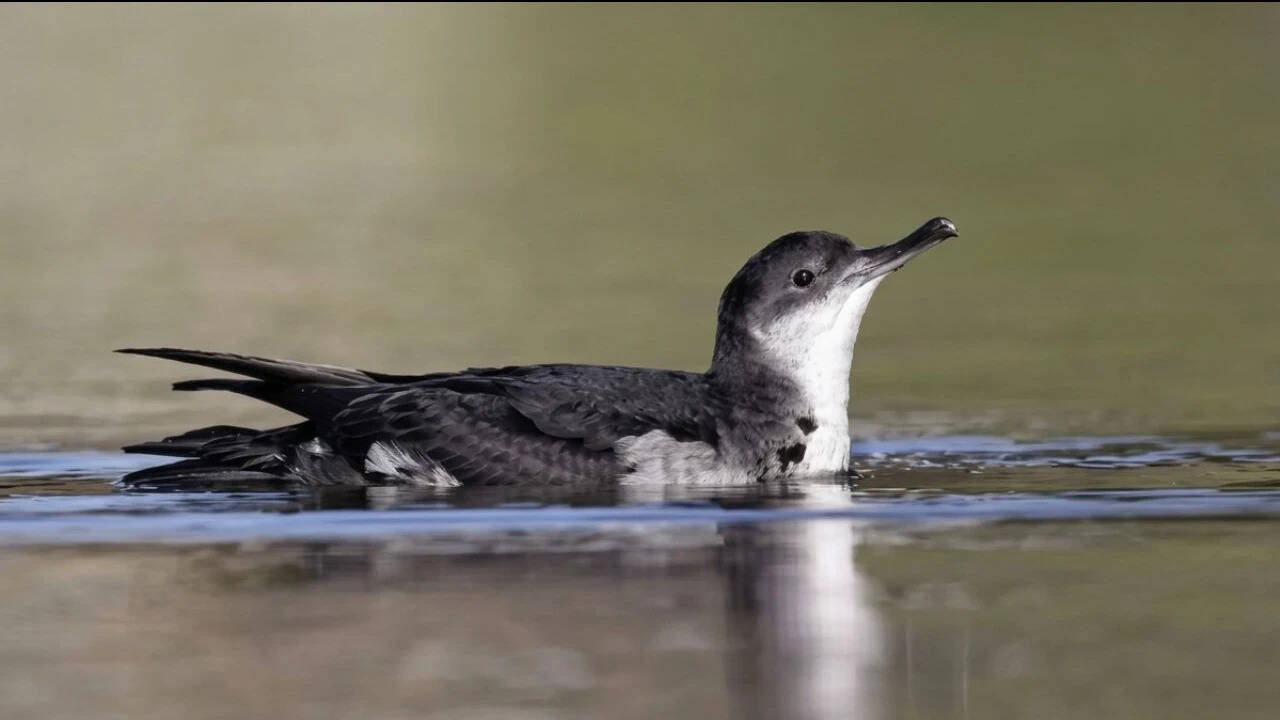
Utilising advanced technologies like cameras and drones, along with the expertise of Woody, a trained Labrador, this project has safeguarded vulnerable seabird populations and facilitated the return of corncrakes and breeding Manx shearwaters. Image Credits: Wikimedia Commons.
Corncrakes return as shearwaters breed againAccording to the RSPB, six calling male corncrakes were recorded on Rathlin Island in 2025, followed by four in July 2026. Rathlin is the only place in Northern Ireland where the birds still breed, making their continued presence an encouraging sign for the species. The return of the Manx shearwater has brought another positive development, with the species confirmed breeding on the island again in 2025 after an absence of around 40 years.For an island where ferrets once posed a serious threat to ground-nesting and burrow-nesting birds, the sight of these species returning gives a clearer picture of what the removal of an invasive predator can mean. The work, however, is not over. Rats remain another threat, while continued monitoring and biosecurity will be needed to prevent ferrets from returning.