
Water year 2026 is coming to an end, and good riddance.
Colorado water officials base their calendars on the water cycle each year, starting new years on Oct. 1. This time, the restart is much needed. Coloradans have endured record temperatures, closures, water cutoffs and the winter-that-wasn’t, when barely any snow fell compared with past years.
“It was a doozy,” Peter Goble, assistant state climatologist, said.
What’s one main takeaway from the year? The state was 5.6 degrees Fahrenheit warmer from October 2025 through the end of August than the 1971 to 2000 average. That makes it the warmest water year on record by a big margin, so it’s no surprise that December, February, March and August all broke heat records.
“In terms of ramifications, I don’t know that we fully understand that,” Goble said.
When temperatures are higher, the atmosphere holds more water vapor. Every 1 degree rise in temperature equals as much as a 4% rise in atmospheric water vapor, according to the National Centers for Environmental Information.
That means less liquid water running into streams, reservoirs and croplands, Goble said.
Temperature, not just changes in rainfall, is driving drought. Higher temperatures, part of human-caused climate change, ramped up the 2020-2022 drought to exceptional levels in the West, according to a 2024 report from the National Oceanic and Atmospheric Administration.
Which brings us to another takeaway: 2026 is the warmest year, but not the driest based on its October through August precipitation. 2002 still holds that record, while 2026 ranked sixth out of 130 years.
“That’s still a critically dry year,” Goble said. “That’s a bad drought.”
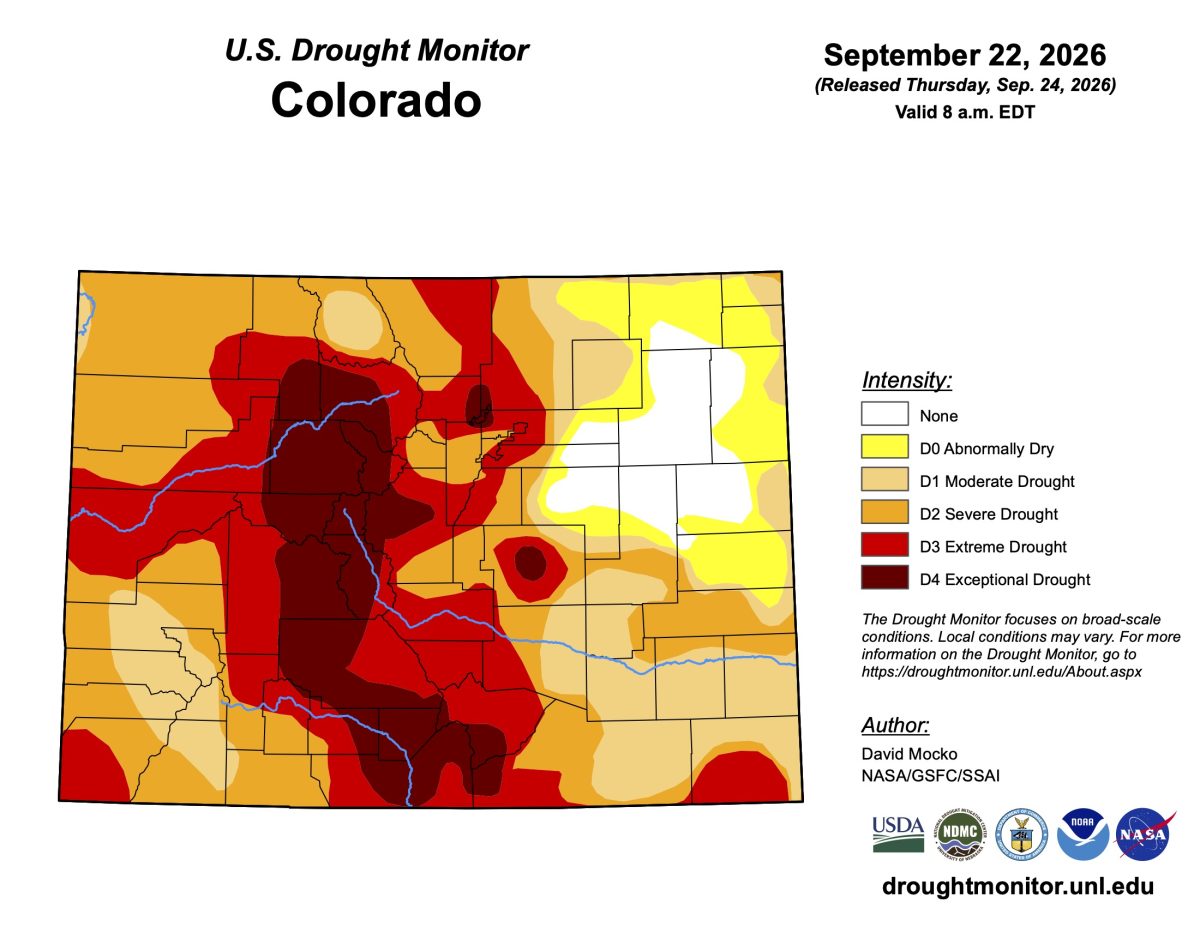 About 38.5% of Colorado was experiencing extreme or exceptional drought Sept. 22. (U.S. Drought Monitor, Contributed)
Ripple effects across Colorado
Rain and snow did come to Colorado this year, just not always at the right time to help out farmers and ranchers, rafting and fishing outfitters and communities in Colorado.
The state’s snowpack — its main reservoir of water — was already at a record low by January, but a heat wave in March dealt the critical blow. The stretch of warm days started a surge of snowmelt that ran off weeks earlier than the usual peak for snow buildup in the mountains.
Farmers and ranchers had to scramble to catch the water earlier and adjust their planting practices. Tourists were calling outfitters to make sure there was enough water to raft and fish. Cities were announcing watering restrictions earlier than usual, and Colorado ramped up its drought response, convening the state Drought Task Force earlier in the year than ever before.
Everything was happening a month early, which meant by July and August, irrigation water for cropland was already in short supply, and toxic algae was blooming in more reservoirs than usual. Roughly 30,000 fish died in one Colorado pond because of high temperatures and low oxygen levels.
Large fires, like the 102,000-acre Aspen Acres fire, ignited. Some communities, like La Veta in Huerfano County, had to scramble to make sure they had enough water to get through the year.
By the end of the summer, Colorado Parks and Wildlife had closed fishing on 28 river sections that covered 650 miles. Some reservoir managers closed boat ramps to recreation or completely drained their storage, like at Daigre Reservoir, Douglas Reservoir and Denver Water’s Antero Reservoir.
And it was the worst year on record for runoff on three major rivers in Colorado: the Colorado River, the Arkansas River and the White River, Goble said.
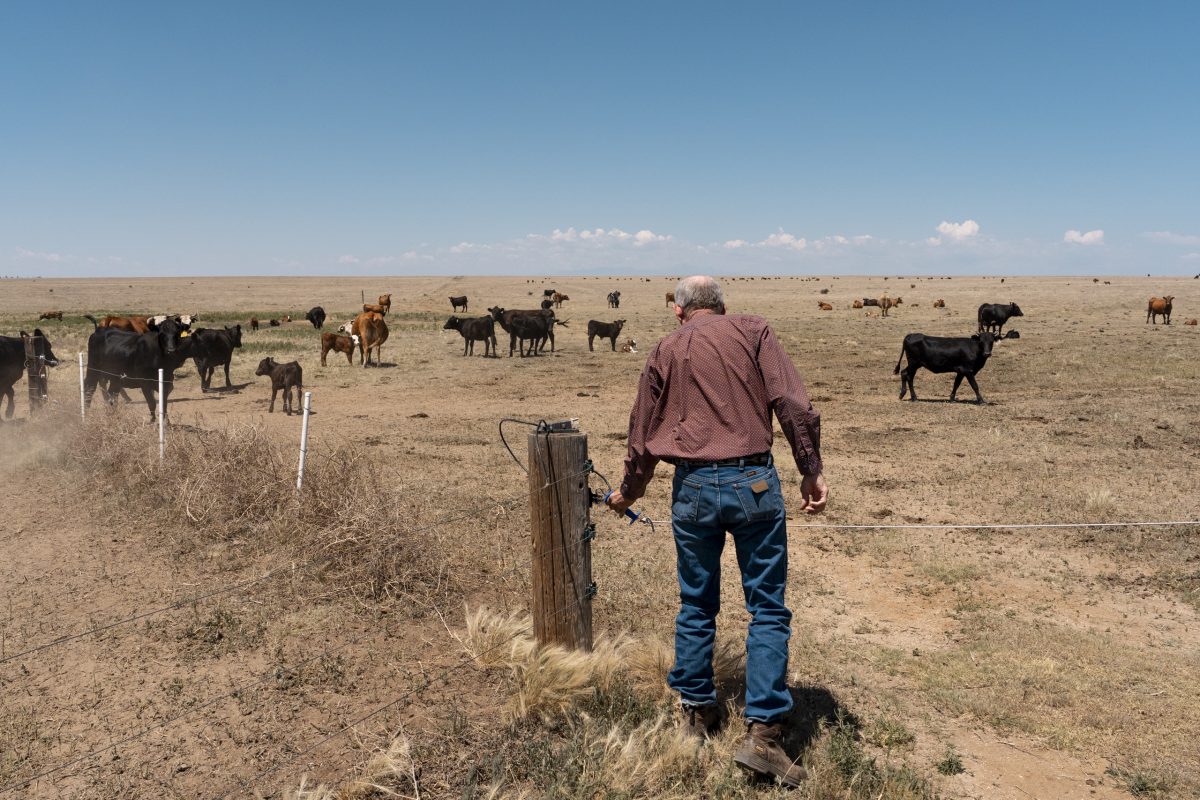 Louis Martin, 66, the manager of Brett Gray Ranch opens a gate to a paddock June 15 in Lincoln County. Ranchers across the state are running their operations amid an ongoing drought. (Cheney Orr, Special to The Colorado Sun)
A rough end and a new start
Colorado is ending the water year with about 38% of the state in extreme or exceptional drought, about twice as much compared with the same time in 2025. And it has just over half of its usual water supply in storage reservoirs.
The state’s snow storage capacity is so big, the melting snow from one banner year is enough to refill all of the state’s reservoirs, Goble said. That happened in 2019 and 2023. Otherwise, the best way to get them back is a few average years and careful management.
“If we have another dry year, it could lead to more severe restrictions and curtailments,” he said. “In some cases, we have basically no carryover storage.”
The rain that did come from monsoons this year arrived later than usual. Even though the precipitation amounts might be decent, monsoonal moisture doesn’t contribute much to water supply.
What’s next?
“Looking at the forecast, there’s a chance for more moisture,” Goble said.
That could come from more monsoon activity, or this year’s Super El Niño. But the long-term forecast still shows that this winter could be drier or wetter than normal, according to Goble.
“I know there’s those out there who are saying, because we’re in a Super El Niño, we need to get really excited about a big powder year,” he said. “I’ve got to kind of tamp down those expectations because we don’t know that for sure.”
The monsoonal moisture helped avoid a record-smashing wildfire year in Colorado, and looking ahead, officials expect the fire potential this fall to be close to normal, according to presentations at Monday’s Drought Task Force meeting.
“Average means we’re still going to have fires. We still may have large fires,” said Vaughn Jones, chief of the wildland fire management section in the Colorado Division of Fire Prevention and Control.
As the water year closed, the Drought Task Force also had its last meeting of the year.
Gov. Jared Polis issued a statewide drought emergency proclamation June 4 and activated the task force in March. The group facilitates communication among state agencies and makes recommendations as part of the state’s drought response.
This year, the state task force compiled economic resources for the public and created subgroups focused on specific topics, like supporting agriculture. Specific state agencies helped out in their areas, like CPW’s fishing closures.
The Colorado Water Conservation Board helped with emergency reservoir releases and approved $29 million in water grants for Coloradans, Lauren Ris, CWCB director, said. Now they’re focusing on the next water year.
“We’re at the end of the irrigation season now, so we’re starting to focus more on snow accumulation, or hopefully, we’ll be focusing on that here soon,” Ris said. “Fingers crossed.”
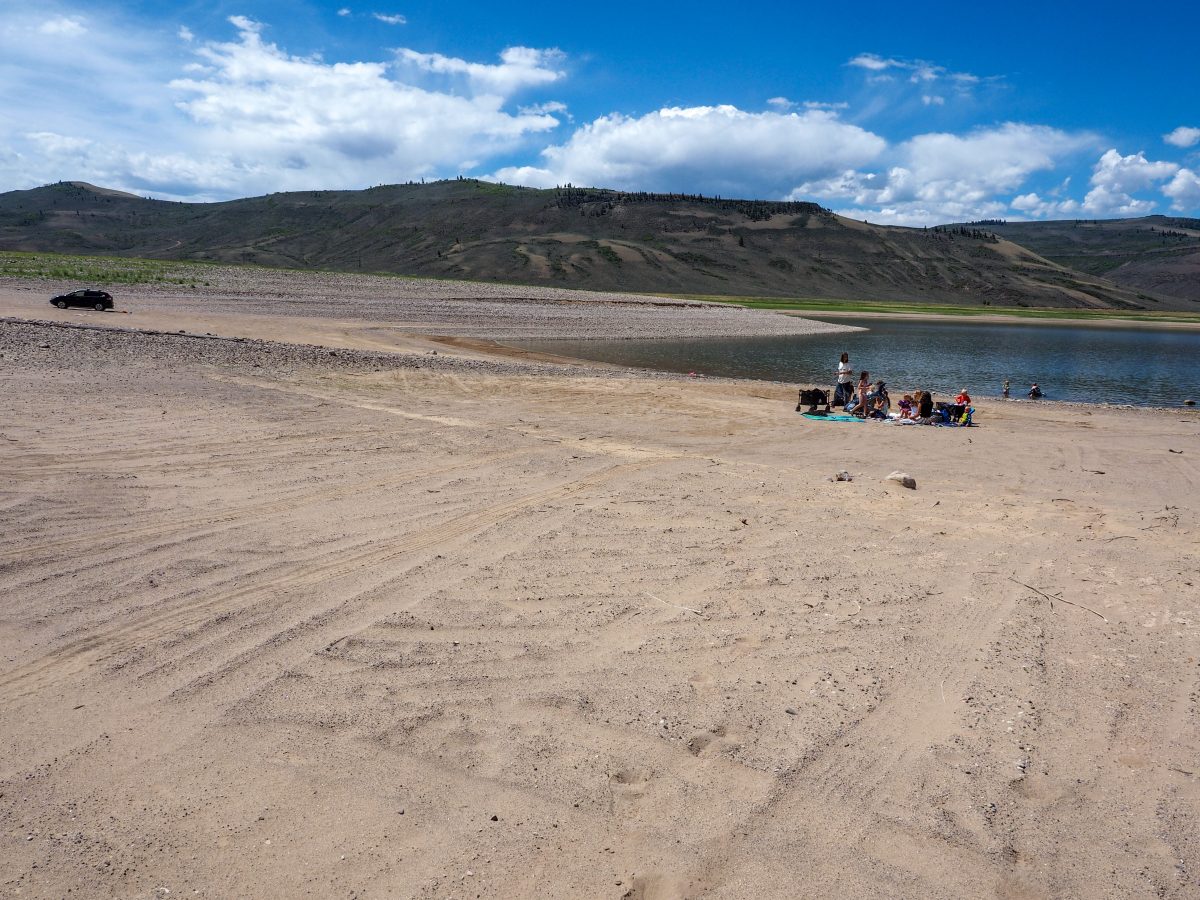 A group of mothers and children relax and play on a beach at Blue Mesa Reservoir on June 2. In a normal year the beach where the group is sitting would be deep under the reservoir’s water, but this year the reservoir near Gunnison is approaching a record low. (Dean Krakel, Special to The Colorado Sun)